

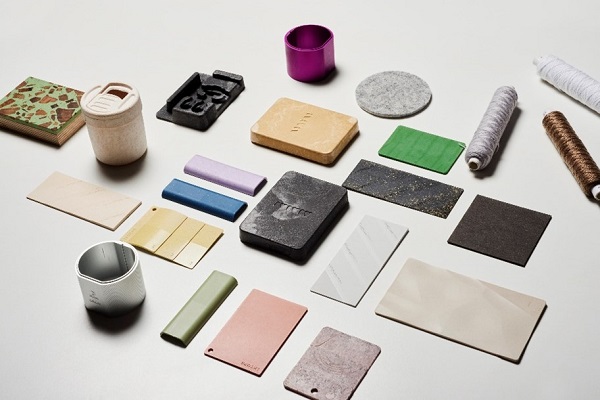
Communicating Sustainability Using Colors, Materials, and Plastic Surface Finishes
It is contradictory to use sustainable materials in product design. The question of where the sustainability story goes and how to communicate this amazing accomplishment arises when a less sustainable material is replaced with a more sustainable one and the new, more responsible version is so well done that it is visually identical to the original, less responsible version.
It is challenging to explain sustainability if the recycled, bio-based, low-carbon, or other environmentally friendly material you use looks exactly like the original plastic. There is no difference in appearance. The paradox of what we designers do is that the sustainability narrative itself frequently gets lost in the process of trying to be sustainable. Or does it? This subject is significant because the environmental aspect is given a lot of attention and is incorporated into the product story. By product, I mean anything from consumer electronics and recreational goods to household appliances and automobile interiors.

A large part of our work as designers is to reproduce our existing knowledge of common plastics and processes, but now we need to think about it responsibly and sustainably. For example, instead of electroplating plastics to create glossy premium finishes, we could instead use a recyclable process where the end result is very similar, if not visually identical, to the original. But do we simply want to replicate what we’ve always done (metallized plastics, glossy finishes) in a more sustainable way? Or do we actually want to do things differently, capture consumers’ imaginations, and excite them about a new approach? From a purely environmental perspective, a progressive aesthetic is less of a concern as long as everything is achieved in a more responsible way. But aren’t we missing a huge opportunity to do something truly different? Shouldn’t we be challenging expectations of good and desirable CMF (color, materials, and finishes)?
We’ve long accepted that materials like wood and metal have their own natural imperfections—knotholes in the wood, patina on brass or copper—and we even celebrate them as signs of authenticity, age, and beauty. Why don’t we do the same with injection-molded plastics?
Some pioneering brands are beginning to redefine the aesthetics of plastic. The Microsoft Xbox Remix Special Edition controller is a perfect example. Made from recycled plastic, it features subtle swirls, flow lines, and color variations on its surface—visible traces of the recycled content. Instead of covering up these “imperfections,” Microsoft has chosen to reveal them, making each controller visibly unique.
The Steelcase Perch stool takes this a step further. Made from hard-to-recycle plastics derived from e-waste, it exhibits numerous color irregularities and “ghost lines” created by the irregular melting behavior of recycled material. Instead of trying to improve the quality of the recycled plastic, Steelcase has embraced the imperfect surface—and even gone a step further by donating the “most irregular-looking” Perch stools, created during color transitions in production, to social innovation partners. They have portrayed this unpredictable aesthetic as a reflection of the complexity and change in the real world.
These examples point to a new possibility: to change the way we define beauty in plastic and to develop an aesthetic language in which the traces of manufacturing processes and raw materials do not remain hidden but become a sign of value and honesty.
The challenge is even greater for higher-end products, where traditional notions of luxury play a crucial role. There is often a strong desire to maintain familiar, high-end aesthetics, such as metallic finishes, which can complicate the introduction of new, visibly sustainable materials.
In addition to finding sustainable solutions for established materials and finishes like chrome, should we also explore other sustainable processes to characterize a new kind of luxury? Should sustainability actually help consumers change their understanding of luxury, rather than simply replicate their current one?
Some forward-thinking brands are already demonstrating how this transformation can be achieved. Panasonic, for example, has developed Nagori—a plastic material made from minerals left over from water treatment. Its layered, gem-like aesthetic offers a unique, sophisticated look that easily rivals the most luxurious conventional materials used for accents and details.
Similarly, unidirectional polypropylene (PP) fibers, commonly used in structural composites, lend a new visual language to non-material plastics. Their linear texture lends them a distinctive, high-end aesthetic that could be considered a modern luxury feature—a feature built on material innovation and 100 percent recyclability.
The problem is: common materials like plastics remain highly desirable. They are produced immaculately, pure, and flawlessly, instantly conveying a sense of luxury. This is the result of over 70 years of designers learning how to use plastics, metals, and new finishes. Perfection is still the norm. This is why virgin plastics and other materials have captivated us so much; a real shift in consciousness is needed to break away from the steady supply of predictable, high-quality, and optimized new goods to which we have become so accustomed.
One of the big trends in sustainable materials in recent years has been the speckled aesthetic. Whether made from natural fibers or inorganic filler waste, these effects steer the material story in a better direction. They not only celebrate the recycled or bio-based origins of the material but also create a unique, unrepeatable aesthetic that gives each product a unique fingerprint connected to its sustainability story.
Several brands, including major players in the automotive industry, have begun to adopt this new aesthetic on a large scale, working closely with material suppliers to develop innovative recycled qualities that showcase sustainability. One notable example is the Volvo EX30, which features speckled door panels and upholstery made from recycled materials. These striking textures have become a defining element of the vehicle’s interior design and have earned the EX30 several awards, including the prestigious 2024 Red Dot “Best of the Best” award.
Similarly, in collaboration with LyondellBasell, Dacia has introduced speckled plastic components for its vehicle interiors that incorporate post-consumer recycled materials. These finishes lend cars a sustainability-focused aesthetic and highlight the material’s recycled origin—a deliberate departure from the industry’s long-standing pursuit of flawless, uniform surfaces.
Interestingly, many consumers seem to be open to this change. Enthusiasm for products that visibly signal a shift away from environmentally harmful, resource-intensive production is growing. However, the real resistance often comes from within—from decision-makers who fear they aren’t appealing enough to the mass market or from quality control teams who struggle with the lack of clear, measurable standards for evaluating these new, inherently variable materials.
What else is there besides speckles, marbling and degraded surfaces?
One way forward is to better blend mainstream and sustainability. For example, what if we went the other way from random speckles and created something truly durable, taking into account the parameters of plastic manufacturing, to potentially achieve broader appeal than the current speckle approach while still using recycled materials? For example, instead of randomly distributed speckles, you could use fine, evenly distributed waste particles. This would be an evolutionary adaptation where the end result looks almost the same, but the consumer understands the subtle difference.
People want to buy products that are kinder to the planet – but they also care about how their products look and feel. There’s certainly a novelty factor in many of these aspects – sustainability has some great stories to tell about newness and innovation. Many consumers are enticed to purchase simply by the novelty of an item. This is where we, as CMF designers, come in. It’s the designer’s job to create desirability and make us fall in love with a product. This is why customers pay for design. In the context of sustainability, our job as designers isn’t just to make things look good, but to make the sustainability story a joyful, desirable one. It’s about changing the narrative so that responsible materials aren’t seen as a compromise, but as something worthwhile and beautiful.
Of course, we can’t achieve this alone. It will require a shared learning curve, with industrial designers, CMF specialists, materials scientists, and plastics and surface manufacturers working together more closely than ever before.
Together we must develop a new aesthetic language – one that makes sustainability visible, honest and desirable.
The spirit of the guided tours he’ll be leading at K2025 is exactly this. As a beginning point for this fascinating new trip, he has put together a list of the most creative and progressive solutions for sustainable plastics, materials, and surfaces—technologies that are presently accessible to all of us. The objective is to provide designers at K in Düsseldorf new ideas, practical examples, and the resources they need to create a future where sustainability and high-quality design coexist.
It’s time to redefine what beauty and value look like – starting with the materials themselves.
#k-online #Modernplasticsindia #Pasticsnews #ModernPlasticsIndiaMagazine
#PrintPublication #PrintMagazine #Modernplasticsasia

