Saturday, July 4, 2026
spot_img
Home Blog Page 104

Teens Enjoy Real-World Robotics Experience Courtesy of FANUC UK

Teens Enjoy Real-World Robotics Experience Courtesy of FANUC UK

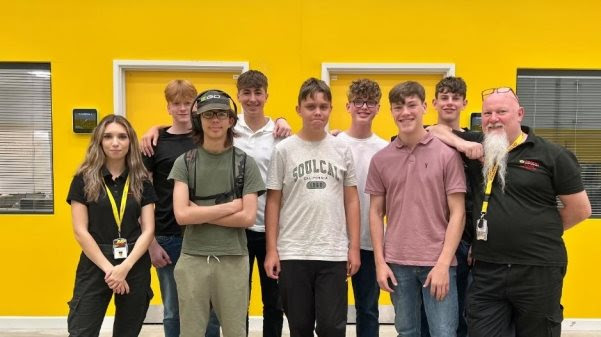
A group of seven young people aged between 14 and 16 have spent a week with leading automation experts FANUC UK, gaining valuable hands-on robotics experience as they learnt what it takes to become an automation engineer. As part of FANUC’s campaign to break down barriers to careers in engineering and build a future manufacturing talent pipeline, the company invited a select group of teenagers into its UK headquarters at Ansty Park, Coventry for five days in August for its first ever Work Experience Week.

Hara Konstantelia, a 23-year-old Technical Sales Support Engineer at FANUC was quizzed by the students and helped run the week-long course.

Hailing from a variety of nearby schools and colleges, the seven teenagers enjoyed a practical insight into the world of automation at the renowned FANUC Academy. Combining hands-on robot programming training with an introduction to project management, the group was also given access to FANUC’s portfolio of industrial robotic and automation solutions, as well as learning about the varied sectors and applications in which they are used – from aerospace and automotive to food & beverage and plastics.

In a bid to understand just what it takes to forge a successful career in robotics, the students also took part in a Q&A session with FANUC staff including Hara Konstantelia, a 23-year-old Technical Sales Support Engineer who herself joined the industry through an apprenticeship programme and helped to run the week-long course.

“I’ve enjoyed seeing the level of passion these young people have shown towards automation, and their excitement to learn new things,” Hara comments. “Having been down this route myself, supporting our work experience students on their own journey and expanding their perception of engineering has been a great experience.”

Attracting Gen Z into a career in engineering is a key aim for FANUC UK. Its Training Academy has recently achieved independent validation, allowing the company to offer accredited courses that can feed into mainstream education. FANUC’s Work Experience programme is showcasing the opportunities available within automation and manufacturing to a cohort that may never have experienced robotics first-hand before. 

“We understand the importance of giving young people the opportunity to have real-world, hands-on experience with industrial robots,” says Tony Bentham, Head of Customer Service at FANUC UK “FANUC’s Work Experience Week aims to ignite a spark in young people by showing just what it takes to forge a career in robotics, as well as giving them access to people who are successfully doing their dream job.”

Combining hands-on robot programming training with an introduction to project management, the group was given access to FANUC’s portfolio of industrial robotic and automation solutions.

For the majority of the participants, this was the first time they had used a robot and the experience was not one to be forgotten. “It’s been a really exciting experience and I’ve enjoyed it so much,” says Nathaniel Sharpe, 16. “I learnt a lot about the different types of robots produced by FANUC – from collaborative ones that you can work alongside, to some that can pick up items with a vacuum or grippers, to ones that can carry huge loads up to 2-3 tonnes. This was my first time using a robot and I thought it would be a lot harder than it actually was – programming it was surprisingly straightforward! The week I spent at FANUC really opened my eyes to the world of robotics and engineering – I’d recommend the work experience programme to anyone.” 

The success of its first ever Work Experience Week and the positive feedback from the participants has prompted FANUC to consider running similar events in the future, as Hara concludes: “Activities like this are so important as the skills required for engineering today are not always accurately represented in the media, especially on platforms aimed at younger people. I hope the students left the week inspired and with a clearer idea of what opportunities are available to them.”

www.fastloopmedia.com 

#modernplasticsindia #indianplasticmagazine #modernplasticsaward #plasticnews #modernplasticsgermany #ginujoseph #modernplastic #plasticindia  #plasticrecycling #sustainability #modernplasticsglobalnetwork #modernglobalnetwork #modernplasticsaward2023 #plasticmagazine #PlasticIndustry  #modernplasticsmiddleeast #indianmagazine #innovations #modernplasticsamerica #modernplasticsbangladesh #modernplasticsasia #modernplasticsitaly

EnEWA Research Project Aims to Unlock The Untapped Potential Of Recyclable Paper In Mixed Waste

EnEWA research project aims to unlock the untapped potential of recyclable paper in mixed waste

The world produces and consumes vast amounts of paper for a wide variety of uses. However, while the paper industry has made significant strides in increasing the sustainability of its production by increasing the recycled content of its products, there is much room for improvement. In fact, a smaller portion of paper produced than might be expected is recovered for recycling, despite separate waste collection being widespread. For example, in Germany, as much as 20% of the paper produced is not returned into the recycling value stream – and a part of this paper is discarded in mixed waste streams. 

“Regulations mandating the minimum content of recycled material in new paper products will require a significant increase in recovered paper for recycling. Even if we were to recycle all the paper collected separately with the existing process, there would not be enough to meet these targets,” explains Annika Ludes, Product Engineer at STADLER. An award-winning research initiative, the EnEWA project, is looking at a solution to fill the gap by unlocking the untapped potential of obtaining recyclable paper from the lightweight packaging, residual waste and commercial waste streams. While the project analysis is based on the paper from mixed waste streams as they are collected in Germany, the solution it is developing will be applicable, with some adaptations, to local situation in other countries. The project kicked off in December 2021 and is due to be completed in November 2024.

“Participating in the EnEWA project is important for us at STADLER. Research projects such as this help us in our search for ways to support the recycling industry as we evolve towards a circular economy,” adds Annika Ludes. “We want to drive change, build these plants to expand the sources of secondary fibers for the paper industry. We also want to work with packaging producers to design packaging that is better for recycling.”

EnEWA project: recovering paper from mixed waste streams

The members of the EnEWA project – Universität Siegen, RWTH Aachen University, LEIPA Group, PROPAKMA, TOMRA and STADLER – are developing a solution for recovering and recycling paper from the lightweight packaging, residual waste and commercial waste streams. They have set clear objectives: increase recycling rates in paper production and reduce primary energy requirements and CO2 emissions. The goal is to achieve an overall recovered paper return rate of 90% – including both separate paper collection and special collection systems, which today have a 78% return rate, and the residual, commercial and lightweight packaging streams from which barely a small part of paper is currently recovered.

The project is also looking at what can be done to create the conditions for maximizing the amount of paper returned to the recycling loop. This includes discussions with German and EU regulatory authorities with recommendations for updating waste management guidelines to improve the waste streams feeding the sorting process; communication campaigns aimed at raising awareness among consumers about the correct separation of their household waste; and collaboration with producers for the design of packaging that is better for recycling.

The task for STADLER in the project is to provide, in collaboration with TOMRA Recycling, technical solutions to extract paper from the mixed streams and sort it into different paper qualities for recycling. Alena Spies, M.Sc., Research associate at the Chair of Anthropogenic Material Cycles of RWTH Aachen University, comments: “STADLER brings its great experience in waste processing technology and plant engineering, which are of great importance for the holistic consideration of material cycles and the development of recycling processes on an industrial scale towards a circular economy. For us, its most important contribution has been the joint planning and implementation of industrial-scale sorting trials at its Test and Innovation Center.”

Industrial-scale trials at STADLER Test Center: early results are promising 

In March, STADLER completed extensive industrial-scale trials at its Test Center in Slovenia to identify and resolve the issues arising in sorting paper from lightweight packaging, residual and commercial waste streams. The sorting process begins with the income stream going through STADLER’s ST2000 ballistic separator, followed by optical sorting with TOMRA Recycling’s AUTOSORT®.

The process was tested on waste collection samples from different areas of Germany, and in different conditions that may affect the sorting process, such as wet or dirty materials. “This is important because the waste collection processes vary from country to country, but also domestically at regional level, and even on a seasonal basis. Also, waste from these streams is often dirty and may be wet. This means that the solution must have the flexibility to manage this variability,” says Annika Ludes. 

The tests have generated vast amounts of data, and the analysis is still in the early stages. The RWTH Aachen University team is examining the results of manual and sensor-based analysis of the waste streams to get a good understanding of the ballistic separator’s operation with these materials. It is analysing separation of three main streams: pure paper, separation of paper out of the plastic waste stream, and separation of plastics out of paper. 

In terms of the sorting process, the analysis so far has revealed that every paper fraction from the different waste streams has its own characteristics and that, due to its modularity and the range of possible settings, the STADLER STT2000 can be used effectively for sorting non-separated collected paper. 

Samplings made earlier in the project to analyse the material composition and paper content of the different waste streams have revealed that approximately 50% of the paper in the lightweight packaging stream could have been disposed of within the separate paper collection. This finding highlighted the need to address the waste collection processes in order to ensure a more effective separation of the streams and, consequently, higher paper recovery rates.

The project is also looking beyond the sorting process, as Alena Spies explains: “Different dissolution and stock preparation options as well as a procedure for the hygienisation of biological contamination and the separation of hazardous substances have been investigated. An additional focus is on the recovery of rejects that arise during paper recycling processes. Last year a complete recycling process have been conducted from the separation of paper and board from lightweight packaging waste till the production of new cardboard including several sorting and processing steps. In addition, the project is continuously accompanied by an ecological and economical assessment and the transfer of knowledge of the results to the paper industry. With this project, we hope to establish the developed recycling process into the paper industry to achieve a material recycling of paper and board from lightweight packaging, residual and commercial waste.”

Environmental benefits include potential savings of 270,000t CO2 

The paper industry has already improved its carbon footprint through optimization of their plants and reducing the energy requirements in the reprocessing of recovered paper. By redirecting the paper from the residual, commercial and lightweight packaging streams into the recycling loop, the process developed by the EnEWA project has a potential according to initial calculations to save some 270,000t of CO2 a year. 

http://www.w-stadler.de/

#modernplasticsindia #indianplasticmagazine #modernplasticsaward #plasticnews #modernplasticsgermany #ginujoseph #modernplastic #plasticindia  #plasticrecycling #sustainability #modernplasticsglobalnetwork #modernglobalnetwork #modernplasticsaward2023 #plasticmagazine #PlasticIndustry  #modernplasticsmiddleeast #indianmagazine #innovations #modernplasticsamerica #modernplasticsbangladesh #modernplasticsasia #modernplasticsitaly

Drupa Prize 2023 Awarded To Acelya Bakir

Drupa Prize 2023 Awarded To Acelya Bakir

For her outstanding doctoral thesis historian Acelya Bakir receives the drupa Prize 2023. With this award drupa honours and promotes outstanding young academics in the Philosophical Faculty at Heinrich Heine University Düsseldorf every year.

The drupa Prize comes with prize money of EUR 6,000 and was presented by Wolfram N. Diener, President & CEO of Messe Düsseldorf, Erhard Wienkamp, Managing Director of Messe Düsseldorf,  Dr Martin Goch, Chancellor of Heinrich Heine University Düsseldorf and Dr Frank Meier, Dean of Studies at the Faculty of Philosophy of Heinrich Heine University Düsseldorf, at a ceremony on 28 August 2023 at the Messe Dusseldorf.Dr. Andreas Pleßke, Spokesman of the Board at Koenig & Bauer and Chairman of the drupa committee, congratulated the prize winner on her performance in a personal video message.

Innovative access to the topic

The doctoral thesis rated summa cum laude bears the title “Sehen, Hören, Mitmachen: Die mediale Inszenierung der Moskauer Schauprozesse und die Mobilisierungskampagne in der Sowjetunion, 1936-1938” (See, Hear and Join in: The Media Staging of the Moscow Show Trials and the Mobilisation Campaign in the Soviet Union, 1936-1938” and was supervised by Prof. Dr. Beate Fieseler. Acelya Bakir pursued a particularly innovative approach in her studies: she placed the Moscow show trials centre stage as a mobilisation campaign for the first time and, hence, not only their staging in the court room but also the accompanying media mediation for the local population.

Bakir’s thesis provides not only important and innovative insights into the political communication and mobilisation during the Stalin era but also many an important impulse for better understanding the present, notes the Philosophical Faculty at Heinrich Heine University for her drupa Prize nomination.

drupa Prize 23 E. Wienkamp, Prof. Dr. Beate Fieseler (Institute for Historical Sciences HHU), Acelya Bakir (Prize winner), Sabine Geldermann, Wolfram N. Diener

 About the drupa Prize winner 2023

Acelya Bakir was born in Krefeld in 1985. From 2005 to 2008 she successfully completed her Bachelor studies in History and German studies at Heinrich Heine University Düsseldorf obtaining her Master’s Degree in History in 2012. The same year she started her PhD studies in Eastern European History at the Philosophical Faculty and completed her doctoral thesis “Sehen, Hören, Mitmachen: Die mediale Inszenierung der Moskauer Schauprozesse und die Mobilisierungskampagne in der Sowjetunion, 1936-1938” in February 2022 after a successful viva examination earning her an overall grade of summa cum laude. Acelya Bakir lives and works in Berlin. She is a scientific assistant at the Foundation “Haus der Geschichte der Bundesrepublik” and is press liaison and coordinates public relations for a member of the German Parliament part time.

About the drupa Prize

Every year since 1978, Messe Düsseldorf has presented the drupa Prize with prize money worth EUR 6,000 to an outstanding doctoral thesis produced in the Philosophical Faculty of Heinrich Heine University Düsseldorf. The prize money serves to promote the publication and dissemination of an excellent thesis in the humanities. The drupa Prize is awarded each year by an expert panel composed of the President and Vice-President of Heinrich Heine University Düsseldorf (HHU), the Chairman of the drupa committee and the President & CEO of Messe Düsseldorf.

www.drupa.de.

#modernplasticsindia #indianplasticmagazine #modernplasticsaward #plasticnews #modernplasticsgermany #ginujoseph #modernplastic #plasticindia  #plasticrecycling #sustainability #modernplasticsglobalnetwork #modernglobalnetwork #modernplasticsaward2023 #plasticmagazine #PlasticIndustry  #modernplasticsmiddleeast #indianmagazine #innovations #modernplasticsamerica #modernplasticsbangladesh #modernplasticsasia #modernplasticsitaly

Unlocking Efficiency And Precision In Blown Film Production: The DRJ IBC Control System

0

Unlocking Efficiency And Precision In Blown Film Production: The DRJ IBC Control System

Not All Internal Bubble Cooling Systems are Created Equal…

In the blown film extrusion industry, the Internal Bubble Cooling (IBC) system plays a pivotal role in line performance. Yet, not all IBC systems deliver on the crucial aspects of production rates, width tolerance, and bubble stability. To bridge this gap, D.R. Joseph offers the market’s best: a superior IBC system designed to transform operations regardless of line complexity or manufacturer.

Unmatched Performance for Every Line

The latest 3rd Generation IBC system from D.R. Joseph redefines excellence across the spectrum, enhancing production rates by 15

– 40% when integrated into blown film lines. It outshines competitors by offering an 8 – 15% boost in production, setting a new standard in rate and layflat tolerance improvements. This leap

is achieved through automated solutions driven by proprietary control algorithms and patented processes, built on from over 30 years of experience.


Automated Precision: Elevating Efficiency

What truly sets apart the DRJ IBC Control System is its comprehensive automation. It empowers operators, both novice and seasoned, to achieve peak performance effortlessly. This system handles the toughest tasks, allowing seamless adaptation to a wide array of materials, from HDPE to exotic variants, ranging from .3 mil to 100 mil.

Reliability Beyond Borders

Reliability is not just a promise; it’s embedded in the system’s DNA. Configurable to suit diverse environmental conditions globally, the DRJ IBC Control System thrives on flexibility and sturdy components, ensuring uninterrupted operations wherever it’s deployed.

Features Redefining Standards

The DRJ IBC Control System boasts an arsenal of patented features:

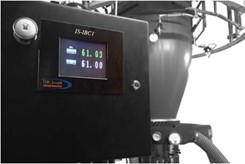
  • Automatic Blower Balance: Maintains airflow balance, detects leaks, and ensures consistent Standard Operating Procedures (SOP).
  • Automatic Layflat Control: Enables “set it and forget it” size changes, minimizing waste and optimizing material
  • Automatic Cage Control: Streamlines size changes and operational consistency, reducing scrap during transitions.
  • Automatic Valve Calibration: Ensures peak performance akin to brand‐new operations, expediting
  • Bubble Break Detection/Extruder Stop: Prevents downtime and damage by detecting and mitigating bubble breaks swiftly.

Meeting Sustainability Objectives

With precision IBC Control, resin savings and waste reduction are directly achievable, aligning with sustainability goals. In these instances, production typically generates a width larger than necessary, necessitating edge trim to meet the target width. However, integrating width control systems not only minimizes edge trim but also represents a profitable and measurable investment in sustainable production by curbing resin consumption.

The advantages of width control are multifaceted, notably reducing resin usage by eliminating or minimizing sheeting trim, automating width control during start‐ups and job change‐overs to slash waste production, averting order returns due to width deviations, and preventing die drool by enabling extruder‐stop when the system detects no bubble.

Post‐Consumer Recyclete (PCR) multiplies the challenge of keeping a consistent width and stable bubble due to contaminants, variation in quality and material composition. These inconsistencies add challenges to holding tight layflat. The high‐speed IBC control from D.R. Joseph addresses this significant challenge, making sustainable production with PCR a profitable option.

To learn more about D.R. Joseph IBC Control Systems, please visit: https://www.drjosephinc.com/internal‐bubble‐cooling/ 

#modernplasticsindia #indianplasticmagazine #modernplasticsaward #plasticnews #modernplasticsgermany #ginujoseph #modernplastic #plasticindia  #plasticrecycling #sustainability #modernplasticsglobalnetwork #modernglobalnetwork #modernplasticsaward2023 #plasticmagazine #PlasticIndustry  #modernplasticsmiddleeast #indianmagazine #innovations #modernplasticsamerica #modernplasticsbangladesh #modernplasticsasia #modernplasticsitaly  #cortecadvertising

ZAHORANSKY at Fakuma 2023: Producing plastic syringes with screw threads cost-efficiently and safely Manufacturing luer-lock from plastic instead of glass – with the ZAHORANSKY Z.SONIC

ZAHORANSKY at Fakuma 2023: Producing plastic syringes with screw threads cost-efficiently and safely Manufacturing luer-lock from plastic instead of glass – with the ZAHORANSKY Z.SONIC

Even a good 150 years after their invention, the standardized luer connection systems for infusions and injections are still frequently made of glass. At Fakuma 2023 (Hall A2, Stand A2-2309), ZAHORANSKY will be exhibiting the associated Z.SONIC 16 luer-lock syringe injection mold from the PRIMA Z syringe production system, which can be used to manufacture luer-locks from plastic instead of glass. The advantages of the plastic versions are clear: plastic products are significantly more robust and easier to clean, both in handling and storage, compared to their glass counterparts. In addition, syringes made of plastic impress with their pH-neutral surface, a significantly lower heavy metal content, and greater freedom in product design. This results in increased shelf life for highly sensitive medications.

Safe and cost-effective manufacturing
The PRIMA Z production line makes it possible to produce plastic syringes with screw threads – the so-called Luer-Lock – extremely cost-efficiently and safely. Disposable needles, for example, can be screwed on easily afterwards and do not have to be injected during production. Syringes with volumes between 0.5 and 10 ml can be produced as standard, but special sizes of up to 50 ml are also possible. The material can also be varied: ZAHORANSKY injection molds easily process various technical polymers such as COC or COP. Based on customer-specific product designs, a cycle time of 15 to 17 seconds can be achieved on the production lines using the no-human-touch process. In the 16-cavity injection mold version, the Z.SONIC mold is thus capable of producing up to 3,840 parts per hour.

www.zahoransky.com

#modernplasticsindia #indianplasticmagazine #modernplasticsaward #plasticnews #modernplasticsgermany #ginujoseph #modernplastic #plasticindia  #plasticrecycling #sustainability #modernplasticsglobalnetwork #modernglobalnetwork #modernplasticsaward2023 #plasticmagazine #PlasticIndustry  #modernplasticsmiddleeast #indianmagazine #innovations #modernplasticsamerica #modernplasticsbangladesh #modernplasticsasia #modernplasticsitaly

Performance Review Institute (Pri) Launches Performance360 A New Customized Critical Manufacturing And Quality Management Service

Performance Review Institute (Pri) Launches Performance360  A New Customized Critical Manufacturing And Quality Management Service 

Performance360 is a new service from PRI for companies seeking to improve business performance by leveraging PRI knowledge, expertise, and technical resources.

Performance360 provides customized services to help organizations worldwide optimize their internal systems and manage their supply chain. It offers internal audits, supply chain audits, audit question development, training and personnel qualification needs assessment, and Non-Conformance Report (NCR) resolution. 

Bob Lizewski, Vice President of Performance360, said: “I am delighted to announce the launch of Performance360. This is an exciting development which will help companies meet specific performance and risk management objectives, while enabling them to probe deeper into their global supply chains.

“Performance360 has the most experienced auditors in the world, with an unrivalled knowledge and understanding of critical manufacturing processes, and quality management systems. We look forward to collaborating with companies worldwide to support and augment their existing capabilities, towards achieving business success.” 

Industries covered by Performance360 include, but are not limited to, aviation, defense and space; medical devices and pharmaceuticals; mobility and transportation; power generation and distribution; oil and gas, marine, and mining.

https://p-r-i.org/performance360/

#modernplasticsindia #indianplasticmagazine #modernplasticsaward #plasticnews #modernplasticsgermany #ginujoseph #modernplastic #plasticindia  #plasticrecycling #sustainability #modernplasticsglobalnetwork #modernglobalnetwork #modernplasticsaward2023 #plasticmagazine #PlasticIndustry  #modernplasticsmiddleeast #indianmagazine #innovations #modernplasticsamerica #modernplasticsbangladesh #modernplasticsasia #modernplasticsitaly  #cortecadvertising

Covestro And Uniplan Receive Red Dot Design Award

Covestro And Uniplan Receive Red Dot Design Award 

  • Combined digital and real world experience
  • Communicative approach and motto “Crafting Connections With You”
  • Prominent lecture program with live broadcasting
  • Multiple use of stand construction made of more sustainable materials
  • “Best of the Best” interzum Award for Arfinio technology

Covestro and the Cologne-based agency Uniplan are winners of this year’s Red Dot Design Award in the category “Digital Solutions – Trade Fair”. Both partners are being honored for an integrated digital and real-world experience they developed on the occasion of the leading plastics trade fair, K 2022. It is based on three pillars: the digital platform SPACE, the integrated booth concept STAGE including a lecture program and the researcher portrait series MEET THE INNOVATORS. 

“With our multi-layered campaign, we are pursuing the goal of establishing contacts with many partners to advance the industry on its path to climate neutrality and the circular economy,” explains Dr. Christian Haessler, one of the two project managers for K 2022 at Covestro. “This communicative 360° approach was also expressed in the motto of our appearance at K 2022, ‘Crafting Connections With You’.” The Red Dot label has established itself internationally as one of the most coveted seals of quality for good design.

Rüdiger Maeßen, CEO Europe at Uniplan, is equally positive: “The good co-creative collaboration and the innovative concept were fundamental to the success of this holistic campaign. Together with Covestro, we have driven the circular economy agenda in the industry by creating an authentic exchange on multiple channels. Therefore, we are even more pleased that the sustainable campaign approach not only convinced the global target audience, but also the jury of the Red Dot Award.”

Creating connections with digital platform

In order to connect with target groups around the world at an early stage and offer them a holistic, long-term experience as a “home base,” Covestro and Uniplan designed a digital event platform called “SPACE.” It went live several months before the start of the trade show and provided information about planned activities at the booth and the company’s major highlight topics:

  • Crafting Circular Economy
  • Crafting Electrification
  • Crafting Sustainable Living
  • Crafting Smart Designs

 A stage for current trends 

These Topic Clusters also formed the basis for the second pillar – the integrated STAGE booth concept. As the other Covestro project manager Dr. Christopher Stillings explains, “Not only the exhibits and topic clusters, but also the wide-ranging lecture program in the central Talks Arena were tailored to these topics. Inspiring guests from well-known companies and universities – all actors in their respective fields – captivated the audience with keynotes on current trends and technologies and during panel discussions. Not only booth visitors participated, but also viewers around the world who followed the live broadcasts via social media.”

Another highlight is the Color Material Finish (CMF) Sample Library, a collection of plastic samples that makes materials visible and tangible. Part of Uniplan´s and Covestro’s STAGE concept is that the booth – or parts of it – can be used repeatedly for further exhibitions. Sustainability aspects and the reduction of CO2 emissions were also at the forefront in the selection of materials for the trade show appearance itself. The success proves both partners right: Thus, the quality of contacts was significantly improved compared to K 2019, and a positive response developed both externally and internally over a longer period of time.

Innovators in the spotlight

While innovative developments are showcased and (hopefully) get the attention they deserve, the researchers behind them are often not visible. In the video series “Meet The Innovators” Covestro gives a voice to some of them and their inventions – see the blog post. They were introduced to a larger audience at K 2022, but prominent guests continue to discuss important innovations and technologies in the “Meet The Innovators” livestream series.

Many inspiring encounters at K 2022 have already led to a large number of new partnerships, technologies and material solutions. They form a valuable basis for developments that Covestro plans to showcase at the next major trade show appearance at K 2025. The company’s motto may be different then – but the message remains that partnerships are the key to achieving a climate-neutral and circular economy: “Crafting Connections With You”.

A Red Dot Award rarely comes alone

Back in May 2023, Covestro and its partner Accesso Dynamics were honored with an award offered by Red Dot and Koelnmesse. At the furniture supplier trade show interzum 2023, they received the “Best of the Best” interzum Award for their Arfinio technology. This technology, first presented at K 2022, enables products with complex but seamless shapes. The development also contributes to sustainability, as the products are partly made from bio-based raw materials, are repairable and can be mechanically recycled at the end of their useful life.

Covestro and Uniplan were also nominated for the Heavent Award in the “Forum, Summit, Congress, Fair Award” category for their communication concept for K 2022. A total of 132 projects from event, experimental and live marketing agencies as well as companies and trade fair and congress organizers were submitted for this year’s event competition.

http://www.covestro.com

#modernplasticsindia #indianplasticmagazine #modernplasticsaward #plasticnews #modernplasticsgermany #ginujoseph #modernplastic #plasticindia  #plasticrecycling #sustainability #modernplasticsglobalnetwork #modernglobalnetwork #modernplasticsaward2023 #plasticmagazine #PlasticIndustry  #modernplasticsmiddleeast #indianmagazine #innovations #modernplasticsamerica #modernplasticsbangladesh #modernplasticsasia #modernplasticsitaly

Turnkey Systems For Lsr Optics Of Led Headlights

Turnkey Systems For Lsr Optics Of Led Headlights 

Working hand in hand with DOW, ELMET has fine-tuned the manufacturing technology for the main optics of LED headlights with ADB (Adaptive Driving Beam) functionality to suit it for use with a grade of LSR specifically developed for optical applications. Consistently high part quality is ensured by a combination of ELMET’s high-precision SMARTmix TOP 7000P dosing system with the mold’s SMART shot E cold runner system, in which the needle is positioned servo-electrically when the nozzles open and close.

Turnkey Systems

ELMET helps to bring such projects to successful fruition by developing turnkey systems, drawing on its wide-ranging LSR expertise to ensure efficient material selection, its own mold-making facilities using proprietary cold runner and dosing systems and its many years of experience in optimizing and automating injection molding processes. Development times are kept short by simulation of the flow processes for mold cavity filling.

The SMARTmix TOP 7000P dosing system is the first commercially available dosing pump designed to be FDA-compliant, which ideally suits it to high-purity optical LSR grades. The volumetric meter’s high measuring accuracy of 0.0156 ml per count pulse ensures high mixing quality and thus process consistency. Virtually abrasion-free delivery also rules out any contamination of the LSR by abraded metal from the pump which would impair functionality.

ELMET’s SMARTshot E valve gate cold runner system has a compact servomotor for moving and positioning the nozzle needle for precise control of sprueless cavity filling. As a result, needle opening can be set in the µm range and the injection process can be much better balanced than is possible with stepper motor drives. And thanks to ELMET’s ability to ensure mold gaps of less than 10 µm, no flash is formed on the optical components despite the material’s very low viscosity.

Successful Collaboration Demonstrates Innovation Potential

The result of the current collaboration with DOW is a turnkey system for manufacturing ADB multiple light guide lenses from the optical LSR grade SILASTIC™ MS-5002. ELMET’s contribution included designing the sophisticated mold for injection molding the geometrically highly complex parts. The part’s volume is around 35 cm³, corresponding to a weight of approx. 37.5 g, based on the LSR’s specific density of 1.07 g/cm³. Together with the widely varying, sometimes large cross-sections, this results in challenging cycle times for LSR mass production.

ELMET has perfectly tailored the mold’s cold runners to the selected LSR grade’s viscosity and thus flow behavior, so ensuring maximum process stability and

providing uniform cooling. The mold inserts, made from a special steel alloy, were heat-treated and polished, which means that the mold surface is perfectly transferred onto the surface of the LSR part, so making it possible to meet stringent optical industry requirements for both the light guides and the outcoupling sections of the lens.

The result is an impressive demonstration of the great innovation potential arising from a combination of DOW’s optical LSR with ELMET’s processing know-how and its SMARTshot cold runner and SMARTmix dosing technology. As Development Manager Thorsten Häuser explains, “Manufacturing ADB optics is highly complex and requires everyone involved in a project to share all their experience. Working with DOW has let us considerably expand our understanding of the close interaction between optical LSR formulations, mold-making and the processing of these LSR grades by injection molding. We are convinced that our combined technical expertise in silicone chemistry, LSR processing and optics will, into the medium term, remain key to unlocking high added value along the automotive LED headlight value chain with silicone light guide lenses.” 

https://www.konsens.de/elmet

#modernplasticsindia #indianplasticmagazine #modernplasticsaward #plasticnews #modernplasticsgermany #ginujoseph #modernplastic #plasticindia  #plasticrecycling #sustainability #modernplasticsglobalnetwork #modernglobalnetwork #modernplasticsaward2023 #plasticmagazine #PlasticIndustry  #modernplasticsmiddleeast #indianmagazine #innovations #modernplasticsamerica #modernplasticsbangladesh #modernplasticsasia #modernplasticsitaly


Don’t Forget the Small Print – When Exploring Wire & Tube 2024 in Düsseldorf

Don’t Forget the Small Print – When Exploring Wire & Tube 2024 in Düsseldorf

Why printing on cables, wires and tubes requires a specialist:
Tuttlingen Between 15 and 19 April, Düsseldorf is going to be full of wire & tube specialists. People who know the challenges facing the wire & tube industries, who understand the emerging technology and customer preferences, and have identified what it takes to succeed in this competitive world.

But you will only find one specialist wire and tube printer: LEIBINGER.
Printing on wires and tubes is a small but essential part of production – and it takes specialist skills. Here’s why.

LEIBINGER offers coding and marking
solutions for the cable, wire and tube
industry.
Source: Paul Leibinger GmbH & Co. KG

Printers need to work fast. Very fast.:
We don’t need to tell you that wire and tube manufacturing processes work at high speed. But you may not know that many printers can’t keep up with those speeds. As a specialist, LEIBINGER offers printers like the JET Rapid Wire that can print up to a kilometer of wire every minute.

Wires & tubes are difficult to print on.:
The print area is small. And convex. And sometimes at a high temperature straight out the extrusion unit. What’s more, dark surfaces require a special kind of opaque pigmented ink to make text readable and compliant. But these are the constraints that LEIBINGER is used to and our printers deal with every day.

Examples of marking imprints on extrusion products with LEIBINGER CIJ printers. Source: Paul Leibinger GmbH & Co. KG

Wire and tube manufacturers need reliability:
Every meter of wire or tube needs to be perfect – and perfectly printed. LEIBINGER is renowned for its reliability and build quality, which ensures every wire or tube you produce is compliant with all marking regulations.

You need to avoid downtime:
Many printers get clogged when ink dries – which means your production line has to stop for cleaning. LEIBINGER’s unique printhead technology prevents air from getting to the ink when not in use. No clogging, no expensive downtime. One customer told us they used to spend 2-3 hours a day cleaning printers. Now they use LEIBINGER – and spend all day making cables.You need to increase sustainability and decrease costs:
Wire & tube manufacturers are under pressure to be both leaner and greener. Which is why LEIBINGER printers use less solvent and less power. To make you more sustainable and keep your costs down. LEIBINGER build quality also means zero maintenance costs for five years – with the latest printer IQJET.

Meet us in Hall 9 at Booth F55:
Why not come and talk print with LEIBINGER in Düsseldorf? We know all about the wire and tube industry – but if we don’t know you yet, we would very much like to meet.
www.leibinger-group.com


#modernplasticsindia #indianplasticmagazine #modernplasticsaward #plasticnews #modernplasticsgermany #ginujoseph #modernplastic #plasticindia  #plasticrecycling #sustainability #modernplasticsglobalnetwork #modernglobalnetwork #modernplasticsaward2023 #plasticmagazine #PlasticIndustry  #modernplasticsmiddleeast #indianmagazine #innovations #modernplasticsamerica #modernplasticsbangladesh #modernplasticsasia #modernplasticsitaly  #cortecadvertising

Photochemical Etching Drives Innovation in the Semiconductor Industry

Photochemical Etching Drives Innovation in the Semiconductor Industry

Micrometal & next generation photo-chemical etching (PCE) process plays a pivotal role in driving innovation within the semiconductor industry, particularly through the production of advanced lead frames. Lead frames are crucial components in semiconductor devices, serving as the backbone for mounting and interconnecting the silicon chip to other electronic components or printed circuit boards (PCBs). These frames not only provide mechanical support but also facilitate electrical connectivity, acting as a bridge between the intricate circuitry of the semiconductor chip and the external environment.

Jochen Kern, Head of Sales and Marketing at micrometal says, “The semiconductor industry constantly seeks ways to enhance device performance, reduce size, and increase functionality, and this is where micrometal & expertise in PCE comes into play. Our precision manufacturing process enables the creation of highly intricate and complex lead frame designs that traditional methods cannot achieve. By utilising advanced PCE, micrometal can produce lead frames with finer pitches, smaller features, and unique geometries, which are essential for the next generation semiconductor devices.” PCE offers several advantages over conventional machining techniques, including the ability to produce components without inducing stress or altering material properties. This aspect
is particularly important for semiconductor applications where the integrity of the material can significantly impact device performance. In addition, the process allows for high precision and consistency across large production volumes, essential for meeting the stringent quality standards of the semiconductor industry.

Kern continues, “Innovation as stimulated by micrometal & next generation PCE process in lead frame manufacturing can manifest in various ways. For instance, it enables the development of more compact and efficient power devices, advanced sensors, and high- frequency communication modules by allowing for the miniaturisation of components and the integration of complex features. These advancements can lead to improved device reliability, enhanced performance, and greater energy efficiency, addressing the critical needs of emerging technologies such as 5G, the Internet of Things (IoT), and artificial intelligence (AI). Moreover, the flexibility of the PCE process supports rapid prototyping and customization, enabling semiconductor manufacturers to experiment with new designs and concepts more freely. This agility is crucial for accelerating the development cycle of new products and technologies, fostering innovation and maintaining competitiveness in a fast- evolving industry.”

Micrometal advanced PCE process represents a critical technological advancement for the semiconductor industry, offering a combination of precision, flexibility, and efficiency that
drives innovation. By enabling the production of lead frames and other components that meet the industry& evolving demands, this process supports the continuous miniaturization and performance enhancement of semiconductor devices. These advancements are not just technical achievements, but are instead the building blocks of the future, enabling new technologies and applications that will transform the world.
www.micrometal.de


#modernplasticsindia #indianplasticmagazine #modernplasticsaward #plasticnews #modernplasticsgermany #ginujoseph #modernplastic #plasticindia  #plasticrecycling #sustainability #modernplasticsglobalnetwork #modernglobalnetwork #modernplasticsaward2023 #plasticmagazine #PlasticIndustry  #modernplasticsmiddleeast #indianmagazine #innovations #modernplasticsamerica #modernplasticsbangladesh #modernplasticsasia #modernplasticsitaly  #cortecadvertising