Tuesday, July 7, 2026
spot_img
Home Blog Page 141

Hinton Pulp Mill Acquisition Supports Growth in Mondi’s Americas Paper Bags Business

Hinton Pulp Mill Acquisition Supports Growth in Mondi’s Americas Paper Bags Business

  • Mondi has agreed to acquire Hinton Pulp mill in Alberta, Canada from West Fraser Timber Co. Ltd for USD 5 million.
  • Intention to invest a further €400 million, primarily in a new 200,000 tonne per annum kraft paper machine at the mill.
  • Customers will benefit from a fully integrated and much shorter supply chain, reducing the overall carbon footprint of Mondi’s packaging products in the region.

Mondi plc (Mondi), a global leader in the production of sustainable packaging and paper, has agreed to acquire the 250,000 tonne per annum Hinton Pulp mill in Alberta, Canada, from West Fraser Timber Co. Ltd (West Fraser) for a total consideration of USD 5 million. As part of the transaction, Mondi will enter into a long-term partnership with West Fraser to access local, high-quality fibre from a well-established wood basket.

The intention, subject to pre-engineering and permitting, is to invest €400 million in the expansion of Hinton, primarily for a new 200,000 tonne per annum kraft paper machine, anticipated to be operational from the second half of 2027. The acquisition of the mill, and investment in the paper machine, will fully integrate operations in the Americas and enable Mondi to secure the long-term supply of high quality, cost competitive kraft paper into its network of 10 paper bags plants in the region, better positioning Mondi to support the growing market demand for industrial and mailer bags.

Customers will benefit from a fully integrated and much shorter supply chain reducing the carbon footprint of Mondi’s packaging products in the region. The kraft paper produced at Hinton will have the highest quality and strength parameters, which, in combination with Mondi’s expertise, will meet customer requirements for sustainable packaging solutions as paper is increasingly being used for packaging across the Americas.

Commenting on the acquisition, Andrew King, Mondi Group CEO, said: “Strategically, we are focused on investing to support the growing market demand for our sustainable packaging products, while delivering attractive mid-teen returns through cycle. The acquisition of Hinton is an excellent opportunity for us to secure locally produced kraft paper for our bags customers, helping to meet the current and anticipated future growth in demand for industrial and mailer bags in the Americas. This acquisition will also enable us to further strengthen our position as the global market leader in the production of kraft paper and paper bags.

“We are delighted to be making this investment in Canada and look forward to working with Hinton colleagues, West Fraser as a long-term partner, and other local stakeholders towards improving the mill’s environmental footprint and securing its sustainable future.

The acquisition is subject to customary regulatory clearance and is expected to close towards the end of 2023.

www.mondigroup.com


#modernplasticsindia #plasticmagazine #indianmagazine #indianplasticmagazine #modernplasticsaward #ginujoseph #modernplastic #plasticindia #plasticnews #plasticrecycling #modernplasticsglobalnetwork #modernglobalnetwork #modernplasticsaward2023 #PlasticIndustry #modernplasticsgermany #modernplasticsmiddleeast #modernplasticsamerica #modernplasticsbangladesh #modernplasticsasia #modernplasticsitaly #gneuss #mondigroup

Westfalia Fruit Group Welcome New Chair of the Board

Westfalia Fruit Group Welcome New Chair of the Board

Westfalia Fruit Group, the global avocado expert, is proud to announce that Dr Khotso Mokhele has been appointed as the new Chair of the Board of Westfalia Fruit International and its parent company, HMH Group.

Dr Mokhele joined the Board of the HMH Group as a non-executive director in 2013 and is the founder of the Academy of Science of South Africa and the National Research Foundation. Dr Mokhele is also President of the Hans Merensky Legacy Foundation, which was established 74 years ago to promote and assist in the development of natural resources within South Africa and its neighbours through research, experimentation and demonstration supported by scientific knowledge.

Dr Mokhele’s role in science is recognised internationally, he has served as a Special Advisor to two Ministers of Science and Technology in South Africa and has also represented South Africa on the executive board of UNESCO.

Dr Mokhele adds, “I would like to thank the Boards of the HMH Group and Westfalia Fruit International for their confidence in appointing me as the new Chair of both Boards. We have ambitious plans for the future, to continue positively developing the global avocado industry for the long term supported by research, innovation and commitment of our Westfalia colleagues”.

www.westfaliafruit.com


#modernplasticsindia #plasticmagazine #indianmagazine #indianplasticmagazine #modernplasticsaward #ginujoseph #modernplastic #plasticindia #plasticnews #plasticrecycling #modernplasticsglobalnetwork #modernglobalnetwork #modernplasticsaward2023 #PlasticIndustry #modernplasticsgermany #modernplasticsmiddleeast #modernplasticsamerica #modernplasticsbangladesh #modernplasticsasia #modernplasticsitaly #gneuss #westfaliafruit

Archroma Wins Four Top Accolades for Digital and Dye Solutions at the Just Style 2023 Excellence Awards

Archroma Wins Four Top Accolades for Digital and Dye Solutions at the Just Style 2023 Excellence Awards

Archroma, a global leader in specialty chemicals towards sustainable solutions, has won several major accolades at the Just Style 2023 Excellence Awards:

  • Business Expansion – Digital Platform award: Color Atlas online library
  • Innovation – Dyes award:
  • FiberColors
  • Diresul Evolution Black liq
  • NOVACRON Atlantic EC-NC

The awards recognize the breadth of Archroma innovation and the company’s contribution to sustainability across the textile sector.

“Archroma’s history is one of constant innovation. We have always believed that collaboration and continuous improvement will drive the textile and apparel industry forward to a more sustainable and prosperous future,” Dhirendra Gautam, Vice President, Marketing and Strategy, Textile Effects Division, Archroma said. “We are honored to be recognized in the Just Style Excellence Awards and committed to continuing to make a difference for our customers and the consumers and communities they serve.”

Digital Platform Award for The Color Atlas by Archroma
The industry’s largest library of colors for cotton and polyester, The Color Atlas by Archroma empowers fashion designers and stylists with off-the-shelf color inspiration and the ability to quickly and reliably execute their design intent with products that meet their desired sustainability profile and comply with international eco-standards.

All 5,760 Color Atlas color references are available in Adobe Swatch Exchange file format (.ase) so they can be uploaded to popular design software and implemented in production anywhere in the world with just a few clicks. Each color is available as a physical color standard that includes precise digital data and access to expert technical support around the world.

Innovation Awards for Dyeing Breakthroughs
Archroma was also recognized for its innovation in dye technology with three Just Style Excellence Awards.

Archroma’s revolutionary FiberColors technology was awarded for helping move the industry towards a circular economy. Synthesized with a minimum 50% textile waste based raw material, FiberColors transforms pre- and post-industrial fashion and textile waste into gorgeous upcycled colors – allowing brands to color their new collections with their pre-loved collections.

Diresul Evolution Black liq, based on the company’s latest cutting-edge synthesis technology, has significant advantages over traditional sulfur black including large reductions in the amount of water needed in dye synthesis and a unique shade and wash-down effect when compared with existing black denim. It was recognized for the outstanding revolution it brings to black denim.

Novacron Atlantic EC-NC won its Just Style Excellence Award for addressing mill challenges with the industry’s first blue element to deliver chlorine- and nitrogen oxide (NOx)-fastness alongside lightfastness. Based on a patented dye molecule, it offers a trouble-free way to produce more sustainable cotton casual wear and home textiles that look as good as new for longer.

The Just Style Excellence Awards celebrate the top achievements and innovations in the global textile and apparel sector to encourage companies and people to pursue excellence and drive positive change.

www.archroma.com


#modernplasticsindia #plasticmagazine #indianmagazine #indianplasticmagazine #modernplasticsaward #ginujoseph #modernplastic #plasticindia #plasticnews #plasticrecycling #modernplasticsglobalnetwork #modernglobalnetwork #modernplasticsaward2023 #PlasticIndustry #modernplasticsgermany #modernplasticsmiddleeast #modernplasticsamerica #modernplasticsbangladesh #modernplasticsasia #modernplasticsitaly #gneuss #archroma

Mondi and Easy2cool Freshen Up the Ecommerce Market

Mondi and Easy2cool Freshen Up the Ecommerce Market

  • Mondi teams up with easy2cool to replace unnecessary plastic for insulation packaging dedicated to eCommerce.
  • Mondi’s FunctionalBarrier Paper wraps paper-based insulation material to safely ship frozen and chilled food products.
  • eCommerce customers can replace both the plastic and polystyrene layer with paper, providing a recyclable solution.

Mondi, a global leader in sustainable packaging and paper, has helped easy2cool, a specialist in sustainable, passive cooling solutions, create a new eCommerce paper packaging solution for fresh and frozen food.

easy2cool has invented a paperfloc Eco-Liner bag that contains shredded recycled paper to insulate cold products, keeping contents frozen or chilled for up to 48 hours. Prior to working with Mondi, the outer layer around the insulation material consisted of mono-PE. By collaborating closely with Mondi, easy2cool has been able to replace the mono-PE layer with Mondi’s recyclable FunctionalBarrier Paper.

This development means that easy2cool’s customers can opt to deliver their goods in responsibly sourced packaging created from renewable resources, in the form of insulated pouches or liners within a corrugated box. Both options have been certified recyclable by cyclos-HTP and are easy to dispose of in existing paper recycling streams throughout Europe.

Mondi’s FunctionalBarrier Paper ensures that no condensation water – naturally occurring during the insulation process – reaches the insulation material where it could compromise its integrity. It also seals the packaging, offering a strong, shock absorbent outer layer to keep the contents safe.

Marco Knobloch, Founder and General Manager of easy2cool, says: “We have trialled a number of different barrier papers, but chilled and frozen products have quite specific requirements and Mondi’s FunctionalBarrier Paper meets all our requirements. Customers using the corrugated box can save up to 70% of the costs associated with the previous option of a polystyrene box, thanks to the reduced storage space used by the new foldable solutions. Another solution in our portfolio is combining a Mondi corrugated box with paperfloc insulation and our EasyAkkus product, to make a disposable cooler box that delivers reliable cooling for four days. Perfect for festivals.”

Thomas Lunz, Industry Group Manager Functional Paper, Mondi adds: “Shipping fresh and frozen food products effectively and sustainably has always been a challenge. By using our FunctionalBarrier Paper, easy2cool can work towards its targets of using resources efficiently to deliver the protection of temperature-sensitive goods anytime, anywhere. While the original application was developed for fresh and frozen food, the solution can also be used for pet food, cosmetics and pharmaceuticals.”

www.mondigroup.com


#modernplasticsindia #plasticmagazine #indianmagazine #indianplasticmagazine #modernplasticsaward #ginujoseph #modernplastic #plasticindia #plasticnews #plasticrecycling #modernplasticsglobalnetwork #modernglobalnetwork #modernplasticsaward2023 #PlasticIndustry #modernplasticsgermany #modernplasticsmiddleeast #modernplasticsamerica #modernplasticsbangladesh #modernplasticsasia #modernplasticsitaly #gneuss #mondigroup

Origin Materials and Husky Achieve Commercialization Milestone for Advanced Packaging

Origin Materials and Husky Achieve Commercialization Milestone for Advanced Packaging

  • Recyclable PET polymer incorporating FDCA successfully processed into preforms using Husky’s commercial-scale injection molding equipment and subsequently bottles
  • Novel hybrid polymer “PET/F” expected to deliver enhanced performance compared with traditional PET plastic and have up to 100% bio content

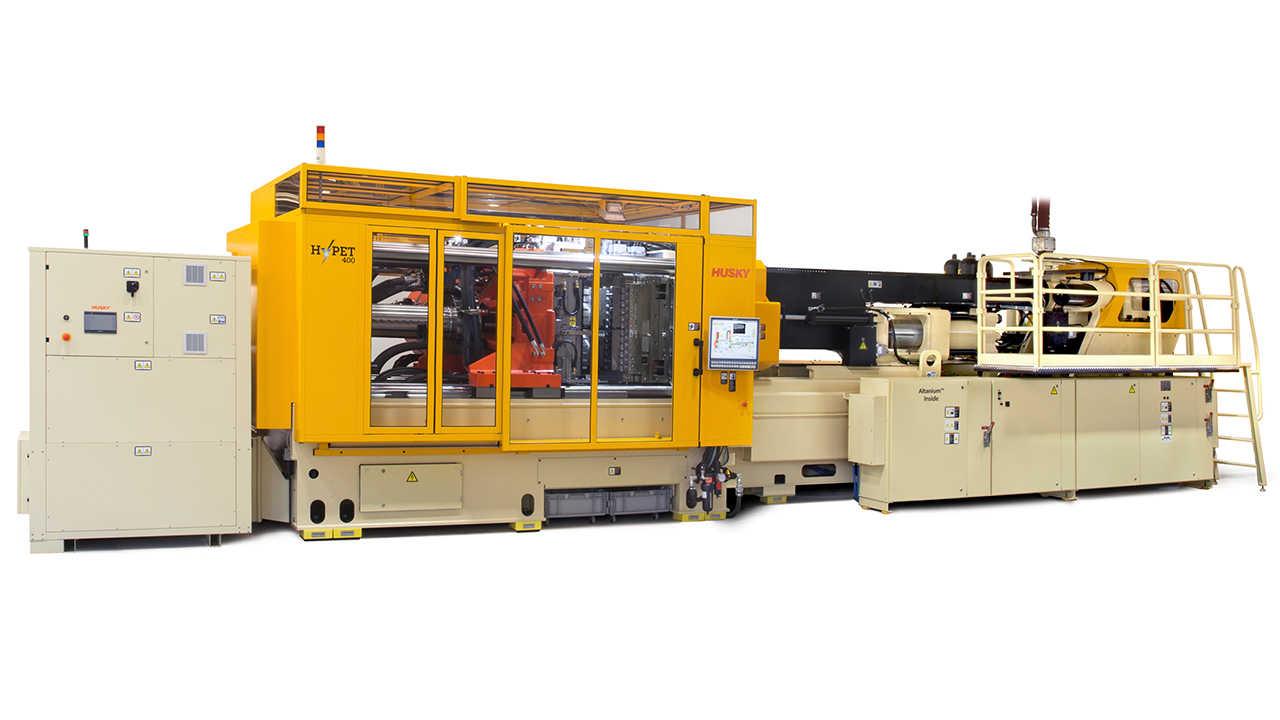
Origin Materials, Inc. (“Origin” and “Origin Materials”) (NASDAQ: ORGN, ORGNW), a leading carbon negative materials company with a mission to enable the world’s transition to sustainable materials, and Husky Technologies (“Husky”), a pioneering technology provider enabling the delivery of essential needs to the global community, announced a milestone in the commercialization of PET (polyethylene terephthalate) incorporating the sustainable chemical FDCA (furandicarboxylic acid) for advanced packaging and other applications.

Origin successfully polymerized the bio-based sustainable chemical FDCA into the common recyclable plastic, PET, and Husky molded the resulting “PET/F” hybrid polymer into preforms that were then blown into bottles. The companies used Husky’s injection molding technologies and manufacturing equipment, a commercial manufacturing-scale level of processing demonstrating the ability of PET/F, a polymer made with FDCA, to be integrated into existing PET production systems.

Origin expects to develop and sell a family of 100% bio-based, low-carbon PET/F polymers offering full recyclability and superior performance compared with traditional 100% petroleum-derived PET. Origin anticipates that PET/F will offer “tunable” performance, with properties like enhanced mechanical performance and superior barrier properties enabling longer shelf life controlled by adjusting manufacturing conditions and the quantity of FDCA copolymer.

This innovation demonstrates a pathway for the drop-in market adoption of FDCA to produce superior polymers cost-effectively from biomass using Origin technology. Origin expects to enable the production of FDCA, PEF (polyethylene furanoate), and PET/F at commercial scale using its patented technology platform, which turns the carbon found in sustainable wood residues into useful materials, while capturing carbon in the process.

“This is a key moment in the commercialization of cost-effective, low-carbon FDCA and PEF and the development of next-generation sustainable polymers generally. We believe these materials have the power to transform plastics and the material economy,” said John Bissell, Co-Founder and Co-CEO of Origin Materials. “We are pleased to work with Husky, a trusted leader in injection molding technologies and polymer processing development, to achieve this performance milestone, showing the ready processibility of our innovative hybrid polymers using Husky’s commercial-scale injection molding equipment. This is a major milestone in our effort to help transition the world to sustainable materials.”

“Driving sustainability through innovation is at the core of how Husky has been leading the way in enabling the circular economy of plastics,” said John Galt, CEO of Husky Technologies. “Preserving and protecting what matters, in even more sustainable ways is foundational to everything we do at Husky. Our collaboration with Origin Materials is an exciting example of combining material innovation with state-of-the-art polymer processing technologies.”

FDCA is a chemical building block with diverse applications including polyesters, polyamides, polyurethanes, coating resins, and plasticizers. FDCA is also the precursor for the next-generation sustainable polymer PEF (polyethylene furanoate). By combining FDCA with PET, Origin has produced PET/F, a “tunable” hybrid polymer offering performance enhancements and full recyclability.

PEF, another product derived from FDCA, offers an attractive combination of sustainability and performance benefits for packaging. Origin’s PEF is expected to be 100% bio-based, fully recyclable, have attractive unit economics, and offer a significantly reduced carbon footprint, with superior strength, thermal properties, and barrier properties compared to today’s widely used petroleum-based materials.

For more information, visit www.husky.co


#modernplasticsindia #plasticmagazine #indianmagazine #indianplasticmagazine #modernplasticsaward #ginujoseph #modernplastic #plasticindia #plasticnews #plasticrecycling #modernplasticsglobalnetwork #modernglobalnetwork #modernplasticsaward2023 #PlasticIndustry #modernplasticsgermany #modernplasticsmiddleeast #modernplasticsamerica #modernplasticsbangladesh #modernplasticsasia #modernplasticsitaly #gneuss #husky

100th Allrounder for H&K Müller

100th Allrounder for H&K Müller

  • New Allrounder 420 C Golden Edition
  • Machine fleet made up exclusively of Allrounders
  • Over 50 years of trusting cooperation

This year, more than 50 years of cooperation between H&K Müller GmbH & Co. KG and Arburg were crowned by the delivery of the company’s 100th machine. The hydraulic Allrounder 420 C Golden Edition is equipped with a Multilift Select handling device and produces screw-top cans as well as measuring and dosing spoons for the pharmaceutical, cosmetics and food sectors.

H&K Müller, based in Engelskirchen, Germany, manufactures plastic cans, reusable cups, measuring cups and measuring spoons, dosing aids, packaging systems as well as sustainable packaging and technical plastic injection moulded parts of various kinds. The company claims to have Europe’s largest freely accessible standard range of screw-on plastic cans and cans with snap-on lids made of plastic. Around 110 employees work in research and development, mould construction, injection moulding, customer-specific decoration using screen and embossed printing in the in-house print shop, as well as logistics.

H&K Müller supplies its products mainly to customers in the food, cosmetics, pharmaceutical, dental, veterinary, chemical and technical industries.

Successful cooperation since 1972

For more than 50 years, H&K Müller has relied exclusively on Arburg technology. Including the new hydraulic Allrounder 420 C Golden Edition, the total number of injection moulding machines in the clamping force range from 500 to 2,200 kN that the company now has in operation is 52. Many systems are equipped with Multilift handling devices to enable automated series production. In the past two years, two turnkey systems have been developed and commissioned together with Arburg. Both work successfully in automated series production, where items that previously required a lot of manpower are produced in large output quantities.

Philipp and Justus Müller from the management of H&K Müller GmbH & Co. KG are completely enthusiastic about the technology and the company’s cooperation with Arburg. “Using these systems means that the packaging process can be completely handled by the docked automation. This helps reduce the manpower required in production and allows us to run shorter cycles,” says Philipp Müller. His brother Justus Müller adds: “We appreciate the reliable and cooperative relationship with Arburg and look forward to many more years of successful cooperation.”

Recyclates on the rise

Products made from 100 per cent recycled material are also produced on the Allrounders. In addition, the company is continuously working on new recyclates and bio-based and biodegradable materials and additives. A large part of the standard range is already available in recycled, bio-based and biodegradable materials derived from a waste product of the sugar cane industry. The company is working tirelessly to be able to offer these options for all products in the future.

H&K Müller is certified four times in accordance with ISCC Plus, DIN EN ISO 9001 Quality Management, 22000 Food Safety and 50001 Energy Management.

Sustainable products, sustainable production

Resource-saving, environmentally conscious and sustainable action has been a fundamental part of H&K Müller’s corporate philosophy for many years. A balance between economic success and social responsibility has been the cornerstone of its business activities for decades – as it has been for Arburg.

H&K Müller attaches particular importance to energy and raw material efficiency in plastic injection moulding and in the production of sustainable packaging. The new production facility, which was opened in 2009, is heated almost exclusively with waste heat from production, and the increased use of electric drives also saves CO2. In this way, and by using photovoltaics, operations are almost emission-free.

For all new machine acquisitions, H&K Müller takes care to ensure a high level of energy efficiency and carries out constant energy monitoring via electricity meters on the production lines. On average, 98,000 kilograms of pre-consumer plastic material from prototype production and production waste are recycled directly in-house every year. A large part of this flows back into production for the manufacture of items that are not subject to food or pharmaceutical safety regulations. Material that cannot be used by the company itself is sold to other companies that can use it in their manufacturing processes. This creates a closed-loop system as a sustainable contribution to environmental protection and sustainability.

www.arburg.com


#modernplasticsindia #plasticmagazine #indianmagazine #indianplasticmagazine #modernplasticsaward #ginujoseph #modernplastic #plasticindia #plasticnews #plasticrecycling #modernplasticsglobalnetwork #modernglobalnetwork #modernplasticsaward2023 #PlasticIndustry #modernplasticsgermany #modernplasticsmiddleeast #modernplasticsamerica #modernplasticsbangladesh #modernplasticsasia #modernplasticsitaly #gneuss #arburg

Sabic Launches Two PP-Based, Intumescent FR Materials Well Suited for Extruding and Thermoforming Large, Complex EV Battery Pack Components

Sabic Launches Two PP-Based, Intumescent FR Materials Well Suited for Extruding and Thermoforming Large, Complex EV Battery Pack Components

SABIC, a global leader in the chemical industry, today introduced SABIC PP compound H1090 resin and STAMAX 30YH611 resin, two breakthrough materials well-suited for sheet extrusion and thermoforming that offer a unique alternative to traditional sheet metal forming, compression and injection molding, allowing customers to form large, complex structural parts.

These new products are 30 percent glass fiber-reinforced, intumescent, flame retardant (FR) materials, based on polypropylene (PP), and can be used for electric vehicle (EV) battery pack components such as top covers, enclosures and module separators. Both grades offer excellent thermal barrier properties to help delay or contain thermal runaway propagation. Furthermore, the extrusion and thermoforming of these materials offer design, system cost, inherent thermal and electrical insulation and weight advantages vs. stamped sheet metal. Compared to injection molding of thermoplastics and compression molding for thermosets, which requires expensive tooling and equipment, extrusion and thermoforming can be more cost-effective and efficient for several cases.

SABIC’s development and validation of these new materials is made possible by BLUEHERO, an initiative that supports the automotive industry’s mission to create reliable, safe and efficient EVs, with an emphasis on helping optimize structural battery components. BLUEHERO leverages, among other things, SABIC’s knowledge of and expertise in large part molding, compression molding, thermoforming and advanced injection molding.

According to Abdullah Al-Otaibi, general manager, ETP & Market Solutions, SABIC: “By providing new alternatives to traditional materials and processes, SABIC can enable customers to design and manufacture the next generation of battery components while driving down costs and gaining a competitive advantage. Our experts have helped pioneer the successful adaptation of glass fiber-reinforced materials for the extrusion and thermoforming of large, complex, structural parts. The development and validation of these novel resins showcase SABIC’s leadership in polymer technologies for vehicle electrification.”

SABIC has validated the mechanical and fire safety performance and the manufacturability of SABIC PP compound H1090 resin and STAMAX 30YH611 resin in EV battery applications with complex geometries, both in its labs and with customers. These materials not only provide new options for the replacement of sheet metal or thermosets in final applications, they can also be used to create prototypes to determine the feasibility of investing in injection molding tools.

Combining Distinct Properties

Both short glass fiber-reinforced SABIC PP compound H1090 resin and long glass fiber-reinforced STAMAX 30YH611 resin feature a distinct combination of intumescence for fire safety and balanced stiffness and ductility. Exposing these materials to vertical and horizontal flames at 1200°C for 10 minutes demonstrates excellent flame-retardant behavior. Efficient charring and intumescence keep the temperature of the reverse side of parts lower than 210°C and help prevent burn-through. Intumescence is enhanced by non-brominated/non-chlorinated FR that meets the UL94 V0 standard at 1.5 mm. Click here to watch a short video demonstrating a thermal runaway test with one of our STAMAX resins.

In addition to excellent stiffness, strength and impact resistance over a wide temperature range, key properties of SABIC PP compound H1090 resin and STAMAX 30YH611 resin include dimensional stability, low coefficient of thermal expansion (CTE) and good creep resistance. As the polymer matrix for both products, PP offers good electrical insulating properties, low density, global availability and good processability.

In addition to these products, SABIC offers injection and compression moldable flame retardant long- and short-glass PP materials – which are well suited for several internal components and complete enclosures of EV battery -packs.

www.sabic.com


#modernplasticsindia #plasticmagazine #indianmagazine #indianplasticmagazine #modernplasticsaward #ginujoseph #modernplastic #plasticindia #plasticnews #plasticrecycling #modernplasticsglobalnetwork #modernglobalnetwork #modernplasticsaward2023 #PlasticIndustry #modernplasticsgermany #modernplasticsmiddleeast #modernplasticsamerica #modernplasticsbangladesh #modernplasticsasia #modernplasticsitaly #gneuss #sabic

App Helps Identify Autistic Children in India

App Helps Identify Autistic Children in India

Children with autism and related neurodevelopmental disorders in India can be successfully identified by community healthcare workers using a low-cost app according to research involving the University of East Anglia (UK).

A new study published today could open the door to help millions of children with autism spectrum conditions to get earlier screening quickly and inexpensively, leading to life-changing support.

Researchers from India, the UK and US tested the app with 131 two- to seven-year-olds living in low-resource neighbourhoods of Delhi, India.

Dr Teodora Gliga, associate professor at the School of Psychology, University of East Anglia, a co-author of the study, said: “This work gives us hope that we could one day provide timely objective diagnosis of autism, wherever this is needed, regardless of financial or cultural barriers.”

The tests were carried out at the homes of the children, by non-specialist healthcare workers, educated to high school level, using the research team’s app, called START (Screening Tools for Autism Risk using Technology).

Dr Gliga said: “Through a series of simple games, questions, images and activities on a tablet computer – such as popping bubbles and looking at patterns and images – the app measured the social preference, sensory interests and motor skills of the children.”

The app was 86 per cent accurate in identifying children with any neurodevelopmental disorders, and 78 per cent accurate in specifically identifying autism. This performance is significantly higher than standard screening assessments for neurodevelopmental disorders used by non-specialists.

Prof Bhismadev Chakrabarti, director of the Centre for Autism at the University of Reading’s School of Psychology and Clinical Language Sciences, led the study. He said the results could help faster identification of children with autism and other neurodevelopmental disorders, in all parts of the world.

“Autism is diagnosed by highly trained professionals, but most autistic people live in parts of the world that harbour few or no such autism specialists, and with little autism awareness,” he said.

“So many autistic people go undiagnosed, misdiagnosed or misunderstood, so we designed the START app to identify autism and related conditions anywhere.

“The START app puts a successful screening tool for autism and related conditions into the hands of the people already working in communities for children’s health.”

The app makes use of a series of tests that measure different domains of behaviour associated with atypicalities in autism.

Children with neurodevelopmental conditions preferred looking at geometric patterns rather than social scenes, were fascinated by predictable, repetitive sensory stimuli, and had more trouble completing precise tasks with their hands.

The app also included questions for parents, combining all the scores to help distinguish autistic from non-autistic children.

The families and healthcare workers using the app said START was easy to use, fun for children to take part in, and could be used in family homes even with background noise and distractions.

This study was funded by a grant from UKRI Medical Research Council Global Challenges Research Fund.

The work was carried out by scientists, app designers and healthcare workers in India (All India Institute of Medical Sciences, Indian Institute of Technology Bombay, Public Health Foundation of India, Sangath), the UK (the universities of Birkbeck, Cambridge, East Anglia, East London, Nottingham Trent, and Reading) and USA (Harvard University).

www.uea.ac.uk


#modernplasticsindia #plasticmagazine #indianmagazine #indianplasticmagazine #modernplasticsaward #ginujoseph #modernplastic #plasticindia #plasticnews #plasticrecycling #modernplasticsglobalnetwork #modernglobalnetwork #modernplasticsaward2023 #PlasticIndustry #modernplasticsgermany #modernplasticsmiddleeast #modernplasticsamerica #modernplasticsbangladesh #modernplasticsasia #modernplasticsitaly #gneuss #uea

Asahi Kasei Joins the Japan Hydrogen Forum to Support Decarbonization in the U.S.

Asahi Kasei Joins the Japan Hydrogen Forum to Support Decarbonization in the U.S.

Asahi Kasei announces that it has joined the Japan Hydrogen Forum (JH2F), which was established to support the decarbonization goals of U.S. federal, state, and local governments. The company will advance activities as a member of the Hydrogen Production Committee, one of the five subcommittees of JH2F.

JH2F was established by 15 Japan-affiliated companies with hydrogen-related operations in the U.S. to support the decarbonization goals of the U.S. Activities are performed in five sectoral subcommittees for hydrogen production, land transportation, port decarbonization, power generation, and finance, supported by the Japanese government and affiliated governmental organizations such as the Japan External Trade Organization (JETRO), New Energy and Industrial Technology Development Organization (NEDO), Japan Organization for Metals and Energy Security (JOGMEC), and Nippon Export and Investment Insurance (NEXI).

Hydrogen-related business is one of Asahi Kasei’s “10 Growth Gears” (GG10), businesses to lead the next phase of growth in fields of focus as part of its medium-term management plan for fiscal year 2024 focused on the theme “Be a Trailblazer.” Asahi Kasei is currently advancing its hydrogen-related business centered on the alkaline water electrolysis system for hydrogen production developed utilizing its experience and expertise gained with the membrane process for chlor-alkali electrolysis.

Asahi Kasei installed a large 10 MW-scale alkaline water electrolysis system at the Fukushima Hydrogen Energy Research Field (FH2R) as part of a NEDO project,1 and performed several trial operations2 since 2020. Based on the technological achievements obtained at FH2R, Asahi Kasei plans to commercialize a larger-scale alkaline water electrolysis system comprising multiple 10 MW modules through various trial operations in the ongoing NEDO/Green Innovation Fund demonstration project of “Green hydrogen production by alkaline water electrolysis system,” which was awarded in 2021.

Through the activities in Japan Hydrogen Forum, Asahi Kasei will contribute to the establishment of hydrogen society together with various governmental and non-governmental organizations and corporations related to the hydrogen value chain in the U.S. by promoting collaboration and making proposals. Asahi Kasei will also build business in the U.S. for large-scale alkaline water electrolysis systems and their after-sales and technical services by leveraging the relationships gained across the value chain.

www.asahi-kasei.com


#modernplasticsindia #plasticmagazine #indianmagazine #indianplasticmagazine #modernplasticsaward #ginujoseph #modernplastic #plasticindia #plasticnews #plasticrecycling #modernplasticsglobalnetwork #modernglobalnetwork #modernplasticsaward2023 #PlasticIndustry #modernplasticsgermany #modernplasticsmiddleeast #modernplasticsamerica #modernplasticsbangladesh #modernplasticsasia #modernplasticsitaly #gneuss #asahikasei

Indaver Chooses Coperion Twin Screw Extruder for Plastics2chemicals Plant

Indaver Chooses Coperion Twin Screw Extruder for Plastics2chemicals Plant

Coperion will deliver a ZSK Mc18 twin screw extruder and corresponding peripherals for a Plastics2chemicals (P2C) plant that Belgian waste management company Indaver is building to chemically recycle plastic waste. The P2C plant is currently under construction in Antwerp, Belgium and is expected to annually transform 30,000 tons of so-called end-of-life plastics into high-quality basic chemicals.

Indaver decided upon Coperion’s twin screw extruder technology to ensure energy-efficient, continuous reactor loading in the chemical plastics recycling process. Along with the ZSK extruder, the order includes Coperion K-Tron gravimetric feeders, a vacuum unit, a closing valve, and the melt line to the reactor.

Added Value from End-Of-Life Plastics

Where mechanical plastics recycling reaches its limits, Indaver picks up with its innovative Plastics2chemicals depolymerization process. The company reclaims materials from mixed polyolefin and polystyrene streams, closing the loop for these plastics with no loss in quality.

In the P2C recycling process, plastics are broken down into shorter carbon chains or monomers. Base products such as naphtha (raw benzine) and wax result from polyolefins (PE and PP). Polystyrenes are split into monomers that can be reused as raw material.

The Coperion ZSK Mc18 twin screw extruder assumes a central function in Indaver’s innovative P2C process. Before plastic waste can be fed into the reactor, it must pass through the ZSK extruder’s process section at throughputs of up to 3.7 tons per hour. Using intensive shearing and dispersion, the ZSK extruder’s twin screws introduce a large amount of mechanical energy into the material stream in a very short period of time. In just 30 seconds, the agglomerated post-consumer waste is transformed into a homogeneous, up to 350°C (660°F) hot melt in an energy-efficient process.

A Coperion K-Tron gravimetric feeder continuously feeds agglomerated plastic waste into the twin screw extruder. The melt exits the ZSK extruder just as uniformly, ensuring constant loading of the likewise continuously operating P2C plant’s reactor.

An additional Coperion K-Tron gravimetric feeder regulates the addition of additives into the ZSK extruder’s process section, where they are homogeneously mixed in. At the same time, the remaining moisture in the agglomerated plastic is reduced via the ZSK extruder’s devolatilization.

The high added value of the ZSK extruder in Indaver’s Plastics2chemicals depolymerization process has been proven in comprehensive tests at Coperion’s Test Center. According to Frank Lechner, General Manager Process Technology and Research & Development at Coperion: “ZSK twin screw extruders possess numerous advantages that are especially beneficial in chemical recycling. Thanks to the twin screws’ effective operation, plastic energy dissipation takes place in no time – one core advantage for energy efficiency. In chemical recycling, ZSK technology covers a very wide throughput range of 1 kg to 20 tons per hour, allowing high-capacity product streams to be processed, even those anticipated in the future.

Paul De Bruycker, CEO of Indaver, explained: “Our innovative Plastics2chemicals project positions us to recycle plastics and successfully transform them into basic chemicals for industry. In so doing, we will achieve our goal as a waste removal company of playing an important role in the circular economy. We will reclaim valuable raw materials from plastics which will generate added value for society and for our customers.”

www.coperion.com


#modernplasticsindia #plasticmagazine #indianmagazine #indianplasticmagazine #modernplasticsaward #ginujoseph #modernplastic #plasticindia #plasticnews #plasticrecycling #modernplasticsglobalnetwork #modernglobalnetwork #modernplasticsaward2023 #PlasticIndustry #modernplasticsgermany #modernplasticsmiddleeast #modernplasticsamerica #modernplasticsbangladesh #modernplasticsasia #modernplasticsitaly #gneuss #coperion