Tuesday, July 7, 2026
spot_img
Home Blog Page 137

Sustainability Measures at Ateliers Busch

Sustainability Measures at Ateliers Busch

The Busch Vacuum Solutions production facility in Chevenez, Switzerland, is the company’s largest plant. This makes it all the more important to pay attention to sustainability at this location in particular. For this reason, far-reaching energy-saving and sustainability measures will be implemented on site by 2024.

“At CHM, we have developed a global environmental concept with the support of a specialist company. We hope to obtain two ISO certifications, 14.001 and 50.001, this year and reduce our energy consumption by 20%. To achieve these goals, we have drawn up a list of measures in working groups, the implementation of which we review every month,” explains Karine Bailly, Head of Maintenance at Ateliers Busch.

In 2019, the entire plant was equipped with LED lighting. This year, intelligent demand control will be added to further reduce energy consumption.

“In total, 26 measures have already been taken since 2020, reducing our energy consumption by 15%. But we already know that we will meet and even exceed our targets, because we have already planned the installation of solar panels and the recovery of heat from our air compressors,” Bailly continues.

These photovoltaic panels will be installed on all buildings, supplying the plant with approximately 25% of its annual electricity needs.

A liquid waste evaporation system allows a significant reduction in liquid waste. It does this by evaporating the water so that only the impurities remain. This cuts the waste from 380,000 liters to only 13,000 liters per year. The total volume of hazardous waste therefore decreases, as does the number of journeys needed to remove it from the site.

A new cardboard compacting machine reduces the volume of cardboard waste. Wood waste is shredded. Both of these measures also avoid unnecessary transport. A new waste management area allows better waste separation and thus easier recycling. Finally, a mobility plan also aims to reduce the carbon footprint generated by employees’ commutes.

www.buschvacuum.com


#modernplasticsindia #plasticmagazine #indianmagazine #indianplasticmagazine #modernplasticsaward #ginujoseph #modernplastic #plasticindia #plasticnews #plasticrecycling #modernplasticsglobalnetwork #modernglobalnetwork #modernplasticsaward2023 #PlasticIndustry #modernplasticsgermany #modernplasticsmiddleeast #modernplasticsamerica #modernplasticsbangladesh #modernplasticsasia #modernplasticsitaly #gneuss #buschvacuum

Generational Change in the Management of OTEC Präzisionsfinish GmbH

Generational Change in the Management of OTEC Präzisionsfinish GmbH

Nico Gegenheimer discusses his values and the company’s future direction

From a start-up in the mechanical engineering industry, specializing in polishing machines for the jewelry and watch industry, OTEC has evolved into a global technology leader for Mass Finishing and Electro Finishing Systems. Customers from various industries, such as jewelry and watchmaking, medical technology, pharmaceuticals, automotive, aerospace, tooling, and additive manufacturing, rely on the company’s decades of expertise and innovative strength. At OTEC, the focus is always on finding the perfect solution to meet customer needs, with machine development being the primary focus. Customers can choose from a wide range of reliable solutions, ranging from small, compact table machines to fully automated mass production systems.

Mr. Gegenheimer, how does it feel to step into your father’s footsteps and continue leading the company he founded?

Mr. Gegenheimer: It is both an immense challenge and a great honor for me to continue my father’s legacy and lead our employees at OTEC. My father transformed OTEC from a garage company into a significant enterprise. My goal is to continue this success story, if not surpass it. The footsteps are large, but I am proud of the influence I have already had in the areas of digitization and process development over the past years.

Did you always have a clear plan to take over the management, and how did you prepare for it?

Mr. Gegenheimer: My entry into OTEC began as a cleaner to supplement my pocket money. This early experience created a strong connection to OTEC, and I was able to witness the development of the production processes over an extended period. During my studies, the plan to take over the company within five years started to take shape. My studies in industrial engineering contributed to this plan. The 5-year plan began with my official full-time entry, during which I accompanied and led various departments. This allowed me to get to know the processes and products and exert my initial influence on them.

What valuable lessons have you learned from your father?

Mr. Gegenheimer: My father always taught me to approach things with a clear mind and avoid hasty decisions. I particularly appreciate this aspect and see him as a great role model in terms of respectful interaction with our employees. He emphasizes the importance of learning from them and involving their expertise in decision-making processes. Despite OTEC’s success, he remains authentic and does not get lost in facades, which I also greatly appreciate about him.

OTEC and my father also stand for flat hierarchies and short decision-making paths. Lastly, he always encourages me not to be afraid of challenges and to embrace making mistakes, as they provide us with opportunities to learn and continuously improve. Having respect for others and maintaining open and transparent communication is the key to success at all levels. Only those who remain open can experience new things.

Can you tell us about past successes and how innovation is ingrained as a tradition in your company?

Mr. Gegenheimer: We have achieved great successes by constantly questioning, improving, and reinventing existing processes. Since the founding of OTEC, this has been an essential part of our philosophy. My father reinvented the Disc Finishing Process, but many other innovations have emerged through collaboration with our employees.

We have a large development department dedicated exclusively to improvements and new developments, which is rather unusual for a company of our size.

And finally, from my perspective, it is our corporate culture that tremendously supports us in being open to change and driving it forward appropriately.

What’s new at OTEC currently? Which innovations are you particularly proud of?

Mr. Gegenheimer: I am particularly proud of the diversity in our team of employees. We have long-serving employees celebrating their 25th anniversary alongside talented newcomers who bring valuable experiences and great ideas. The good working atmosphere and high commitment of our staff fill me with joy.

In terms of our products, the Electro Finishing process is a perfect addition to our portfolio. I am excited about the many new and fantastic products in this field. Especially for our existing customers who aim to achieve the optimum in their processes, the Electro Finishing series offers exciting possibilities to further push the boundaries of conventional vibratory finishing.

How do you currently observe the interest in the Electro Finishing process? Is Electro Finishing experiencing growing demand while vibratory finishing takes a back seat?

Mr. Gegenheimer: In reality, the key lies in the perfect combination of both processes. While Mass Finishing has its limitations when it comes to complex and intricate geometries, Electro Finishing complements our Mass Finishing portfolio ideally. Therefore, as mentioned before, this is particularly exciting for our existing customers. Achieving maximum brilliance, even in the smallest corners of workpieces with various geometries, is made possible, all from a single source. This sets new standards for many industries.

However, Mass Finishing is what has made OTEC successful and accounts for a significant portion of our revenue. We will continue to develop and drive new products in this field. So, we see both product series as perfect complements, working hand in hand for our company’s future.

In your view, what is the key to the success of OTEC Präzisionsfinish GmbH?

Mr. Gegenheimer: The keywords for OTEC’s success are stability, quality, expertise, reliability, and trust. From my perspective, the key to our success lies in the broad range of expertise in all areas and our global network of over 80 distribution partners. These factors enable us to offer our long-standing customers high-quality solutions and gain their trust.

Furthermore, at OTEC, we have always embraced the challenges of the market and adjusted our products accordingly. We actively seek new application possibilities and continuously develop our products to meet market demands. This flexibility and adaptability are another key to our success.

How do you plan to further develop the company, and what personal goals have you set for the future?

Mr. Gegenheimer: It is of particular importance to me to smoothly continue the generational change in management without any loss of quality. We will continue to strive to be the leading and reliable expert for precision surface finishing in both Mass Finishing and Electro Finishing for our customers, positioning ourselves in the market. I see significant developments in the areas of digitization, automation, and artificial intelligence in concrete applications.

We invest a lot in the development and well-being of our employees, offering them top-notch facilities such as a first-class cafeteria, a lounge area including a sauna, free beverages, training opportunities, summer festivals for the whole family, and much more. In this way, we aim to be perceived as an attractive employer in the region, both within and outside our company.

Lastly, is there a message you would like to convey to your employees, customers, and partners?

Mr. Gegenheimer: I would like to personally thank everyone for their trust in OTEC. Behind OTEC, there is a strong and motivated team committed to our continuous innovation and quality in the field of Mass Finishing and Electro Finishing.

We are passionately dedicated to creating perfect surfaces worldwide through innovative machine technology “Made in Germany” and practical solutions. We are committed to ensuring that our customers benefit from our products and services and that their individual requirements are met.

I would also like to thank all employees for the trust and support I have received and continue to receive over the years. Without such an amazing and helpful team, it would have been much more challenging for me to make the decision to take on the role of managing director at such an early stage. I truly appreciate having such a strong support system and knowing that I have colleagues by my side to provide guidance and assistance in times of challenges and difficult decisions. I sincerely appreciate it!


#modernplasticsindia #plasticmagazine #indianmagazine #indianplasticmagazine #modernplasticsaward #ginujoseph #modernplastic #plasticindia #plasticnews #plasticrecycling #modernplasticsglobalnetwork #modernglobalnetwork #modernplasticsaward2023 #PlasticIndustry #modernplasticsgermany #modernplasticsmiddleeast #modernplasticsamerica #modernplasticsbangladesh #modernplasticsasia #modernplasticsitaly #gneuss

Covestro (India) Pvt. Ltd Wins Coveted ‘Best Employer of Maharashtra’ Award by World HRD Congress for Outstanding Workplace Culture and Employee Engagement

Covestro (India) Pvt. Ltd Wins Coveted ‘Best Employer of Maharashtra’ Award by World HRD Congress for Outstanding Workplace Culture and Employee Engagement

Covestro (India) Pvt. Ltd, a leading global supplier of high-tech polymer materials, has been honoured with the prestigious ‘Best Employer of Maharashtra’ award at the Maharashtra Best Employer Brand Awards 2023 by World HRD Congress on July 13, 2023 at Taj Lands Bandra. This esteemed recognition highlights Covestro India’s commitment to fostering an exceptional workplace culture and nurturing employee engagement.

The Maharashtra Best Employer Brand Awards 2023, a pinnacle event that recognizes exemplary organizations within the state, chose Covestro India for its outstanding contributions to human resources development and pioneering HR practices. Through meticulous evaluation of crucial parameters, including innovative HR strategies aligned with business transformation, fostering an atmosphere of camaraderie and joy, exemplary talent management and development, ingenious recruitment methodologies, unwavering employee engagement initiatives, progressive benefits and recognition, and comprehensive health management at the workplace, Covestro India emerged as an undisputed leader.

Kartik Iyer, Head of Human Resources at Covestro (India) Pvt. Ltd., expressed appreciation for the recognition, stating, “We are honoured to be acknowledged as the ‘Best Employer of Maharashtra.’ This award underscores our unwavering commitment to creating a vibrant, positive, and engaging work environment for our employees. At Covestro, we prioritize the growth, development, and work-life balance of our people. This accolade reflects the dedication and collective efforts of our talented colleagues who embody our C3 values – Curious, Courageous and Colorful and strive to make a positive impact every day.”

Receiving the ‘Best Employer of Maharashtra’ award signifies an exceptional achievement for Covestro India, as only 50 companies across the entire state were bestowed with this prestigious recognition. This accolade highlights the company’s consistent pursuit of a remarkable workplace culture and reinforces its standing as an employer of choice in the region.

Covestro (India) Pvt. Ltd. remains committed to nurturing an environment that empowers employees, encourages innovation, and fosters collaboration. The award further underscores the commitment of Covestro India’s Senior Leadership Team, who lead by example through their people-centric approach, compassion, and purpose. By fostering a conducive work atmosphere that nurtures talent, promotes employee well-being, and emphasizes the company’s core values, Covestro India continues to inspire and motivate its workforce to achieve excellence.


#modernplasticsindia #plasticmagazine #indianmagazine #indianplasticmagazine #modernplasticsaward #ginujoseph #modernplastic #plasticindia #plasticnews #plasticrecycling #modernplasticsglobalnetwork #modernglobalnetwork #modernplasticsaward2023 #PlasticIndustry #modernplasticsgermany #modernplasticsmiddleeast #modernplasticsamerica #modernplasticsbangladesh #modernplasticsasia #modernplasticsitaly #gneuss

99 Pancakes Ties Up With Amazon To Sell Its Exclusive FMCG Products

99 Pancakes Ties Up With Amazon To Sell Its Exclusive FMCG Products

99 Pancakes, India’s first QSR chain in the pancakes segment, has joined hands with Amazon to sell its exclusive FMCG products in the snacking segment – Brownie Brittles, Chocolate Bars, and Almond Waffle Roll on the latter’s marketplace.

The Brownie Brittle Chips will be available in Almond, Coffee, Pistachio, and Strawberry flavors and the Chocolate bars, in different variants, including Caramalised Milk Bar, Milk Chocolate Bar, Dark Chocolate Bar, Dark Chocolate Bar (100%) and Keto Dark Chocolate Bar. Moreover, the Almond Waffle Roll will be available in two different variants- Orange Almond Roll Almond Waffle Roll. These products are available for delivery all across the country.

Commenting on associating with Amazon, Vikesh Shah, Founder of 99 Pancakes, said, “With a wide range of products across categories, Amazon.in has become a destination for customers seeking quality and diversity. Having a successful e-commerce platform like Amazon.in will help us reach out to more consumers efficiently, which will help us meet their needs.”

In the upcoming time, the QSR will come up with Gift hampers, Hot chocolate Bombs, Stroop Waffle, and Pancake Premix on the Amazon marketplace.

99 Pancakes announced its foray into the FMCG segment recently and launched the snacking products in the company’s retail outlets present across India.


#modernplasticsindia #plasticmagazine #indianmagazine #indianplasticmagazine #modernplasticsaward #ginujoseph #modernplastic #plasticindia #plasticnews #plasticrecycling #modernplasticsglobalnetwork #modernglobalnetwork #modernplasticsaward2023 #PlasticIndustry #modernplasticsgermany #modernplasticsmiddleeast #modernplasticsamerica #modernplasticsbangladesh #modernplasticsasia #modernplasticsitaly #gneuss

David Alatorre, Chief Technical Officer, Rivelin Robotics

David Alatorre, Chief Technical Officer, Rivelin Robotics

This article aims to explore the challenges being faced by manufacturing organisations across industries. A societal and cultural shift away from manual, craftsmanship-based roles, coupled with the perception of health risks in manufacturing occupations has led to a significant skills shortage in the sector. Various other challenges include regulatory pressures, unstable supply chains, and unprecedented uncertainties — all of which are exacerbating the situation and threatening the competitiveness of manufacturing enterprises. However, this article posits that the solution to these escalating issues lies within the realm of digitalisation and automation technology.

Our analysis is rooted in the evolution of job market trends, and the opportunities presented by innovations such as Rivelin NetShape , a frontrunner in the digital revolution of manufacturing. By harnessing machine learning, advanced sensors, and proprietary algorithms, this technology transforms skilled manual tasks for post processing and finishing metal parts and components into repeatable, traceable digital procedures that significantly boost productivity and reduce costs.

The article will go on to present a future where the burdens of manual labour can be alleviated by robotics and AI, and show how a ‘local for local’ production model – the strategy of manufacturing goods in proximity to their intended customers to promote regional self-sufficiency – can become a reality thanks to digital manufacturing. Furthermore, we posit that these changes in the industry make roles like ‘Digital Manufacturing Engineer’ increasingly appealing to a new generation of computer-literate, technically-minded job-seekers. The objective of this communication is to assess the impending shift from manual craftsmanship to digital procedures, and from low-cost overseas production to local digital manufacturing; offering insights for industry stakeholders and business leaders navigating these changes.

DIGITAL MANUFACTURING AND THE LABOUR MARKET

Despite recent advancements in industrial safety standards and protocols, manufacturing occupations are still associated with a multitude of health risks such as exposure to harmful substances, repetitive strain injuries, hand-arm vibration syndrome, dust inhalation, hearing loss, vision deterioration, and risks related to machinery accidents, fire, and electrical hazards. It is hypothetically possible to eliminate these risks through comprehensive safety measures; but, even then, trends suggest that this alone will not prevent the looming skills shortage.

Over recent years, the allure of traditional skilled workforce sectors such as manufacturing has been diminishing. As pointed out by Muro et al. in their research at Brookings Institution, societal progression and technological development have catalysed an evolution in the job market, shifting the focus from manual, craftsmanship-based roles to those centred on digital skills and intellectual stimulation.

One of the key factors contributing to this shift is the rapid advancement of technology and digitalisation across various industries. The digital revolution has created new and exciting opportunities in fields like artificial intelligence (AI), data science, software development, robotics and automation. These professions are attractive as they involve working with cutting-edge, innovative technologies to solve complex problems, and push through new boundaries. Organisations of all sizes increasingly rely on digital technologies to enhance their operations, improve efficiency, and gain a competitive edge.

Safety considerations are also a significant factor in career choices, along with physical exertion. As a result, traditional industries like manufacturing and construction are typically associated with being physically demanding and higher risk. For younger people entering the workforce, manufacturing jobs are less likely to attract them for the above reasons. This is supported by a survey conducted by Deloitte, which found that millennials and Gen Z workers prioritise purpose and meaning in their careers and avoid higher risk industries.

As a consequence, across the global workforce, but particularly in Western cultures, millions of physical and skilled positions remain unfilled, not necessarily due to salary constraints or flawed policies but because of a pronounced shift towards more fulfilling and safe professions.

RE-INDUSTRIALISATION OF WESTERN ECONOMIES

This skills shortage is only one among a growing list of factors escalating manufacturing costs. The manufacturing sector is grappling with a multitude of other challenges such as unstable supply chains shaken by global events, regulatory pressures tightening the requirements for quality and traceability, and unprecedented uncertainties. The combination of these factors leads to spiralling costs, threatening the competitiveness of manufacturing enterprises.

www.rivelinrobotics.com


#modernplasticsindia #plasticmagazine #indianmagazine #indianplasticmagazine #modernplasticsaward #ginujoseph #modernplastic #plasticindia #plasticnews #plasticrecycling #modernplasticsglobalnetwork #modernglobalnetwork #modernplasticsaward2023 #PlasticIndustry #modernplasticsgermany #modernplasticsmiddleeast #modernplasticsamerica #modernplasticsbangladesh #modernplasticsasia #modernplasticsitaly #gneuss #rivelinrobotics

Ishida Technology Helps Petfood Line Efficiency

Ishida Technology Helps Petfood Line Efficiency

An Ishida multihead weigher and checkweigher are helping to deliver effective speed, accuracy and quality control at leading Irish petfood manufacturer Irish Dog Foods. The machines are part of a complete turnkey line installation designed by Ishida’s Irish distributor SF Engineering.

Irish Dog Foods, part of the Queally Group, produces premium dog treats and pet food. The company is a leading name in the pet foods market in Ireland and also exports to over 54 countries around the world in Europe, North America and Asia. The new line was required to process and pack pre-formed pet treats into doypacks.

The speed and accuracy of the 14-head Ishida CCW-RVE-214W multihead weigher are helping the line to operate at 80 packs per minute, exceeding the target originally set for the installation of 60 ppm, and deliver an Overall Equipment Effectiveness (OEE) of 85%.


Key to the CCW-RVE’s excellent weighing accuracy is its advanced combination calculation software. After the best weight combination has been calculated from the 14 weigh hoppers, it is double checked to ensure the discharge is as accurate as possible before the portion is released to the bagmaker.

A customised feed system maintains a consistent feed of product to the multihead weigher. This works in conjunction with Ishida’s patented Pulse Width Modulation (PWM) technology that provides greater control of the infeed of the product both at the top of the weigher and to the weigh hoppers. The ability to automatically vary both the amplitude, time and frequency of vibration ensures a steady and consistent flow of product, maximising speed and efficiency and eliminating the danger of overfill in the hoppers.

After weighing, product is transferred to the pouch filling and sealing system. Packs are then passed through the Ishida DAGS-G-S015 checkweigher and metal detector combination to ensure product is the correct weight and free of metal contaminants.

The checkweigher incorporates Ishida’s Anti-Floor Vibration (AFV) technology to maintain high weighing accuracy in environments susceptible to floor vibration. It also features the company’s Retail Reject Confirmation (RRC) software that checks and confirms that out-of-spec products or packs have been successfully removed from the line.


“We have enjoyed a longstanding working partnership with Ishida,” commented Patricia Molloy, Marketing Manager of SF Engineering. “The company’s equipment is the best on the market, particularly in terms of its efficiency and reliability, and the CCW-RVE and DACS-G were the perfect choices to ensure we could deliver our targets for the line.”

The new line has increased throughput by 75 percent. Operator requirement has been reduced by 60 percent and personnel reallocated to other manufacturing processes, thus improving overall facility productivity. These benefits have led to a reduced cost per pack, with Irish Dog Foods achieving a return on investment within 12 months of installation.

“The line has been working well against agreed targets and is helping with our plans for further expansion and automation,” said Andrew Flynn, Irish Dog Foods’ Factory Manager. “The solution that SF Engineering and Ishida have delivered really is impressive.”

www.ishidaeurope.com


#modernplasticsindia #plasticmagazine #indianmagazine #indianplasticmagazine #modernplasticsaward #ginujoseph #modernplastic #plasticindia #plasticnews #plasticrecycling #modernplasticsglobalnetwork #modernglobalnetwork #modernplasticsaward2023 #PlasticIndustry #modernplasticsgermany #modernplasticsmiddleeast #modernplasticsamerica #modernplasticsbangladesh #modernplasticsasia #modernplasticsitaly #gneuss #ishidaeurope

At AMI Thin Wall Packaging Conference, TekniPlex Consumer Products Highlights Materials-Diverse Approach to Sustainability

At AMI Thin Wall Packaging Conference, TekniPlex Consumer Products Highlights Materials-Diverse Approach to Sustainability

Rodolfo Haenni, VP of Sales, Marketing, & New Product Development, presented ‘Protecting Products, Strengthening Brands, & Innovating Sustainably’ to hundreds of attendees spanning various sectors.

TekniPlex Consumer Products, a globally integrated provider of innovative solutions through materials science and manufacturing technologies, put materials diversity and sustainability front and center during a featured presentation at AMI Plastics’ Thin Wall Packaging Conference, June 20 in Chicago. At the event, Rodolfo Haenni, VP of Sales, Marketing, & New Product Development, presented ‘Protecting Products, Strengthening Brands, & Innovating Sustainably’ – TekniPlex’s take on addressing evolving sustainability needs through functional, item-specific materials science solutions.

TekniPlex was invited to present in recognition of its broad array of packaging materials and solutions for industries including food & beverage, beauty, personal care, and others where thin-walled packaging designs such as rigid and flexible plastics, rubber, aluminum, molded fiber, and paper-based containers are utilized.

In addressing TekniPlex’s multi-faceted approach to furthering sustainability, Haenni’s presentation ran countercurrent to a topic often portrayed in an overly simplistic fashion. Speaking from his experience pairing packaged goods of all sorts with solutions comprising differing materials and environmental benefits, he stressed that sustainability has many different definitions depending on customer and consumer needs, must be intimately connected to the product requirements, and can be achieved in different ways – always combining product protection with exemplary brand experience in ways that are cost-effective and satisfy both customers and consumers.

The presentation hinged on a common – and common-sense – denominator: that for any package to further sustainability goals, it must first protect the product it houses. “Waste is sustainability’s worst enemy. There’s nothing worse than putting a product inside a package that does not protect it. When that happens, all the resources invested in making the product, its package, and the entire supply chain involved in bringing it to consumers is wasted, with a significant carbon footprint,” said Haenni.

A number of other factors were brought into the overall discussion; fitting, as “sustainability” has taken on various context-dependent meanings. Product shelf life and performance, portability and consumer convenience, dosing and dispensing control, and resealability – all play complementary roles in determining how truly sustainable any solution is.

Haenni also discussed the packaging industry’s responsibility to help society improve and achieve sustainability goals by continuously reducing waste, increasing operational efficiency, innovating around eco-designs, further using and developing bio-based and post-consumer recycled solutions, and implementing closed-loop systems for a true circular economy for all materials.

“Our customers’ sustainability goals are both far-reaching and far-ranging, encompassing everything from recyclability and biodegradability to materials waste reduction and a lighter transportation footprint,” said Haenni. “And of course, all of this falls under the umbrella of product protection, package functionality, and consumer satisfaction. The invitation to present our sustainability perspectives at AMI Plastics’ conference is greatly appreciated, and we were delighted with the warm reception and healthy dialogue it generated.”

For more information, visit www.tekni-plex.com


#modernplasticsindia #plasticmagazine #indianmagazine #indianplasticmagazine #modernplasticsaward #ginujoseph #modernplastic #plasticindia #plasticnews #plasticrecycling #modernplasticsglobalnetwork #modernglobalnetwork #modernplasticsaward2023 #PlasticIndustry #modernplasticsgermany #modernplasticsmiddleeast #modernplasticsamerica #modernplasticsbangladesh #modernplasticsasia #modernplasticsitaly #gneuss #tekniplex

Optimizing Mixing and Dosing Processes From the Start

Optimizing Mixing and Dosing Processes From the Start

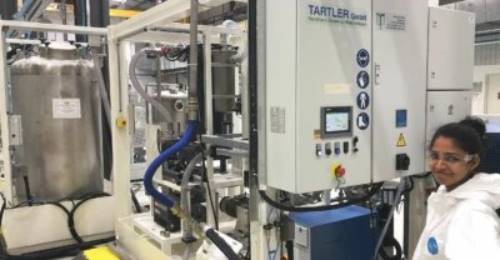
TARTLER‘s T-EVAC degassing system sets standards in material conditioning

The T-EVAC system is the flagship in the range of innovative material degassing stations from the German TARTLER GROUP. It supports quality-enhancing, resource-saving and cost-reducing processing methods across all modern synthetic resin processes and right into many areas of fluid technology. Designed as standard for degassing capacities of up to 1,000 liters per hour, it is also suitable for large-volume consumers.

Whether you think of vacuum infusion or wet pressing, direct infusion or resin transfer molding (RTM) – the TARTLER GROUP degassing stations can meanwhile be used in almost all technologies of modern synthetic resin processing. What’s more, users of other processes in which liquid and pasty media circulate have now also discovered the advantages of these innovative system solutions. At the moment, it is primarily the T-EVAC type evacuation system, which is mostly customized, that has proven to be a pioneering option for quality-enhancing, resource-saving and cost-reducing material conditioning. Numerous synthetic resin processors now use them as a preliminary stage in their dosing and mixing processes, thereby opening up further scope for improving the mixing quality, material efficiency and product quality.

New perspectives for quality optimizers

The T-EVAC is particularly popular in vacuum infusion technology. As in numerous other synthetic resin processing methods, one crucial question is always in the mind of plant operators, product developers and quality optimizers: How can the homogeneity of the material mixtures consisting of different components (resins, hardeners, additives, etc.) be significantly improved? Since this is precisely the focus of TARTLER degassing systems, they make a decisive contribution to the realization of high-quality shaping, application or coating results.

The functionality of the T-EVAC can be illustrated using the example of a synthetic resin processing method where the TARTLER system is currently encountering growing interest: pultrusion technology. In industrial practice, this technology is now a multi-stage process for the production of lightweight profiles or weight-saving molded parts made of carbon or glass fiber reinforced plastic. Passing a fiber reinforcement – fleece, mat or another knitted fabric – through a bath or a mold with a matrix of liquid polyurethane or epoxy resin and various additives is usually one of the first processing steps. The quality of the mixture of resins and additives is of great relevance for the successful cross-linking of the CFRP or GFRP fabric with the matrix. To be on the safe side at this point, the first T-EVAC degassing stations are already being used in pultrusion technology. As before, users are using the opportunity to positively influence the quality of the mixture immediately before application – for example by controlling the dosing/mixing system and selecting the mixing heads and mixing spirals (all of this is also part of the TARTLER portfolio). With the T-EVAC, however, the operators of the pultrusion systems tap into additional potential for process optimization and improvement of the product quality. The reason for this: With a vacuum of <5 mbar (abs.), the T-EVAC removes all air and moisture from the resins and hardeners before processing.

With the components preconditioned in this way, the dosing/mixing system can then create mixtures of high homogeneity reliably and with repeatability, with which high-quality composite-technical results can be reliably achieved in the subsequent pultrusion. Costsaving side effect: Many fillers (e.g. zeolites) previously required in pultrusion technology, which are intended to bind moisture in the resin in order to prevent unwanted reactions, can be partially or even completely omitted. Since the use of such fillers is unpopular anyway – they often act as disruptive factors in fiber impregnation – this also means a simplification and optimization of the process.

Offline or inline?

As standard, the T-EVAC has a PLC control from Siemens (7-inch HMI screen), is primarily designed for the conditioning of epoxy and polyurethane resins and achieves a degassing capacity of up to 1,000 l/h. In addition, it is basically available in two versions: As a central offline station, at which several dosing/mixing systems can be „filled up“ with the degassed components; and as an inline module that can be integrated into a dosing/mixing system. The basic equipment of the T- EVAC includes an automatic vacuum pump protection system and an automatically controlled water heating system with heat recovery. Optionally, there is an automatic water-cooling system, an MX feed system with Kamlok connection for 1,200-liter IBCs and a vacuum buffer tank with a capacity of 1,000 liters. In its role as a special machine builder, TARTLER then takes care of the coordination with the individual process requirements of the customer and all other technical adjustments. As a result, the customer always receives a complete solution tailored to their needs.

TARTLER developed the T-EVAC to offer users in almost all areas of synthetic resin processing an additional tool with which they can decisively optimize their application, coating and shaping processes as well as the quality of their products. The improvements achieved through the use of the vacuum degassing station can be measured and verified and documented in numerous customer applications by TARTLER.


#modernplasticsindia #plasticmagazine #indianmagazine #indianplasticmagazine #modernplasticsaward #ginujoseph #modernplastic #plasticindia #plasticnews #plasticrecycling #modernplasticsglobalnetwork #modernglobalnetwork #modernplasticsaward2023 #PlasticIndustry #modernplasticsgermany #modernplasticsmiddleeast #modernplasticsamerica #modernplasticsbangladesh #modernplasticsasia #modernplasticsitaly #gneuss

At Pack Expo Las Vegas, Wipotec to Debut Checkweigher for Volatile Aerosol Production, as well as Versatile New X-ray Scanner

At Pack Expo Las Vegas, Wipotec to Debut Checkweigher for Volatile Aerosol Production, as well as Versatile New X-ray Scanner

HC-A-EX Checkweigher provides precision checkweighing in environments at risk of explosion incidents; SC-S 5020 X-ray Scanner offers multifaceted inspection for F&B containers, including exacting microleak detection.

Wipotec, a leading manufacturer and supplier of precision in-motion weighing, track and trace/anti-counterfeiting solutions and X-Ray scanning equipment, will introduce two state-of-the-art inspection machines at Pack Expo Las Vegas Booth SU-8027, September 11-13. The company will premiere one unit for each of its specialties: precision checkweighing and X-ray enabled inspection.

Wipotec’s HC-A-EX Checkweigher is designed for precision checkweighing in manufacturing environments where a mix of gases or flammable substances brings moderate risk for explosion incidents. The machine meets requirements for ATEX, an EU Directive mandating safeguards in these production scenarios. Among other features, the HC-A-EX accomplishes this by nickel-coating all conveyor belts, which helps diminish adverse conductivity.

Specializing in cans and other aerosol containers, the modular HC-A-EX can handle more than 300 items per minute. In a niche where container weights can be exceedingly light, the unit is nonetheless capable of exacting checkweighing via Wipotec’s precision Electro-Magnetic Force Restoration (EMFR) technology, which enables extremely short settling times to deliver fast, accurate and repeatable weighing results. The HC-A-EX is equipped with a wide range of options, including lateral side grip conveyors or separation of rotary star wheels from separating screws, as well as several ejection and control technology features.

Also at Pack Expo, Wipotec will debut the SC-S 5020 X-ray Scanner, specifically designed for leak detection in filled and sealed glass bottles and jars used in food & beverage applications. In addition to detecting micro-leaks as tiny as 0.1mm, the unit can provide foreign body detection, fill level check and confirmation of proper screw cap or lid closure. The system enables optimum product handling – even for tall and/or slender containers – at throughput rates up to 60,000 products per hour.

Easily integrated into existing filling lines without the need for opening an additional transport route, the SC-S 5020 features ejectors capable of sorting faulty products into lockable rejection bins, or conveying them upright into a sort lane. Like all Wipotec X-ray scanners, the machine comes with a user-friendly operator interface highlighted by a 15” color touchscreen that displays real-time inspection statistics.

www.wipotec.com


#modernplasticsindia #plasticmagazine #indianmagazine #indianplasticmagazine #modernplasticsaward #ginujoseph #modernplastic #plasticindia #plasticnews #plasticrecycling #modernplasticsglobalnetwork #modernglobalnetwork #modernplasticsaward2023 #PlasticIndustry #modernplasticsgermany #modernplasticsmiddleeast #modernplasticsamerica #modernplasticsbangladesh #modernplasticsasia #modernplasticsitaly #gneuss #wipotec

Using Renewable Energy, CHUK Closes in on Achieving Net Zero With Carbon Intensity of 0.1372 Tons tCO2/MT

Using Renewable Energy, CHUK Closes in on Achieving Net Zero With Carbon Intensity of 0.1372 Tons tCO2/MT

Besides controlling carbon footprints to nearly net zero, CHUK has also ensured working towards reduced water consumption in FY 22-23

Using a philosophy powered by UN SDGs, CHUK (by Pakka Limited) achieved a total carbon intensity of 0.1317 tCO2e/MT as compared to the average carbon footprint of plastic is estimated to be 3.5 kg tCO2e/MT. Demonstrating leadership, CHUK’s sustainability report for FY 2022-23, factors in Scope 1 through 3 emissions. Scope 1 (vehicles and logistics) accounted for 1.70% of the carbon footprint, followed by Scope 2 (Renewable and Purchased Electricity) and Scope 3 (purchased goods and services, waste, and raw materials) accounting for 33.24% and 65.06%, respectively.

The report showcases CHUK’s outstanding contributions to reducing carbon emissions, achieving net zero goals, and promoting sustainability within the tableware industry. However, it also acts as a larger scope for the MSME and manufacturing industry on how to align operations to generate sustainable impacts.

The brand’s bi-pillar strategy (built in collaboration with UN SDGs) focused on Monitoring & Reporting and Decarbonization & Net Zero, covers multiple parameters across 12 out of 17 goals in the UN’s list. The UN SDGs were devised to achieve the creation of a sustainable planet by 2030. The 17 parameters outline different areas across social governance, poverty alleviation, etc., to be addressed for the same.

The approach used by CHUK factored in responsible local sourcing of raw materials to reduce logistical delays and carbon footprint as a byproduct of transportation while uplifting local farming communities. Secondly, effective water management was demonstrated through effluent in effluent treatment plants (ETPs) and closely monitors key performance indicators (KPIs) such as biochemical oxygen demand (BOD) and chemical oxygen demand (COD) to ensure the quality of their effluent, that yielded a water intensity of 24.64 KL/MT owing to the use of 48.2% recycled water. The standard water intensity for the pulp and paper industry is estimated at 54 KL/MT. Third, operational measures such as the use of locally sourced pith and rice husk to create 75% renewable energy to power operations has minimized the risk of dependence on non-renewable energy sources, resulting in automatic waste management as well.

Mr. Satish Chamyvelumani, Business Head, CHUK said, “Our report aims to build a sustainable ecosystem for the economy and foster business collaborations across the industry to boost the development of green ecosystems. By aligning with the UN SDGs, we offset carbon emissions and create societal value through each step in our product creation. It helps us achieve traceability and prioritize clean and responsible practices to lead towards a sustainable future. We will continue researching and innovating regenerative packaging solutions while maintaining the highest environmental standards in our operations.” Further adding on how this impacts customers, Mr. Chamyvelumani said, “Our carbon footprint is extremely low at 0.001 kg CO2e per piece. This is 1310% less than plastic, 8733% less than plastic lined paper-based packaging and 5406% less than Styrofoam packaging. CHUK’s products minimize carbon footprint while offering the same user experience as alternative materials. Our locally sourced bagasse containers are versatile (microwaveable, freezable, ovenable, etc.), and their minimal carbon footprint helps consumers lower downstream emissions.”

Pakka Ltd. (CHUK’s parent company) also inculcates a culture of CSR driving efforts through the establishment of a Miyawaki mini-forest of 5,000+ saplings of around 30 different species of trees and shrubs, in an area of around 2,600m2 near Pakka Skills, the education institute for vocational training, adoption of 5 ponds and lakes covering over 3.56 acres in the region around the Ayodhya plant, and their commitment to educating rural India through Pakka Foundation.

With their compostable tableware made from bagasse, CHUK is not only revolutionizing the food packaging industry but also empowering consumers and businesses to make eco-friendly choices. CHUK is paving the way and setting an example for businesses in the industry to develop sustainable and green practices to ensure India can achieve its net zero goals in due time.

www.pakka.com


#modernplasticsindia #plasticmagazine #indianmagazine #indianplasticmagazine #modernplasticsaward #ginujoseph #modernplastic #plasticindia #plasticnews #plasticrecycling #modernplasticsglobalnetwork #modernglobalnetwork #modernplasticsaward2023 #PlasticIndustry #modernplasticsgermany #modernplasticsmiddleeast #modernplasticsamerica #modernplasticsbangladesh #modernplasticsasia #modernplasticsitaly #gneuss #pakka