No Emissions, No Compromise: Bike Backpack Redefines Sustainability at K 2025
VAUDE, the outdoor apparel and equipment brand at the forefront of sustainable outdoor fashion and technology, introduces its groundbreaking partnership with BASF in creating the climate-friendly new TRAILCONTROL ZERO 20+ bike backpack. In its strategic integration of environmental responsibility and cutting-edge engineering, VAUDE uses BASF’s pioneering Ultramid ZeroPCF—a polyamide (PA) 6 with a zero Product Carbon Footprint (PCF)—to produce this next-generation bike backpack.
Photo Credit: Messe Düsseldorf
Ultramid ZeroPCF is not only a standard polyamide, but the very embodiment of carbon-neutral polymer science. It derives its zero-carbon status through a complete lifecycle strategy for sustainable production, wherein production runs on renewable electricity from the Hollandse Kust Zuid offshore wind farm, and biomethane and bio-based raw materials from used cooking oil displace fossil-based materials. This approach follows ISCC+ standards and is based on a certified mass balance system. The outcome is a material that has all the mechanical and visual characteristics of conventional polyamide 6 but far surpasses it in terms of environmental sustainability.
“Thanks to all these measures and the benefits we derive from the efficient production methods of our BASF Verbund, we are reducing the CO2 footprint of the polyamide to zero,” states Marcel Schmitt, Global Strategic Marketing, Polyamide 6 at BASF. The Verbund concept—BASF’s unique integrated production system—enhances resource efficiency by allowing by-products of one process to serve as raw materials in another, further minimizing waste and emissions.
This partnership between BASF and VAUDE not only represents a technological breakthrough but also illustrates the actionable steps companies can take toward climate neutrality. “With this flagship project, we want to stimulate discussions about how materials with a carbon footprint of zero can contribute to climate neutrality,” adds René Bethmann, Senior Material Innovation Manager at VAUDE. The brand has long been committed to environmentally responsible innovation and this collaboration reinforces that legacy.
The announcement follows BASF’s strategic October 2024 expansion of its polyamide portfolio to include Ultramid LowPCF and Ultramid ZeroPCF. These materials are a part of BASF Monomers division’s wider initiative to offer circular or PCF-reduced versions of all major product lines. This sustainable transition is integral to BASF’s long-term strategy for achieving net-zero CO2 emissions by 2050, aligning with global climate goals and industry expectations.
The VAUDE backpack will play a main role at the K 2025 International Trade Fair for Plastics and Rubber, scheduled from October 8 to 15, 2025, at Messe Düsseldorf. Under this event, BASF will highlight its “Choose to Reduce” strategy—showing customers and partners in industry how making the right material choice can reduce carbon emissions considerably without sacrificing on performance or product quality. The booth will feature BASF’s complete Ultramid portfolio, which now encompasses a series of climate-friendly polyamides for various applications in textiles, consumer products, automotive, and sports equipment.
This debut at K 2025 signifies a turning point for both companies—and, indeed, for the wider plastics and outdoor equipment industries—as they show that sustainability and high-performance materials need not, but should, go hand in hand. By embracing innovation, openness, and cooperation, the future is being rewritten—one carbon-neutral product at a time.
K-Preview 2025 Unveils Plastics Innovations in Circular Design and Automation
At a time when plastic is coming under increasing scrutiny around the world—fueled by increasing awareness, consumer demand, and rising evidence of environmental damage—Reifenhäuser took a bold and timely move at K‑Preview 2025. Rather than simply demoing a slate of machines, the leader in extrusion technology presented a visionary case: converting plastics to a circular, high-performance, efficient material. Reifenhäuser’s presentation went beyond typical trade-show fare, providing a template for environmentally conscious yet commercially real packaging production.
Leading the spotlight was the revolutionary Machine Direction Orientation (MDO) technology, epitomized by the EVO Ultra Stretch module integrated directly into the haul-off section of blown film lines. This positioning allows the film to be stretched immediately from the initial heating, improving process stability and enabling the production of ultra-thin polyethylene (PE) films as thin as 18 µm, yet matching or even exceeding the performance of traditional 25 µm variants.
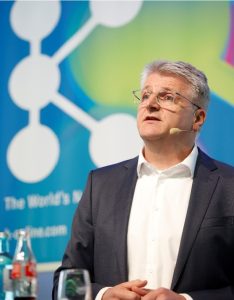
Marcel Perrevort, CSO of the Reifenhäuser Group, Photo Credit: Messe Düsseldorf
Marcel Perrevort, CSO of the Reifenhäuser Group, explains: “We entered the cast MDO market at an early stage, which means that, in addition to the hardware, we have a firm knowledge of the process. Together with partners,
we develop high-performance end products such as Cast All-PE stand-up pouches. As a line manufacturer, we always pursue one goal: to develop2/4 technology for recyclable films that are both functional and economical to
produce. We will be showcasing the successful results at K 2025”.
The implications are significant: a 25 percent reduction in raw material use, directly translating into lower carbon emissions and raw material costs. These films also maintain high mechanical robustness—with moduli of elasticity exceeding 1,400 MPa in machine direction and 1,100 MPa in transverse direction—and optical clarity with haze values below 5%, outperforming conventional benchmarks of 6–7%.
Crucially, the EVO Ultra Stretch maintains EVOH barrier content under 5%, ensuring compatibility with mono-material PE recycling standards. This means that while delivering high barrier functionality necessary for food and medical packaging applications, the entire film structure remains fully recyclable—a rare combination of performance and sustainability. Equally compelling were the real-world demonstrations: the 18 µm films were printed at speeds of up to 500 m/min on Bobst presses, with exceptional register accuracy—even in BOBST’s demanding oneECG gravure process at over 300 m/min.
Backing this innovation is a strategic collaboration with LG Chem, formalized through an MoU on 28 November 2024. The partnership leverages LG Chem’s expertise in polymer compounding with Reifenhäuser’s extrusion know-how, aiming to produce cost-competitive, high-quality MDO-PE films for recyclable packaging. The recent rollout of the world’s first 18 µm MDO-PE film is now scaling toward mainstream adoption. As Bernd Reifenhäuser, CEO, remarked, the alliance aligns raw materials, extrusion precision, and production reliability—enabling recyclable mono-material films to transition from concept to mass production. Dr. Lee Choong Hoon of LG Chem praised the partnership’s establishment of “unprecedented records in downgauging”—while confirming that further material reduction remains under active development.
The collaboration’s commercial aim is clear: make recyclable packaging not just environmental idealism, but an economically viable, mainstream solution. That goal is underscored by the common industry benchmark: replacing a 12 µm PET layer with a 16–17 µm MDO-PE, offering parity while ensuring recyclability. With the EVO Ultra Stretch already achieving 18 µm reliably, the MoU targets cost-efficient packaging that aligns with consumer expectations and regulatory demands.
Reifenhäuser didn’t stop at blown film innovation. The event also unveiled the MIDEX 11‑2500 cast film line, now equipped with integrated MDO. Designed for a variety of films—CPP, CPE, barrier variants, hygiene materials—this platform supports material downgauging while preserving performance. By enabling thinner, mono-material films that match multilayer laminates in strength and barrier function, the MIDEX line contributes to reducing material consumption and waste—a critical step toward circularity.
Photo Credit: Messe Düsseldorf
Automation, too, formed a core theme at K‑Preview, centered around PAM (Precise, Autonomous, Mechatronic). This intelligent system replaces traditional manual bolt adjustments in coextrusion adapters and dies with digitally controlled actuators. The result is consistent film quality, dramatically reduced energy use—up to 99% less than conventional thermal-bolt setups—and reduced operator skill requirements, bolstering safety, uptime, and productivity. PAM exemplifies Industry 4.0 principles: smart, efficient, and adaptive manufacturing that supports sustainability goals through precise control and energy optimization.
Thermal management received special attention through Kdesign, Reifenhäuser’s cooling technology arm. The highlight was the KARAT cooling ring, capable of boosting output by up to 50% on mid-range operations and improving performance by 25% compared to top-tier competitors. This new standard in cooling efficiency helps meet the growing pressure for speed and quality without excessive energy or material usage.
In hot or humid production environments, the CENTRO‑Freeze secondary cooling system delivers another leap in efficiency. Installed just before the film lay-flat stage, CENTRO‑Freeze reduces film temperature by up to 12 °C, effectively preventing blocking and eliminating reliance on anti-blocking additives. That means fewer materials in the mix, more reliable production under heat stress, and a payback within a couple of hot summer cycles. Users can digitize monitoring with inline temperature sensors and rely on automatic format adjustment during bubble diameter changes—delivering both energy savings and operational convenience.
To support global deployment, Reifenhäuser announced the opening of a new Service Hub in the UAE, complemented by increased support networks across the MEA region. This facility offers local installation, commissioning, spare parts, and expert training—critical for maintaining service uptime and supporting regional market growth. By placing capabilities closer to clients, Reifenhäuser enhances responsiveness and helps partner companies integrate sustainable technologies smoothly.
K-Preview 2025 set a powerful tone ahead of the full K 2025 expo in October, framing Reifenhäuser as not just an equipment vendor but a strategic partner for sustainable packaging transformation. The cohesive display—from MDO and cast film to automation, cooling, and global service—underscores a comprehensive commitment to enabling circular plastics. The timing is perfect. With consumer demand for recyclable products and legislative initiatives such as the EU’s packaging waste directive pushing for change, film downgauging and mono-material packaging are now short-term imperatives. The potential to lower material usage by 25% with PET-level performance provides manufacturers with much better margins and environmental credentials.
On the broader industry front, Drupa 2024 already showcased high-barrier recyclable films; now, K-Preview reinforced the convergence of recycling and extrusion at trade events. Meanwhile, competitors like Erema are focusing on recycling systems, signaling a unified push across value chains toward circular solutions.
Looking ahead, Reifenhäuser and LG Chem are continuing joint R&D toward films thinner than 18 µm and free of PFAS—all while refining formulations, ensuring extrusion stability, and meeting performance targets. Applications are poised to expand beyond flexible packaging into medical, hygiene, and high-barrier food applications—all benefiting from mono-material simplicity and full recyclability.
As production ecosystems embraced by K‑Preview demonstrate, the future of plastics lies in digital, energy-optimized, recyclable manufacturing. Technologies like EVO Ultra Stretch, MIDEX, PAM, KARAT, and CENTRO‑Freeze are not stand-alone innovations—they form an integrated infrastructure enabling digital continuity, resource efficiency, downgauging, and environmental responsibility.
Reifenhäuser’s clear message: sustainability and profitability are neither optional nor conflicting—they’re inseparable. By delivering technical innovation in film production, barrier technology, automation, cooling, and service networks, the company is building a pathway for global packaging manufacturers to adopt circular, high-performance, cost-effective solutions.
That vision has immediate resonance. With regulatory deadlines nearing and consumers demanding greener packaging, the time for recyclable mono-material film is now. Reifenhäuser’s approach may well redefine industry expectations—and manufacturers who adopt these systems early could gain a competitive head start in cost, compliance, and brand appeal.
In sum, K‑Preview 2025 was more than an exhibition—it was a manifesto for the future of plastics. By combining revolutionary machine design, strategic raw material partnership with LG Chem, digital controls, thermal innovation, and global service expansion, Reifenhäuser has delivered a credible, scalable, and profitable path to circularity. Their message is clear: the plastics economy of tomorrow will be circular, high-performing, and meticulously engineered, and Reifenhäuser is paving the road.
MAAG Group Strengthens International Strategy Through SIKORA AG Acquisition
A global leader in polymer processing systems and solutions, the MAAG Group has formally announced the completion of its acquisition of SIKORA AG, a premium provider of cutting-edge technology for measuring, control, inspection, and sorting. The acquisition further demonstrates MAAG Group’s long-term commitment to expanding its capabilities and global presence and marks a critical milestone in the company’s strategic expansion plan.
Established in 1973 and based in Bremen, Germany, SIKORA AG has earned a solid reputation over the years for providing cutting-edge technological solutions to various industries such as cable, pipe, hose, tube, sheets, and plastics. The firm has consistently set new standards in accuracy, dependability, and process efficiency with its portfolio of groundbreaking equipment and smart software solutions that improve quality inspection, minimize waste, and optimize production efficiency. With operations and alliances in over 80 nations, SIKORA’s international reach is supplemented by the MAAG Group’s large footprint of locations and service centers.
By joining forces, MAAG and SIKORA are poised to unlock new technological synergies and accelerate their shared mission of delivering integrated, high-performance solutions that meet the growing complexity and quality demands of polymer and industrial processing worldwide. The collaboration will enable the companies to align their R&D strengths, broaden their product portfolios, and offer expanded customer support in both established and emerging markets.
Ueli Thuerig, President MAAG Group
“We are very pleased about this partnership. By combining our strengths and expertise, we are ideally positioned to create additional value for our customers, drive innovation in a targeted manner, and promote the long-term growth of both companies,” said Ueli Thuerig, President of MAAG Group. This statement reflects the Group’s strategic intent to not only grow its technological capabilities but also to co-create solutions that will define the next era of smart, efficient, and sustainable manufacturing.
With both firms preparing for closer cooperation, the integration of SIKORA’s cutting-edge quality inspection technology with MAAG’s reliable system solutions is poised to bring considerable advantages to customers in a wide range of industries. From inline measuring in real-time to non-destructive testing and artificial intelligence-based sorting systems, SIKORA’s technologies will maximize the accuracy, transparency, and productivity of polymer processing lines. The MAAG Group, meanwhile, has its own massive expertise in melt pumps, filtration, pelletizing, and pulverizing technologies — a complete end-to-end value chain from raw material handling to end product quality control.
Dr. Christian Frank, CEO SIKORA AG
Dr. Christian Frank, CEO of SIKORA, expressed enthusiasm about the merger: “We are proud to be officially part of the MAAG family now. This partnership goes far beyond standard cooperation – it is based on a shared commitment to innovation, entrepreneurial spirit, and sustainable action, which form the foundation for long-term success. It marks an important step in our shared future, opens up a wide range of opportunities, and strengthens our ability to develop innovative solutions. We look forward to working with MAAG to continue our success and growth in a sustainable way.”
Also, this acquisition indicates a greater emphasis on digital transformation and sustainability, two important tenets of both businesses’ corporate philosophies. MAAG and SIKORA are ready to take on industry issues like energy efficiency, circular economy imperatives, and smart manufacturing—all while upholding the highest quality standards—by combining operational strengths and forward-thinking tactics.
As the integration process moves forward, both teams are focused on aligning organizational structures, investing in joint innovation projects, and ensuring uninterrupted service for customers and partners. The expanded team will continue to operate under their respective brands, reinforcing market confidence while paving the way for a unified approach to delivering cutting-edge technologies and services.
The MAAG-SIKORA partnership will eventually create new value streams by setting new benchmarks for accuracy, sustainability, and customer-focused innovation in addition to product integration and global reach. Driven by shared ideals and a goal to lead the worldwide development of polymer and industrial processing technologies, the acquisition marks a watershed in the history of both businesses.
Innovative Polyurethane Applications Driven by PUre Synergy at K 2025
Interesting solutions are produced by greater knowledge: KraussMaffei will be showcasing two applications with ColorForm and Pure glycoLine PU at K 2025 in Düsseldorf (October 8–16). In these applications, polyurethane processing from the Reaction Process Machinery division (RPM) works with injection molding technology and extrusion, respectively. Process dependability and long-term value generation are the objectives. The only business that can provide equipment and procedures for the complete polymer processing chain from a single source is KraussMaffei.
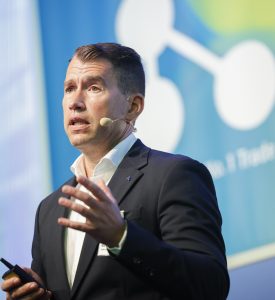
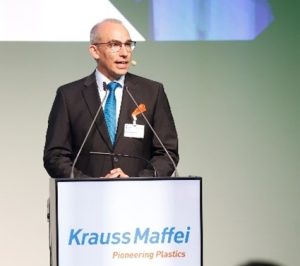
Dr. Frank Szimmat Managing Director of KraussMaffei Technologies, Photo Credit: Messe Düsseldorf
ColorForm stands for the highest surface quality and efficient series production in an integrated process. KraussMaffei is the only supplier to offer all technologies from a single source – this creates real added value for our customers said, Dr. Frank Szimmat Managing Director of KraussMaffei Technologies.
The environmental regulations for spray painting are constantly becoming stricter and are causing a boom elsewhere. ColorForm, the painting of thermoplastic components using PU flooding, is experiencing a steep rise around 15 years after its development.
At K 2025, KraussMaffei and its partner Leonhard Kurz are taking technology integration even further and combining ColorForm with a film decoration system for which a new type of mold-integrated film thermoforming concept has been developed.
The application can be seen live on a GXW 650 (with swivel plate) at the Leonhard Kurz booth (Hall 5 / A19). The innovative 3K demonstrator component, based on a headlight (length 720 millimetres), was designed in such a way that the design film provided by Leonhard Kurz is back-injected with a crystal-clear and a black polycarbonate using the in-mold labeling process.
As PC would yellow due to UV radiation and headlights are exposed to stone chips and similar stresses, the component is given its crystal-clear polyurethane coating directly in the mold.
Paint layer accurate to a tenth of a millimeter
Ready-painted straight from the injection mold: the ColorForm process gives thermoplastic components a PU coating. This can be adjusted in terms of color and feel – and is also self-healing if desired.
The complete system from KraussMaffei combines reaction process machinery and injection molding technology. With ColorForm, the PU lacquer layers can be precisely adjusted in the tenth of a millimeter range. A range of different effect and lacquer colors are available, which, in combination with variable haptics, enable a variety of design options.
In addition to protection against chemical influences, a self-healing effect is also possible – for example in the case of fine scratches on the surface. Another visual advantage is the characteristic depth effect that ColorForm creates. The metering machines manufactured by them enable output rates of up to 500 g/s and are therefore also ideally suited for large-format components.
Suitable metering units are available for adding color, so that even demanding design requirements in the vehicle interior or on the vehicle exterior can be precisely implemented.
KraussMaffei supplies all the components of ColorForm technology as a turnkey solution from a single source – from the injection molding machine and PUR metering technology to fully integrated automation.
Industrial recycling of PU with a high proportion of foreign matter
Sustainable cycle thanks to purity gycoLine PU: The PU components of items such as refrigerators are converted into polyol with recycled content (rPolyol) at the end of their service life using an extruder in a continuous chemical process.
Photo Credit: Messe Düsseldorf
This serves as a starting material for new applications and can be processed in the metering machine without any adjustments. PU is also frequently used for insulating applications such as refrigerators, and at the end of the appliances’ life, the question of disposal arises. Until now, PU from old refrigerators has often been incinerated, for example to generate energy in cement production, but it is foreseeable that the thermal recycling of plastics will be more restricted in the near future.
KraussMaffei is therefore in the process of industrializing a process for the continuous chemical recycling of PU through depolymerization. The project partners are BASF, Rampf (Producer of sustainable recycled polyols) and Remondis (processing and recycling of old electrical appliances).
In the purity glycoLine PU process, PU insulating foam from the Remondis refrigerator recycling plant is recycled within minutes using a co-rotating twin-screw extruder (ZE BluePower). Unlike the widely known batch process, this continuous extrusion method can efficiently handle PU regrind with contamination levels of up to 30 %, including residues of other plastics and metals.
In order to achieve depolymerization using a glycolysis process modified by RAMPF, the PUR regrind is mixed with depolymerization agents and other additives in the extruder. KraussMaffei has adapted the filtration technology required for this to the market requirements for polyols in extensive tests at its Innovation Center.
The polyols obtained from the extruder can be used at BASF as a component of innovative PU systems for the production of rigid foams with recycled content. What is particularly important here is that the process is already economically attractive today.
Metering machine ready for digitalization and autonomous operation
RimStar metering machine with new digital features: the machine and process are even easier to control, even for less experienced users. The vision for the future is autonomous operation.
At the K trade fair, visitors to the KraussMaffei booth can experience live how the PU system with recyclate content is processed into foamed insulators for beverages.
The Reaction Process Machinery team will be presenting another market launch: a RimStar series metering machine with numerous new features in preparation for digitalization and autonomous operation.
This will make the machine and process even easier to control, even for less experienced users – in future, it should even be possible to completely relieve operators of certain tasks.
Digital analysis tools such as the dataXplorer, which records and evaluates all relevant process data, are already integrated for this purpose. In future, its results will serve as the basis for automatic adjustments during the production process.
Transforming Trash into Treasure: The Future of Plastics Begins at K 2025
As the world’s largest trade fair for plastics and rubber again comes to Düsseldorf this October 8th to 15th, BASF is once more on board – as it has been for every single K-Fair since the first one in 1952.
“This year, we manifest our commitment to the plastics industry, and we continue our commitment to sustainability and innovation through our global campaign, #OurPlasticsJourney. More than just a tagline, it reflects our ambition to transform the plastics industry. This journey takes time, but the destination is clear: a circular economy of plastics,” emphasizes Martin Jung, President of BASF Performance Materials.
During the K-Preview press conference of June 17, BASF has revealed the first impression of what customers can look forward to at K 2025: pioneering applications designed to customers’ requirements and highlighting genuine progress in circularity in multiple business areas and industries.
Photo Credit: Messe Düsseldorf
A product portfolio evolving toward a lower carbon footprint
BASF launched its LowPCF and ZeroPCF portfolios at K 2022 as ways to employ renewable electricity, low-emission steam, and renewable raw materials in a mass balance approach to lower the Product Carbon Footprint (PCF) by at least 30%. VAUDE’s bike backpack, which uses Ultramid ZeroPCF—the first polyamide 6 in the market to reach a CO2 footprint of net zero—is a recent example of a ZeroPCF product innovation.
Building on this, BASF has now launched a reduced PCF product range, rPCF, aimed at PCF improvements using renewable electricity and steam alongside the production process. The offering is now available in BASF’s Engineering Plastics and Thermoplastic Polyurethanes sustainability toolbox. It follows BASF’s achievement of completely switching all its European Performance Materials plants to renewable electricity powered by solar and wind energy.
Make becomes circular
While technology and processes are major levers of transformation, the use of alternative raw materials is equally essential. At K 2025, BASF will showcase products for which fossil resources are replaced with renewable feedstock at the beginning of the production process using the Biomass Balance approach. This helps reducing the carbon footprint of:
Siemens circuit breaker SIRIUS 3RV2: Ultramid BMB and Ultradur BMB
Certified compostable and soil-biodegradable biopolymers: ecovio and Ecoflex BMB
ZARA bodysuit: Ultramid BMB
Additionally, BASF replaces fossil resources with feedstock from the chemical recycling of plastic waste in a mass balance approach for its Ccycled portfolio:
Transformation is not only about materials, but also about data. As the industry moves toward greater transparency and accountability, digital tools become essential to enable and accelerate the green transformation. To support this, BASF offers the PACIFIC app that provides standardization and interoperability in PCF data exchanges of plastic materials. Designed for ease of use, the PACIFIC app is seeing growing adoption across stakeholders in the value chain.
Alexander Weiser, Senior Vice President, Head of BASF, Photo Credit: Messe Düsseldorf
“With rPCF, we are giving customers flexibility to customize their products’ carbon footprint by opting for renewable energies in our production process. This is a logical next step in both their green transformation and ours,”- Alexander Weiser, Senior Vice President, Head of BASF.
Use of plastics’ strengths
Plastics bring unique benefits to many applications that often extend their lifespan. This is particularly important for future technologies, such as the production of green hydrogen. For example, Ultrason S3010 (PSU: polysulfone) enables the production of larger, more robust and durable parts like frames in stacks for alkaline electrolyzers developed by Stargate Hydrogen.
In high-performance household appliances like the latest Thermomix by Vorwerk Elektrowerke, BASF’s engineering plastics, Computer-Aided Engineering (CAE), and testing capabilities support complex applications. Several parts are made of either Ultramid Advanced N (PPA: polyphthalamide) or Ultramid A (PA66: polyamide 66), selected for their high temperature stability and mechanical strength respectively.
In the eMobility sector, BASF has developed a next-generation battery demonstrator featuring advanced plastic material solutions to enhance lightweighting, thermal management, safety and performance.
Recycle is the new Make
As part of its commitment to a circular plastics economy, BASF is scaling up complementary recycling technologies to give waste a second life. Across various industries – packaging, furniture, appliances, textiles and vehicles – new solutions demonstrate how recycling becomes an engine of innovation.
To support efficient recycling processes, BASF subsidiary trinamiX provides a handheld tool for fast and reliable identification of different plastic and textile types. The trinamiX Mobile NIR Spectroscopy Solution facilitates cleaner sorting and improved recycling outcomes.
For paper-based food packaging, BASF extends the end-of-life options to organic recycling. Its tailored certified home and industrial compostable ecovio allows coating on paper food articles to achieve necessary barrier properties, especially for liquid and fatty ingredients.
As a leader in the polyurethanes (PU) business for more than 60 years, BASF is committed to demonstrating PU’s versatility and recyclability:
Together with its long-standing partner Vitra, BASF is showcasing the world’s first economically recyclable flexible foam for furniture.
In collaboration with Krauss Maffei, Rampf and Liebherr, BASF is also developing an efficient chemical recycling process to return polyurethane to the same material cycle. In a stable, continuous industrial depolymerization process, recycled polyols are produced, which can be used to manufacture new PU rigid foams as insulation material in refrigerators. By using post-consumer waste from end-of-life refrigerators as feedstock, the consumption of fossil resources can be significantly reduced.
Thermoplastic polyurethanes (TPU) also enter the circular economy: the new Elastollan RC grades include up to 100% recycled content with close to virgin performance by re-using post-industrial and post-consumer TPU waste.
With loopamid, BASF has developed an innovative solution to improve circularity in the fashion industry and recycle post-industrial and post-consumer polyamide 6 textile waste over multiple times.
Finally, BASF is advancing numerous projects in the recycling of automotive plastics via mechanical recycling, solvent based recycling, depolymerization and high temperature recycling such as gasification.
Precision Extrusion Innovations Lead the Way at K 2025
Performance. Perfected. For you – with this slogan, KraussMaffei will be presenting at K 2025 (Düsseldorf, October 8th – 16th) how leading-edge technologies and a top customer orientation provide measurable added value. The focus of extrusion technology is on solutions for more efficient and future-oriented plastics processing – from large-scale industrial polymer production to pipe and profile extrusion and to efficient recycling processes. The trade fair appearance will be supplemented by digital innovations to enable smart, low-operator production.
Photo Credit: Messe Düsseldorf
The development roadmap for the coming years is clearly defined: “We are working specifically on new developments to continuously increase customer benefits, actively maintaining our products and resolutely driving forward the digitalization and automation of our products.” This is how KraussMaffei Extrusion is creating the foundation for sustainability, economic success and technological progress. “And we are making this tangible for visitors at K 2025 in Düsseldorf,” says Ralf Benack.
Future market petrochemicals: New processing extruder for raw polymer production
One of the latest significant advancements is the latest generation of ZE Petrochemical (ZE-PC) compounding extruders, specifically designed for the high requirements of large-volume polymer manufacturing. Drawn from the successful BluePower technology, the co-rotating twin-screw extruders – with screw diameters up to 400 mm – integrate energy efficiency with superior processing quality.
“Thanks to a D/d ratio of 1.65, torque densities of up to 16 Nm/cm³, and variable-speed drives, the machines can run at lower screw speeds without compromising throughput. This lowers the specific drive power and reduces the melt temperatures, which lowers the risk of degradation,” explains Dr. Thomas Unger, Vice President Technologies at KraussMaffei Extrusion. At the same time, the larger diameter ratio ensures significantly more effective degassing. “This allows us to offer our customers an economical, reliable and material-friendly solution,” he adds.
Ralf Benack, Managing Director of KraussMaffei Extrusion GmbH, Photo Credit: Messe Düsseldorf
“Performance. Perfected. For you. reflects our commitment to delivering advanced extrusion solutions – technically refined, highly efficient, and consistently geared to the requirements of our customers, Our strength lies in the combination of highly developed mechanical engineering and deep process know-how – all from a single source, reliably delivered worldwide.” –Ralf Benack, Managing Director of KraussMaffei Extrusion GmbH
Bottle-to-bottle PET recycling to material preparation for chemical processes – as a circular economy innovation driver, KraussMaffei Extrusion provides trailblazing solutions for any type of recycling. In the field of PET recycling, KraussMaffei Extrusion is showing a high-performance twin-screw system from the BluePower series for throughputs of up to 12 tons per hour. The technology answers the growing need for greater output and more energy- and cost-effective processing. It is up to 20% lower in energy consumption compared to traditional twin-screw systems. They are compatible with standard SSP units and yield food-grade rPET.
In chemical recycling, KraussMaffei Extrusion is focusing on key technologies: high-performance extruders for processing material streams – for example, to produce pyrolysis oils – efficiently implement crucial process steps such as dewatering, degassing and the removal of impurities. Pressures of up to 200 bar and the retractable UltraGlide system with easy-to-maintain screws enable customized solutions for demanding recycling applications.
KraussMaffei Extrusion has also refined its EdelweissTechnology for processing recyclates more efficiently – even with fluctuating material properties. The focus is clearly on process optimization and cost efficiency. The twin-screw extruder covers all process steps: degassing, filtering and compounding. “This integrated setup can lower investment costs by up to 25%,” says Dr. Thomas Unger.
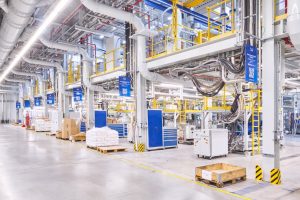
More efficient research, more economical production: ZE BluePower in a new design
Whether for research or daily production – the new generation of the ZE BluePower twin-screw extruders offers clear advantages. The new ZE 28 BluePower scores with improved operation, greater energy efficiency and digital networking via ppC (pioneer processControl). The larger ZE 42-80 series has also been comprehensively redesigned – with a focus on simple maintenance, digital interfaces and an optimized modular system. “For our customers, this means a better price-performance ratio and shorter delivery times – real advantages in day-to-day operations,” says Dr. Thomas Unger.
New multilayer pipe head processes up to 100% recyclate
With its newly developed PVC multilayer pipehead, KraussMaffei Extrusion is demonstrating how pipe and profile extrusion can be made more sustainable and future-proof. The system processes up to 100% recycled PVC – even with varying material quality. The layer configuration can be flexibly adjusted depending on the application. A newly designed flow system prevents spiderlines and ensures consistent product quality with optimal material usage.
Digital transformation: rethinking machine control
With the new ppC (pioneer processControl) control system, KraussMaffei is bringing greater clarity and efficiency to extrusion processes. Instead of complex operating logic, ppC relies on intuitive processes, clearly structured user guidance and a unified user interface. This shortens the learning curve, reduces the amount of training required and makes everyday production easier. Its modular design enables use across all extrusion tasks – from Flat & Foam to Pipe & Profile through to Compounding and Recycling.
Integration into existing systems is also easy: interfaces for connecting to third-party devices such as metering devices, measuring systems and higher-level systems such as MES or DCS enable the central operation and monitoring of entire systems. This ensures greater transparency and process reliability.
Looking ahead: on the way to production without operators
In view of growing staff shortages, KraussMaffei Extrusion is developing digital tools for production without operators (PWO). Start-up workflows, AI-supported assistants and HMI solutions for mobile use make it easier to monitor entire lines – with fewer personnel. The first systems are already running unmanned at weekends – a milestone towards lights-out manufacturing.
Tailor-made Lifetime Service for maximum system efficiency
With its Lifetime Service, KraussMaffei Extrusion offers a comprehensive service concept that goes far beyond routine maintenance. “From commissioning and targeted modernization and data-based services, we support our customers throughout the entire life cycle of the system – reliably, proactively and with personalized solutions,” says Ralf Benack. Whether it’s spare parts, remote support, training, or digital condition monitoring, the goal is always the same: maximum plant availability, consistent product quality, and a sustainable boost in overall efficiency.
Performance. Perfected. For you.
KraussMaffei Extrusion’s presence at K 2025 underlines its commitment to combining innovative technologies, sustainable solutions and maximum cost-effectiveness in perfectly coordinated system solutions – individually tailored to customer requirements along the entire polymer processing value chain.
Where Sustainability Meets Precision: Advanced Extrusion Takes the Spotlight at K 2025
As the world plastics industry looks ahead to one of the most significant trade shows in the world—K 2025 in Düsseldorf—battenfeld-cincinnati stands out as a leader, emphasizing its dedication to ecological responsibility, technological innovation, and optimized production. With its thematic call to action “Think Green, Act Smart, Extrude Sustainably,” the company is not just attending—it’s leading the charge. As a global market leader for extrusion machines, battenfeld-cincinnati will illustrate how the values of sustainability, digitalisation, and industrial performance are not only compatible but also reinforcing each other. This year’s K 2025 is more than an exhibition—it’s a declaration that the strength of plastics is being re-defined for a more sustainable future.
Dr. Henning Stieglitz, CEO of battenfeld-cincinnati Group, Photo Credit: Messe Düsseldorf
“We are demonstrating that green, smart, and responsible are specific development guidelines for us. The combination of economic efficiency, high flexibility, and active sustainability makes battenfeld-cincinnati a reliable partner for future challenges. We look forward to discussing these topics in person with our customers at K and developing them further.”
The plastics market is being revolutionized by customers and regulators alike, who are demanding smarter operations, improved resource efficiency, and closed-loop solutions. Plastics processors today have to function in a fast-pressure market where innovation has to be a solution for live problems: energy consumption has to decline, recycled products have to be economical at volume, automation has to be wise, and product has to remain competitively priced. To meet these increasing needs, battenfeld-cincinnati is launching an extensive range of innovative extrusion technologies, converting vision into real-world, sustainable engineering.
Center of attention at the firm’s stand is the latest BC 120-40 DVT single-screw extruder, an innovation that sets a first by being the first of its kind to come with Dual Vent Technology. This technology advancement brings with it a two-stage melt degassing system tailored to deal with tough and dirty recycled materials without compromising on better product quality. This degassing process eliminates volatiles and water more effectively, with the capability to accept high levels of recyclate content in the feedstock without compromising the integrity of the end product. Maybe most impressive is that all this is done with lower energy consumption, lesser thermal loads, and less waste—characteristics of a system fully in line with sustainable objectives.
This new extruder wasn’t created in isolation. It’s the product of global collaboration across battenfeld-cincinnati’s R&D and engineering divisions. Its development reflects a core philosophy of leveraging internal synergies, integrating proprietary software, thermal management systems, and mechanical innovations into a unified machine platform. More than just a new piece of hardware, the BC 120-40 DVT serves as proof of concept that future-ready extrusion systems can be high-performing and environmentally sound at the same time.
Photo Credit: Messe Düsseldorf
In pipe extrusion, the company also debuts another significant innovation: Intelligent Operating Adjustment (IOA). This automated centering system of ball-joints significantly decreases operator intervention in pipe production, optimizing the use of materials and enhancing accuracy. IOA allows the extrusion line to automatically maintain optimal positioning, with the result that the pipe is always centered—something usually requiring operator expertise and constant adjustment. With reduced material required for the corrections and less rejects, the system increases productivity as well as sustainability. It is also a classic case of Industry 4.0 in practice—autonomous, smart, and highly integrated into the digital world of manufacturing.
In addition to this, battenfeld-cincinnati introduces a new degree of flexibility with its piggyback coextrusion solution, a space-saving line integrating the twinEX 78 and conEX NG 65 extruders. This innovative technology enables the simultaneous processing of virgin PVC, recyclates, and special compounds with high output and consistent quality. The design is suited to manufacturers that face varying production requirements, allowing them to change product types rapidly or blend materials for new products. The NG series extruders also cement their green credentials through the use of low-energy screw design, accurate thermal zoning, and the capability to process heat-sensitive materials—all with the ability to produce scalable outputs adequate for commercial-level manufacturing.
For producers of sheets and films, the upgraded multiTOUCH-X roll stack with Axis-Crossing Technology is making waves. Designed for extremely thin films—such as polypropylene below 200 microns or PET below 150 microns—the system eliminates the need for vacuum boxes. This not only reduces energy requirements but also shortens startup times and improves safety. The result is high-speed production with minimal scrap and outstanding film quality. In terms of innovation, it’s a leap that supports lightweight packaging and recyclable film applications, which are gaining traction as both consumers and regulators push for reduced environmental impact.
To complement this, the new solEX NG 105 extruder is being launched, offering throughput levels of up to 2,100 kilograms per hour while maintaining lower melt temperatures. What sets this extruder apart is its closed-loop cooling circuit, developed entirely in-house. Unlike conventional systems, this cooling loop operates independently of the main water supply, offering corrosion protection, thermal stability, and extended longevity of key extruder components. For manufacturers, this translates to better machine uptime, fewer maintenance disruptions, and significantly lower operational costs.
In downstream processing, the company is showcasing its next-generation pullStream B63-1000 WS belt haul-off, designed with World Solution Design principles. Its ergonomic structure prioritizes user-friendly operation, offering tool-free maintenance access, integrated belt alignment, and a 10-inch touchscreen interface for intuitive control. Even at high line speeds of up to 300 meters per minute, the system ensures consistent pipe quality and seamless integration with other line components. It exemplifies how operator comfort, digital control, and production efficiency can coexist to create superior manufacturing environments.
One of the more forward-looking tools on display is the Spider NG tooling system, a modular setup tailored for the evolving demands of PVC pipe manufacturing. Its design allows quick adaptation to changing requirements, enabling manufacturers to shift product formats, layer configurations, or input material compositions without needing entirely new die heads. This level of adaptability is especially vital in today’s regulatory climate, where producers must be ready to meet new environmental standards and shift toward higher use of recyclates or bio-based compounds.
That vision isn’t theoretical—it’s supported by a wide portfolio of machines and services designed for real-world implementation. battenfeld-cincinnati’s full range includes solutions for pipe, profile, thermoforming sheet, and packaging film extrusion. Their platforms—like solEX NG, conEX NG, uniEX, and others—are supported by process control innovations such as BCtouch UX, a unified control interface that brings user-friendly navigation, predictive maintenance, and OPC UA-ready data integration into every machine.
In fact, digitalization is a key enabler of their sustainability goals. With BCtouch UX, operators receive real-time feedback, automated diagnostics, and intelligent system suggestions—reducing downtime, material waste, and human error. Its connectivity to manufacturing execution systems (MES) and enterprise platforms also supports traceability, regulatory compliance, and lean manufacturing principles.
Globally, battenfeld-cincinnati serves customers with a distributed network of service centers and manufacturing sites. From Europe to North America to Asia, their regional hubs provide commissioning, remote diagnostics, preventive maintenance, and training tailored to local market needs. Their “World Solution” standard ensures that equipment specifications meet the highest international benchmarks while allowing for customization to meet local processing norms or climate conditions.
What truly distinguishes battenfeld-cincinnati at K 2025 is their ability to turn abstract ideals—like circular economy, energy efficiency, and digitalization—into tangible, measurable, and profitable realities for processors. From their dual-vent extruders that make high-recyclate content feasible to automated centering systems that reduce waste, their portfolio is not just innovative but strategic. For converters, brand owners, and compounders alike, their systems offer a roadmap to future-proof manufacturing.
As the countdown to K 2025 continues, battenfeld-cincinnati is positioning itself not only as a provider of cutting-edge machinery but as a key architect of the plastics industry’s next era. It is a future defined not just by performance, but by purpose. One where plastics—so long seen as a sustainability challenge—are being reimagined as part of the solution. A future where thinking green, acting smart, and extruding sustainably are not marketing phrases but operational realities.
K 2025 Puts Customer-Focused Precision and Peak Performance in the Spotlight
Under the motto “Pioneering Plastics – Performance. Perfected. For you.”, KraussMaffei will present itself at K 2025 as a total solution provider throughout the entire polymer processing value chain. Injection moulding technology, automation and additive manufacturing will concentrate on new technologies for ultimate efficiency, highest component quality, sustainability and uniform digitalization. The trade fair features include the innovative new all-electric PX series with simple MC7 control, the new Chopped Fiber Processing (CFP) process, an automated production line as well as digital solutions and innovations in additive manufacturing.
“What sets KraussMaffei apart is the unique combination of innovative mechanical engineering, profound expertise in process technology and intelligent digital solutions. And this in the areas of injection molding, automation, reaction process machinery, extrusion and additive manufacturing,” explains Jörg Stech, CEO of KraussMaffei Technologies GmbH. This portfolio is complemented by a global, high-performance service that supports customers throughout the entire product life cycle – with fast response times, maximum availability and digital tools such as the pioneersClub. “Our aim is to develop future-proof and sustainable solutions for our customers. Cost-effectiveness is clearly our top priority – and that’s exactly what we’ll be demonstrating live at K 2025 in Düsseldorf.”
PX series redefined: Compact, powerful, sustainable
A highlight at the KraussMaffei stand will be the world premiere of the all-electric PX injection molding machine series. The new generation impresses with outstanding energy efficiency, excellent shot weight consistency and short cycle times. The machines offer a wide range of applications and high overall equipment effectiveness (OEE) “The new PX machines from KraussMaffei are the most advanced injection molding machines on the market. Their attractive price-performance ratio and long service life make them a future-proof investment for our customers,” explains Jörg Stech.
Besides cost efficiency, the new series is also centered on sustainability: due to cutting-edge drive technology with energy recovery, low media consumption and a resource-efficient machine design, the PX machines provide highest values in energy efficiency during operation as well as during idle operation. Through their compact space requirements, they also allow flexible production cells with built-in handling and conveyor technology – perfectly optimized for the demands of modern manufacturing.
Live at K: New PX series with new LRXplus linear robot
At K 2025, KraussMaffei will be presenting the new all-electric PX series together with the new LRXplus linear robot. The LRXplus series provides versatile functions for flexible automation and is noted for high compatibility, both with KraussMaffei injection molding machines and with machines of other manufacturers as well as with different automation tasks.
Attendees at the trade fair will be able to see for themselves the cost-effective combination of PX machine and LRXplus robot in live operation at the KraussMaffei stand. Future-oriented applications in medical technology, technical components and packaging/logistics will also be presented.
Photo Credit: Messe Düsseldorf
New MC7 control generation: More power, more operating convenience
With the MC7, KraussMaffei presents a modern, web-based control platform. It impresses with its intuitive operation, powerful software and hardware architecture and the highest security standards. The MC7 architecture already includes the upcoming requirements of the Cyber Resilience Act (CRA). This means that the control system is even better protected against cyber-attacks and the distribution of malware. The CRA standard also makes it easier to connect machines to the network for digital data usage.
Another feature of the new MC7 control system is the new, web-based visualization concept, which impresses with its intuitive user guidance, clear display and extended functionality. The new interface makes set-up, operation and maintenance easier and increases efficiency in day-to-day production.
Revolutionizing the processing of chopped glass fibers
With the new Chopped Fiber Processing (CFP) process, KraussMaffei presents an economical solution for direct compounding of chopped glass fibers and polypropylene. Compared to conventional long glass fiber pellets, CFP offers significantly greater flexibility and noticeable cost advantages – while maintaining the same component performance.
At the heart of the process is a newly developed, patented screw geometry that ensures particularly efficient melting and homogeneous mixing of polymer and fibers. The result: high-quality, fiber-reinforced components with optimum material utilization. Another advantage: CFP is compatible with all KraussMaffei standard injection molding
machines and can be easily retrofitted via the KraussMaffei Service. The return on investment (ROI) is less than one year. “The CFP process from KraussMaffei is currently unique on the market. For the increasing demand for fiber-reinforced plastics, we offer a real game-changer with the CFP solution to significantly reduce material costs,” explains Jörg Stech.
Visitors to the K 2025 can experience the CFP process live at the KraussMaffei stand on a GX 650-4300 in combination with a LRXplus linear robot. A complex tailgate component for the automotive industry will be produced, providing practical proof of the capabilities of the new technology.
When every part fits perfectly – Automated assembly cell
KraussMaffei is expanding its automation portfolio beyond injection molding technology to include autonomous automation cells that are versatile and easy to integrate. At K 2025, the company will be presenting a fully automated assembly cell that assembles three plastic parts in real time – without any manual intervention. The mobile, compact unit enables particularly short cycle times with a minimal error rate.
Assembly is carried out by form-fit clipping of the components. A laser scanner then checks the height and width of the components with an accuracy of 0.01 mm. An optical inspection automatically detects and sorts out faulty parts, while the good parts are filled directly into boxes.
Digitalization that makes the difference
Digital solutions that increase efficiency and make everyday production noticeably easier are an integral part of their strategy. Numerous innovations will be presented at K 2025: With the Dataset Manager, the socialProduction platform will receive new functions for transferring, versioning and comparing machine data sets. A new AI function supports machine operators with intelligent assistance in real time. Two new modules are being added to the tried-and-tested and patented APCplus machine function: cascadeX for cascade control and the new materialX database for customer-specific material parameters.
Additive manufacturing: Large format printing on a new level
Following the successful launch of the powerPrint at K 2022, they are presenting the new powerPrint FLEX and printCore variants at K 2025. These modular systems offer maximum flexibility, high productivity and excellent print quality for industrial applications – e.g. in design, mold making and functional end components.
As part of a live demonstration, KraussMaffei will be showing the powerPrint FLEX in combination with the new printCore extruder in an industrial robot cell. The focus will be on mold and die making applications as well as functional end-use parts and design models.
Shaping Tomorrow’s Sustainability with Bold Innovation at K 2025 Preview
As K 2025 draws near, the world’s leading trade fair for plastics and rubber is once more attracting innovators, industry players, and sustainability champions. Among the highlights from the returning players is Röhm GmbH, the stalwart of the plastic industry and a perennial exhibitor at K since its launch in 1952. This time around, the spotlight is on Röhm’s PLEXIGLAS molding compounds with the irresistible theme, “PLEXIGLAS makes your design shine.”. Day by day.” The brand’s polymethyl methacrylate (PMMA) chemicals will be highlighted in various superior-quality, eco-friendly product offerings that capture the smartness, variability, and ecological compatibility that today’s consumers and industries increasingly require.
Photo Credit: Messe Düsseldorf
PLEXIGLAS is world famous for its optical transparency, UV stability, and durability. These features not only position it as the preferred material for aesthetic and functional product use but also for environmentally friendly solutions in major industries including automotive, electronics, architecture, and consumer goods. Röhm will demonstrate at K 2025 how PLEXIGLAS compounds support sustainable development objectives, support high-end design, and enhance product performance simultaneously. The brand’s ability to maintain its attractive appearance over time—gloss retention, clarity maintenance, and color depth preservation—guarantees that its products will last longer, reducing the need for replacement and waste production. For engineers and designers, PLEXIGLAS is more than simply a material; it’s a medium that transforms creative concepts into durable, sustainable realities.
Aligning with the master theme of K 2025, “Shaping the Circular Economy,” Röhm is highlighting PLEXIGLAS’s recyclability and sustainable life cycle. PMMA is perfectly positioned for circularity due to its chemical composition that enables efficient recycling, such as depolymerization to its initial monomer state. It is a distinctive benefit over other plastics, which tend to break down in recycling. Röhm is investing in this closed-loop strategy and creating sophisticated recycling technologies that allow for genuine circularity—to convert end-of-life PMMA products into virgin-quality material that is reusable in high-performance applications. At the trade fair, the company will highlight molding compounds that incorporate post-industrial recyclate, demonstrating that even highly engineered materials can be part of the solution to plastic waste.
This year’s exhibition will also introduce visitors to Röhm’s pioneering production technologies that align sustainability with industrial scalability. The business is introducing innovative production methods that lower emissions, use less energy, and boost the percentage of recycled materials in its goods. These developments benefit downstream firms who want to lessen their own carbon footprints because they not only improve process efficiency but also lessen the environmental impact of production. Röhm takes a comprehensive approach to sustainability, taking into account the source of raw materials, energy consumption, processing effectiveness, and end-of-life recyclability. In a time when resource responsibility and environmental compliance are major concerns for all companies, this holistic approach enhances their standing as a progressive supplier.
At Röhm’s stand, they will be treated to a photographic tour of everyday uses showcasing the performance, beauty, and sustainability of PLEXIGLAS. A major area of emphasis will be within the automotive industry, where PLEXIGLAS Hi-Gloss and LED-suited grades are utilized in tail lights, illuminated logos, and interior trim. These parts demand not only excellent clarity and esthetics, but also thermal stability, weather resistance, and processability for high-volume production. Röhm will also feature PMMA parts in e-mobility solutions, including lightweight glazing for windows, aerodynamic lighting shrouds, and lighted charging connections. These applications demonstrate the material’s role in reducing vehicle weight, energy consumption, and brand differentiation—all with recyclability.
In architecture and construction, PLEXIGLAS continues to be a material of choice for its transparency, formability, and resistance to UV degradation. At K 2025, they will present applications such as façade panels, acoustic barriers, and skylight domes that illustrate how PMMA can be integrated into modern building envelopes for both aesthetic and performance gains. Transparent and colored variants, textured or glossy finishes, and custom formulations enable architects to achieve creative visions while meeting energy efficiency and sustainability criteria. Similarly, in the consumer electronics space, PLEXIGLAS is used in high-gloss covers, backlit displays, and tactile interfaces. These components demand scratch resistance, durability, and visual precision, all of which PMMA provides.
Their presence at K 2025 is not only about showcasing materials—it is about setting new standards for what plastics can achieve in a circular economy. This includes the launch of new molding compounds that integrate recycled PMMA without compromising on mechanical or optical properties. These grades are suitable for a wide range of applications, from durable goods to interior components, offering customers a seamless path to improved sustainability credentials. Furthermore, the company is exploring bio-attributed PMMA made from renewable feedstocks, which reduces dependence on fossil-based inputs and supports carbon neutrality goals. By embedding circular economy principles into product development and manufacturing processes, there are making it easier for customers to transition to more sustainable production models.
Digitalization is also at the forefront of Röhm’s future plans. The firm is creating digital product passports and data-driven lifecycle monitoring tools that will enable OEMs and processors to track material provenance, determine environmental performance, and meet ESG (Environmental, Social, and Governance) reporting obligations. These developments do more than provide greater transparency; they also enable compliance with regulations as well as brand integrity in a more sustainability-oriented marketplace. In doing so, PLEXIGLAS is not just a physical material but an information-enabled solution for businesses looking to measure and enhance their environmental impact.
They are also working in collaboration with recyclers, policymakers, and industry groups to shape a more responsible plastics economy. This includes participation in global certification programs such as ISCC PLUS, which assures the sustainable sourcing and production of chemicals and polymers. Through joint ventures, pilot projects, and supply chain engagement, the company is accelerating the commercialization of circular PMMA solutions and contributing to broader industry transformation.
Visitors at Röhm’s booth in K 2025 can look forward to a comprehensive, immersive experience. Aside from product displays, there will be real-time demonstrations of material attributes, talks with technical specialists, and chances to navigate the entire life cycle of PLEXIGLAS through online portals. The booth itself is also sustainably planned, with recycled and reusable components to further solidify the values of the company. It is a physical representation of the brand’s slogan—design that shines daily—and its greater commitment to making a cleaner, more sustainable world possible through materials.
Röhm’s presence at K 2025 demonstrates the company’s ten-year commitment to sustainability, innovation, and excellence. PLEXIGLAS develops as a multifaceted, accountable, and performance-focused solution in the face of global environmental issues, resource constraints, and regulatory changes. Its benefits span decades, its applications cut across industries, and its circular potential shines bright in a world that is in dire need of both literal and symbolic clarity.
While the plastics world is racing toward a more sustainable tomorrow, Röhm is forging ahead with transparency, innovation, and purpose. At K 2025, it doesn’t merely exhibit products—it weaves a tapestry of transformation, one in which smart design, technical mastery, and environmental responsibility are balanced under one material vision. And in doing so, Röhm challenges the world to envision a tomorrow in which sustainability burns as brightly as design—each and every day.
Materials of Tomorrow Unveiled Today at K 2025: Circular, Clever, and Cutting-Edge
At K 2025 in Düsseldorf this October, Covestro will unveil a powerful narrative under the banner “The Material Effect,” revealing how advanced material science can solve some of today’s most pressing global challenges. As the world’s premier trade fair for plastics and rubber, K marks a pivotal moment for the industry—and Covestro is seizing it to spotlight over 20 innovation stories that embody its vision of becoming fully circular. This vision has gained renewed urgency amid overlapping crises—from climate disruption and energy volatility to geopolitical and supply chain tensions—reminding us that resilience now demands adaptability, innovation, and sustainability more than ever.
Markus Steilemann, Covestro’s CEO, Photo Credit: Messe Düsseldorf
“The world seems to have gone off track, and the chemical industry is feeling the full force of the current multiple crises,” he warned. Yet he also highlighted a hopeful direction: “The future will be ever greener and smarter. At Covestro, we are paving the way for that… with our recyclable, climate-neutral high-performance plastics—whether in e-mobility and autonomous driving, efficient buildings, or digitalization.”
At booth A75 in Hall 6, visitors will witness how Covestro is mobilizing its expertise in sustainable future, automotive, electronics, healthcare, and sports & leisure. Among the standout exhibits is the SUE “People Mover”, a driverless electric shuttle by UE | STUDIOS built with polycarbonate glazing, lidars, and mono-material components like Arfinio and TPU. This concept vehicle highlights how lightweight, recyclable polymers with exceptional durability and design freedom can transform urban transportation.
Digital innovation also takes center stage with IMAGIO, a digital sampling tool that creates realistic material twins for product visualization in early design stages—eliminating the need for physical prototypes and accelerating time-to-market. This tool exemplifies their push toward digitized material development, aligning with broader digital transformation trends across industries.
Photo Credit: Messe Düsseldorf
Behind the exhibit—and behind “The Material Effect”—is Covestro’s deep-rooted strategy for circularity and climate neutrality. The company aims to achieve full circularity by using alternative raw materials, green energy, and advanced recycling technologies. Internally, Covestro targets operational climate neutrality (Scope 1 and 2) by 2035, and ambitions extend to complete value-chain climate neutrality (Scope 1–3) by 2050. They are achieving this through eleven Power Purchase Agreements, supplying about 16 percent of their global energy use with renewables.
A key strategy is the increasing use of alternative raw materials—including biomass, post-consumer waste, CO₂ sources, and green hydrogen—through mass-balance procurement certified by ISCC PLUS. This allows fossil and renewable feedstocks to be processed together while attributing green content to finished products. Covestro now applies mass balance at over 20 global sites, including prominent plants in Leverkusen, Krefeld-Uerdingen, Dormagen, Baytown (US), Shanghai, and Changhua (Taiwan).
The company’s CQ label—short for Circular Intelligence—marks products with at least 25 percent alternative raw materials. Within CQ, additional sub-labels define sourcing and production methods: RE for renewable-based polycarbonates, RP for chemically recycled post-consumer polycarbonate via mass-balance, and R for mechanically recycled content. Notable early CQ-certified products include climate-neutral polycarbonate from Krefeld-Uerdingen and EIDesmodur CQ, a mass-balance MDI introduced in 2022.
Jochen Hardt, Vice President, Global Marketing Mobility at Covestro, Photo Credit: Messe Düsseldorf
“The Material Effect’ enables our customers and partners to achieve more—in terms of sustainability, circularity, and performance.”
Covestro is also establishing innovative recycling technologies under the Evocycle CQ brand—chemically recycling polyurethane mattress foam into raw materials for new production. This pilot contributes to a broader “Circular Foam” collaboration involving 22 partners, with the goal of recycling one million tons of PU foam and saving 2.9 million tons of CO₂ annually by 2040.
Concrete examples of CQ applications span multiple sectors. In electronics, polycarbonate grades like Makrolon RP with up to 72 percent recycled share deliver virgin-quality transparency and durability while promoting circularity. At the same CES 2025 event that showcased IMAGIO, Covestro highlighted polycarbonate innovations, battery packaging resins, and electronics solutions—all underlining “Material Effect” themes of performance and sustainability.
In automotive and mobility, CQ polycarbonates are enabling low-carbon EV charging stations and lighting components, while sustainable coatings and adhesives—including bio-based clearcoats developed in collaboration with Audi and BASF—support decarbonization across the vehicle value chain.
The strategy presentation previewed at K also outlines Covestro’s directions: nearly 1 billion in circular economy capex over 10 years, an R&D investment shift where 80 percent of R&D spending targets UN SDG-related projects by 2025, and emission reductions goals of –30 percent for Scope 3 by 2035. These extend R&D into quantum computing, biotechnology, and electrochemistry to accelerate circular breakthroughs.
At K 2025, Their innovation roadmap will be on full display—from advanced materials in health care and sports to building insulation, beverage packaging, and digital interfaces. Each of the 20+ innovation stories illustrates how “The Material Effect” can deliver measurable outcomes: lower carbon footprints, improved product lifecycles, and material-driven societal impact. Each story reinforces Covestro’s core message: materials are not merely enablers—they are tools for transformation.
Underlying this is the idea, championed by Jochen Hardt, Vice President and K 2025 project lead, that Covestro’s strength lies in combining material science, process engineering, and application know-how. “That unique combination… makes the decisive difference,” Hardt said. “ ‘The Material Effect’ enables our customers and partners to achieve more—in terms of sustainability, circularity, and performance.” At a moment when the chemical industry faces multiple pressures, Covestro stands firm: performance must be sustainable, and sustainability must perform.
Covestro’s presence at K 2025 is not simply a product showcase—it is a strategic manifesto. In person and through interactive exhibits, the company will demonstrate how the circular economy, digital acceleration, and climate neutrality are no longer distant goals but operational pathways available today. From cradle-to-gate, cradle-to-cradle, and digital twins to driverless e-shuttles, Covestro’s message at K will be clear: The Material Effect empowers industries—and societies—to build a resilient, net-zero future with the power of high-performance, circular plastics at its heart.




 Paint layer accurate to a tenth of a millimeter
 In order to achieve depolymerization using a glycolysis process modified by RAMPF, the PUR regrind is mixed with depolymerization agents and other additives in the extruder.


 More efficient research, more economical production: ZE BluePower in a new design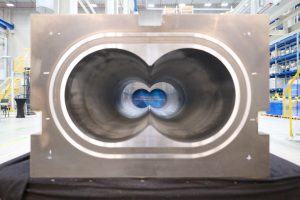



 PX series redefined: Compact, powerful, sustainable
 Another advantage: CFP is compatible with all KraussMaffei standard injection molding


 The strategy presentation previewed at K also outlines
  Underlying this is the idea, championed by