Tuesday, June 30, 2026
spot_img
Home Blog Page 35

Sidel Drives Labelling Innovation with CoboREEL’s Cobotic Technology and 18-Reel Autonomy

Sidel Drives Labelling Innovation with CoboREEL’s Cobotic Technology and 18-Reel Autonomy

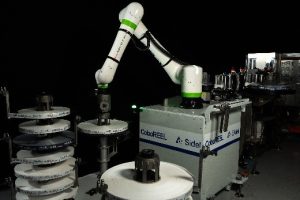
Sidel presents CoboREEL, an automated reel loading solution for beverage packaging labels with three times the reel capacity of any other solution on the market.

CoboREEL’s exceptional 18-reel capacity guarantees 100% accuracy, maximizes efficiency, promotes productivity, and boosts profitability by integrating cobots to automate the reel loading process.

According to forecasts, the world’s demand for packaged water will have increased by 3.5% to over 350 billion liters by 2029. This increase is primarily due to the growing scarcity of clean drinking water in many regions, as well as increased tourism and on-the-go consumption, even though many countries have implemented strict regulations on single-use plastic. Since sustainability and health are predicted to be key trends in the category, carbonate volumes are also anticipated to have increased by 2.2% by 2029. These are just two of the primary beverage categories that are anticipated to expand; other PET packaging sectors are following suit.

As cutting costs and improving efficiency are essential in such high-volume segments, packaging leader Sidel has created CoboREEL, an innovative solution to boost the labelling step.

By automating this simple, repetitive task with integrated cobots, manufacturers achieve 100% accuracy and maximum precision—minimising errors, delays, and misplacements that can lead to unexpected downtime and lost productivity. It also eliminates the need for manual label reel changes, further reducing disruption to operations.

“Our customers are looking for ways to work smarter, with fewer resources and in a more efficient and intelligent way,” explains Antonio Mancino, Product Manager – Labelling, at Sidel. “Thanks to our five decades of packaging expertise at Sidel, we are constantly developing easy-to-use solutions that reduce costs, speed up daily operations, and require minimal training. With CoboREEL, automating reel uploading not only frees workers from repetitive tasks but also allows them to focus on value-added activities where their input is critical.”

Optimising workforce efficiency

CoboREEL enhances production efficiency by automating the reel loading task for labelling equipment, removing the need for operator intervention or reel replacement for the whole duration of the shift. After feeding the CoboREEL at the beginning of the work shift, workers are freed from the repetitive task of manually loading the reels. This allows them to focus on more complex, interesting tasks which in turn improves focus and productivity.

With 18-reel autonomy, the highest reel capacity on the market, CoboREEL not only ensures a full coverage throughout the entire production cycle, but it also handles different label types and designs in total autonomy, without the need of manual changes.

This innovative solution is designed to be intuitive and easy to use, with no maintenance requirements and minimal need for technical expertise, ensuring the lowest total cost of ownership (TCO). With frequent staff turnover, CoboREEL provides businesses with a tool that anyone can operate quickly, without the need for specialised skills or long onboarding.

Boosting productivity and profitability 

With CoboREEL, Sidel has developed accurate and innovative cobot technology that eliminates the risk of manual errors and prevents unplanned machine stops due to uploading delays or misplacements. Coupled with its ability to work independently from the production line, operators can continue working on CoboREEL to load reels for the next cycle even if the line is temporarily stopped. This reduces inefficiencies, which in turn increases profitability and leads to a fast and measurable return on investment.

Flexibility through mobility

CoboREEL works as a standalone unit which can be easily moved and deployed across different modules as required. As it can be interchanged among the labellers, producers benefit from greater flexibility and can utilise equipment efficiently across the plant.

Reducing the environmental impact

The unique, safety-first cobot design of CoboREEL is compact and flexible, with embedded traceability, able to manage different label types and designs autonomously. Its low energy consumption (<0.5 kWh) helps manufacturers reduce their environmental footprint.

“With an unmatched reel autonomy of up to 18 reels, Sidel’s CoboREEL sets a new standard in the industry,” concludes Antonio Mancino. “As the beverage market grows, Sidel will continue to innovate and offer new packaging technologies and solutions that guarantee accuracy, optimise efficiency, boost productivity and increase profitability for our customers.”

https://www.sidel.com/en

#SidelCoboREEL #Modernplasticsindia #Pasticsnews #ModernPlasticsIndiaMagazine
#PrintPublication #Modernplasticssingapore

Trusted Globally, Engineered in India: Shibaura Machine’s Decades of Molding Expertise

Trusted Globally, Engineered in India: Shibaura Machine’s Decades of Molding Expertise

How has Shibaura Machine India adapted its technology and product offerings to meet the evolving demands of the Indian plastics industry?

Shibaura Machine India (SMI) has continually evolved its technology and product offerings to meet the dynamic demands of the Indian plastics industry. With a strong focus on innovation and customer-centric solutions, SMI has integrated advanced automation, energy efficiency, and precision engineering into its injection molding machines. We have introduced a range of high-performance machines designed to cater to diverse sectors such as automotive, packaging, medical, and consumer goods, ensuring flexibility and adaptability to various industry needs.

In response to the growing demand for sustainable solutions, Shibaura Machine India has developed energy-efficient molding machines that reduce power consumption while maintaining high output, contributing to both cost savings and environmental benefits. The company has also embraced Industry 4.0, incorporating IoT-enabled smart technologies into its machines for real-time monitoring, predictive maintenance, and data-driven insights, enhancing production efficiency and reducing downtime for customers.

Additionally, SMI has focused on improving the customization of its products to better align with the specific requirements of the Indian market. This includes offering localized technical support, training, and tailored solutions that cater to regional manufacturing challenges. By staying at the forefront of technological advancements and responding to market trends, Shibaura Machine India continues to provide cutting-edge solutions that drive growth and innovation in India’s rapidly expanding plastics industry.

Can you explain how the integration of Industry 4.0 technologies in your All Electric Injection Molding Machines enhances automation, monitoring, and overall operational efficiency for customers?

The integration of Industry 4.0 technologies in Shibaura Machine India‘s All Electric Injection Molding Machines brings substantial improvements across multiple areas, including:

Reduction in Rejection Rates: With realtime data monitoring and advanced sensors, the machines can detect any inconsistencies during the molding process. This early detection helps in making instant adjustments, minimizing defects, and ensuring higher product quality, ultimately reducing rejection rates.

Reduction in Cycle Time: Industry 4.0 features, such as automation and predictive analytics, optimize machine performance by continuously adjusting the molding parameters for maximum efficiency. This reduces cycle times, increasing throughput and enabling faster production without compromising on quality.

Low Running Costs: The All Electric Injection Molding Machines are designed with energy efficiency in mind. They consume less power than traditional hydraulic machines, leading to lower operational costs over time. Additionally, automation minimizes the need for manual intervention, further reducing labor costs.

Low Utility Costs: These machines require fewer utilities, such as water and compressed air, compared to our hydraulic counterparts. This reduces the overall utility expenses for manufacturers, making them more cost effective to operate.

Enhanced Product Quality: The precision offered by the All Electric machines ensures that each molding cycle produces consistent and high-quality parts. With the integration of real-time monitoring, adjustments can be made instantly, resulting in fewer defects and more reliable product outcomes.

What aspects of Japanese manufacturing culture and Shibaura Machine’s own legacy influence its approach to modern challenges like sustainability and automation in today’s global market?

Japanese manufacturing culture, characterized by precision, efficiency, and a strong emphasis on quality, has significantly influenced Shibaura Machine’s approach to modern challenges. Japanese manufacturing culture, with its emphasis on precision, quality, and continuous improvement (Kaizen), deeply influences Shibaura Machine’s approach to modern challenges like sustainability and automation. Shibaura Machine’s legacy of innovation aligns with Japan’s commitment to technological advancement, driving the development of energy-efficient, automated solutions that meet global standards for eco-friendliness and productivity. This focus on meticulous craftsmanship and environmental responsibility allows Shibaura Machine to address evolving market needs while upholding the trusted quality associated with Japanese engineering on a global scale. The Japanese work ethic is characterized by dedication, discipline, and a strong sense of teamwork. This fosters a collaborative environment where employees work together to achieve common goals.

With the increasing demand for specialized applications in industries like medical and electronics, White Goods, Packaging, Medical Equipment, PET Solutions, Agriculture Products how does Shibaura Machine India adapt its molding technologies to meet these specific needs?

At Shibaura Machine India, we continuously adapt our injection molding technologies to cater to the evolving and specialized needs of diverse industries such as medical equipment, electronics, white goods, packaging, agriculture, and PET solutions.

Our machines are engineered for precision, flexibility, and high productivity. For example, in the medical and electronics sectors, features like precise clamping control, optimized screw design, and PID-based temperature stability ensure accuracy and product safety. In packaging, we offer high speed injection systems capable of reaching velocities up to 400 mm/s, meeting the demands of thin-wall part molding. For agriculture and piping, our machines deliver high plasticizing capacity and support long hold times needed for thick parts. In PET preforms, we offer specialized screws, high response drives, and integrated turnkey solutions to ensure high throughput and superior quality at lower cycle times. Across all these sectors, the adaptability of our machines—combined with advanced control systems, energy-efficient servo technology, and support for complex molding operations—ensures we deliver reliable, cost-effective, and application specific solutions to our customers.

How does Shibaura Machine’s die casting technology cater to the needs of industries like automotive and electronics, where strength and dimensional accuracy are critical?

At Shibaura Machine, we understand that industries like automotive and electronics demand not only high strength and dimensional precision but also consistent productivity and sustainability. Our High-Pressure Die Casting (HPDC) machines are engineered to meet these exacting requirements.

Technically, our machines are capable of producing components with superior mechanical properties—high tensile strength, hardness, and wear resistance—which are crucial for critical automotive parts like engine blocks, transmission housings, and structural elements. We ensure tight dimensional tolerances through high-rigidity platens, precision injection systems, and closed-loop control for consistent shot quality—essential for electronic components like connectors and housings.

To enhance performance and reduce energy consumption, we’ve introduced servo hydraulic technology that precisely controls injection pressure, speed profiles, and holding pressure across each cycle. Our electric die closing system, a key innovation, improves cycle time, minimizes hydraulic oil usage, and significantly reduces the machine’s carbon footprint—aligning with our sustainability goals.

Additionally, our machines support high speed casting and are capable of handling complex geometries with thin walls and intricate features, thanks to advanced mold filling simulations and robust clamping mechanisms.

We’ve also integrated IoT-ready platforms into our machines, enabling remote diagnostics, predictive maintenance, and real-time process analytics, which empower our customers to optimize productivity and reduce downtime.

In essence, our die casting solutions are not only designed for high performance but are also future-ready—equipping our customers with the tools to stay competitive in a rapidly evolving manufacturing landscape.

With over 30 years of experience in manufacturing excellence, what core values and practices have been instrumental in Shibaura Machine’s sustained success and growth in the industry?

Shibaura Machine’s sustained success and growth over 30+ years are rooted in core values of quality, innovation, and customer commitment. Dedication to quality ensures that every machine produced adheres to the highest standards, delivering reliable and durable solutions across industries. This focus on quality builds trust with clients who depend on Shibaura machine for critical manufacturing processes.

Rigorous Quality Control: Implementing stringent quality control measures ensures the production of high-quality products that meet or exceed industry standards.

Precision Manufacturing: Advanced manufacturing techniques and precise engineering practices contribute to the production of components with exceptional accuracy and durability.

Global Network: A strong global presence enables Shibaura Machine to serve customers worldwide and collaborate with industry leaders.

Strategic Partnerships: Collaborating with key partners strengthens the company’s market position and accelerates growth.

Shibaura Machine India has a strong commitment to innovation. How does the company’s core vision drive its approach to technological advancements and the development of new solutions for the manufacturing industry?

Shibaura Machine India’s core vision is to be a global leader in providing innovative and reliable manufacturing solutions. This vision drives the company’s commitment to technological advancements and the development of new solutions for the manufacturing industry.

This commitment to innovation ensures our solutions not only meet current demands but also anticipate future challenges, providing customers with solutions that are adaptable and scalable. For instance, the company’s focus on energy-efficient designs and environmentally friendly.

production methods reflects a broader mission to support sustainability, which is increasingly important in today’s manufacturing landscape. With this Shibaura Machine India continues to deliver high-performance, reliable solutions that empower its clients to achieve operational excellence and competitive advantage in the global market.

www.shibauramachine.co.in

#shibauramachine #Modernplasticsindia #Pasticsnews #ModernPlasticsIndiaMagazine
#PrintPublication #Modernplasticssingapore

SML Launches a New Turret Winder for Cast Jumbo Rolls with a Diameter of up to 1,500 mm

SML Launches a New Turret Winder for Cast Jumbo Rolls with a Diameter of up to 1,500 mm

SML’s brand-new turret winder W1300 comes fully equipped with powerful technical features and functions. Its ability to produce jumbo rolls with a mechanical diameter of 1,500 mm offers numerous benefits to manufacturers in downstream processes.

“Our new W1300 turret winder was designed for the winding of CPP, CPE, mono-oriented and barrier films of absolute premium quality. With winding speeds of up to 450 m/min and end film widths from 2,400 to 3,900 mm, the new winder boasts everything necessary to ensure high-volume production”, Alexander Bruckmüller, the Product Manager at SML, confirms.

Efficiency in subsequent processes

Thanks to the winder’s large mechanical roll diameter of 1,500 mm, the running times of the individual rolls can be extended quite significantly. Extending the production runs primarily leads to a boost in efficiency in subsequent processes, such as printing or metallising. The following example demonstrates quite clearly the tremendous amount of cast film contained in a jumbo roll of 1,500 mm: When cast film with a thickness of 25 µm is wound onto a roll with a diameter of 1,200 mm, this roll contains 45,000 running meters of film. A jumbo roll with a diameter of 1,500 mm has 70,000 running meters of the same film – this is an increase of more than 50 %!

Adjusting the hardness of the film roll

The W1300 winder can be adapted with ease to different production requirements. Two operational modes are available: Depending on the film, the winder either can work in gap mode or in contact mode. Before the film hits the contact roller, it runs over a continuously adjustable satellite roller, to control the air intake between the individual film layers and to adjust the hardness of the film roll. Winding is possible either with or without winding shafts. The inlet section of the winder is prepared for the installation of a post cooling roller.

Roll change with auxiliary contact rollers

Two different cross-cutting units are available for the winder W1300: One is a full-width twisting knife for thinner films and the second one is a flying knife for thicker films and oriented films. During a roll change, driven auxiliary contact rollers are engaged in order to keep the condition of the film at the roll in perfect condition up to the very last layer. A handling system is available both for shaftless winding and for winding with shafts. During shaftless operation, rolls can be also handled with an overhead crane.

Suitable for retrofits

The standalone nature of the winder makes it easy to install it on third-party cast film lines since it comes with its own control system and electrical components.

www.sml.at

#sml #Modernplasticsindia #Pasticsnews #ModernPlasticsIndiaMagazine
#PrintPublication #Modernplasticssingapore

Tosca Doubles Down on German Investments for Retail Scalability

Tosca Doubles Down on German Investments for Retail Scalability

In order to meet the expanding demands of its retail clients throughout Central Europe, Tosca, a world pioneer in reusable packaging and pooling solutions, has announced a major expansion of its operations in Germany. In order to accommodate growing demand and client growth throughout the region, the company has made a strategic infrastructure investment by building a new service center in Salzkotten and expanding its current facility in Frechen.

New Salzkotten Service Centre – Enhancing Capacity and Efficiency

On February 1, 2025, Tosca opened a new service center in Salzkotten to meet the rising demand for its plastic half pallet. Covering 3,300 square meters and offering an annual capacity of 3.1 million trips for half pallets, the facility significantly enhances Tosca’s operational footprint in the region.

The site plays a key role in supporting their reusable plastic half pallet operations, helping to onboard and scale major FMCG opportunities effectively.

Strategic Expansion of Frechen Service Centre – Supporting Growth

In addition to the new opening, they have completed a substantial expansion of its existing service center in Frechen. The facility’s footprint has doubled, enabling approximately 2 million additional half pallet flows per year. This expansion supports anticipated business growth of over 30% in 2025 and ensures Tosca can continue to deliver consistent, high-quality service to customers across Germany.

Strengthening Supply Chain Support for Retailers in Central Europe

These developments reflect their continued focus on strengthening supply chain efficiency and reliability for key players in the FMCG and retail sectors. The investments are tailored to meet the rising operational demands of Tosca’s half pallet business, delivered through a joint programme with several prominent retail chains in Central Europe.

“These strategic investments allow us to keep pace with growing demand while maintaining the high standards of service, reliability, and sustainability expected by our customers,” said Marco Gonzalez, Managing Director for Central Europe. “With enhanced infrastructure in Salzkotten and Frechen, we are well positioned to support our continued growth across Germany.”

https://www.toscaltd.com/

#toscaltd #Modernplasticsindia #Pasticsnews #ModernPlasticsIndiaMagazine
#PrintPublication #Modernplasticssingapore

Schaltbau Innovates Plastic Processing with Shot Blast Automation

Schaltbau Innovates Plastic Processing with Shot Blast Automation

Attaining a competitive advantage in the market through the economical production of innovative products. By automating the de-flashing of plastic housings at its German facility, a world leader in the manufacturing of electromechanical components for safe and effective switching operations and the protection of direct current applications complied with this recommendation. The company selected an ATEX-compliant Rösler wire mesh belt blaster, model RSAB 370-T1+1. The labor costs were essentially reduced because to this investment.

The innovative products from Schaltbau GmbH, such as contactors, are – among others — used in the sectors railway, energy and e-vehicles. The de-flashing operation facilitates assembly and ensures the functionality of the electrical systems.

The Schaltbau GmbH is a top supplier of direct current (DC) solutions worldwide. This Munich-based multi-division company specializes in electrification solutions and products for a wide range of sectors. Railway clients have been using the extensive range of contactors, plug connectors, switches, and safety components for decades. The Eddicy trademark represents cutting-edge solutions for dependable and safe switching operations as well as the defense of direct current applications in the energy and e-vehicle sectors. These cutting-edge goods are manufactured in a number of places across Germany, Europe, the US, and Asia, including a facility in Aldersbach, Bavaria, Germany.

Reducing manufacturing costs through automation

Armin Voggenreiter, director of operations at the Aldersbach location of the Schaltbau GmbH, comments: “To remain competitive at our Aldersbach plant we work hard to identify cost reduction possibilities for practically every single manufacturing step.” As part of a lean manufacturing project the production of housing components was extensively analyzed. These are molded in a pressing operation utilizing melamine/polyester materials. Due to some material overflow in the press unwanted flashes are created, which must be removed to ensure the safe assembly and functionality of the components.

The blow-off system at the machine exit ensures that the housing components are leaving the blast machine without any adhering dust particles and residual blast media.

To date the flash removal was done manually requiring a lot of time and personnel. For example, one person was stationed at each press. Therefore, automating the de-flashing operation offered a substantial cost-saving opportunity.

The project managers at Schaltbau presented this task to two equipment manufacturers, whose machines are already utilized in other manufacturing areas of the company. Armin Voggenreiter explains: “Rösler was one of the two suppliers we talked to. We know this company well, because it has been a reliable partner of ours in the field of mass finishing.”

A major requirement for the selection of the right blast machine was that the de-flashing process had to be extremely gentle. For example, the components must not tumble over each other during the entire process, and they must be completely free of any residual blast media when coming out of the machine. “For this challenging task Rösler presented the by far most convincing equipment concept”, remembers the director of operations. Rösler offered the highly flexible wire mesh belt blast machine, model RSAB 370-T1+1, as the most suitable solution for the continuous, gentle de-flashing of the housing components. The de-flashing trials at Rösler were conducted in a comparable machine.

The innovative products from Schaltbau GmbH, such as contactors, are – among others — used in the sectors railway, energy and e-vehicles. The de-flashing operation facilitates assembly and ensures the functionality of the electrical systems.

“The excellent results of the processing trials convinced us that the Rösler equipment concept was by far the best for our purposes”, concludes Voggenreiter.

Effective de-flashing with less personnel

After they have been pressed, the duroplast components, with dimensions of up to 350 x 215 x 45 mm and weighing up to 575 Gramm, are manually placed on the 370 mm wide, wear resistant wire mesh belt. The transport speed through the blast machine, precisely adapted to the respective work pieces and the severity of the flashes, is stored in a processing program, which can be selected by the operator at the control panel. The blast chamber is equipped with two W32 turbines, which were specially developed for the treatment of plastic components. One turbine is placed above and the other below the wire mesh belt. The mesh is wide enough that the blast media – in the form of polyamide pellets — reaches the work pieces on all sides so that they can be de-flashed in one single pass through machine. Any dust created during the process is continuously removed.

The optional conveyor belt transport system returns the finished work pieces to the loading station where the operator removes them manually.

Moreover, the standard blow-off system and the additional compressed air blow-off device ensure that any residual blast media is removed from the de-flashed components. At the machine outlet a chute transfers the finished housing components to a separate conveyor belt system in “L” shape design for returning the components to the loading section, where they are removed by hand. “The shot blast machine allowed us to reduce our personnel costs by around 40 %”, reports Armin Voggenreiter. To minimize the operating noise, the entire shot blast machine is placed in a noise absorbing cabin. To offset the resulting shortening of the loading area, Rösler increased the length of the wire mesh belt.

www.rosler.com

#rosler #Modernplasticsindia #Pasticsnews #ModernPlasticsIndiaMagazine
#PrintPublication #Modernplasticssingapore

STADLER Entrusts Co-CEO Role to Julia Stadler, Eighth Generation in Line

STADLER Entrusts Co-CEO Role to Julia Stadler, Eighth Generation in Line

The internationally operating German firm STADLER Anlagenbau GmbH, which specializes in the design, manufacture, and assembly of turnkey recycling and sorting systems, is pleased to announce Julia Stadler’s appointment as Co-Chief Executive Officer, commencing June 1, 2025. This action promotes a forward-thinking, sustainability-driven strategy and upholds STADLER’s longstanding legacy of family leadership.

CFO Claus Maier and two co-CEOs, Willi and Julia Stadler, now make up the leadership group. This seamless team ensures continuity, trust, and a single strategic vision based on engineering excellence and environmental responsibility by merging expertise, innovation, and generational transition.

Founded in 1791 as a village forge in Altshausen, STADLER has evolved over eight generations into an internationally recognized technology leader. Today, the company is synonymous with high-quality, tailor-made sorting systems for various types of waste, enabling efficient preparation for recycling. With its innovative solutions, STADLER plays a crucial role in advancing a healthy circular economy in every country it serves.

When Willi Stadler assumed leadership in 1993, the company employed just 26 people. Today, that number has grown to around 600—reflecting sustained growth driven by a steadfast commitment to quality, innovation, and sustainable practices.

Julia Stadler, the eighth-generation family member, joined STADLER in 2023 and has served as Chief Digital Officer for the past two years. In this role, she has led the company’s digital transformation, driving initiatives in automation, integrated data systems, and AI, positioning STADLER for long-term global competitiveness. Her leadership in this role, combined with her prior international consulting experience, has equipped her with sharp strategic insight, authentic leadership qualities, and a deep understanding of global business dynamics, making her exceptionally well-prepared to assume the role of Co-CEO.

“Stepping into the role of Co-CEO as the eighth generation in our family business comes with many emotions: pride, humility, and gratitude,” says Julia Stadler. “It’s both a commitment to carry forward a business built over more than 230 years and a unique opportunity to shape where we’re going. Most of all, it’s a privilege to do this alongside my father and our dedicated team.”

Julias’s leadership qualities are powerfully captured in the words of Willi Stadler: “Julia is extremely goal-oriented and driven. When she sets a vision, she pursues it with focus, energy, and persistence. At the same time, she leads with empathy and integrity—essential qualities in today’s leadership. She listens carefully, brings people together, and creates an environment where innovation and responsibility can grow. These qualities make her not only a strong leader but also an inspiring one.” Guided by core values such as responsibility and optimism, Julia fosters a culture of ownership and empowerment, encouraging individuals and teams to view challenges not as obstacles, but as opportunities for innovative solutions.

“Julia’s appointment represents continuity and long-term thinking for our company. Her energy, modern leadership style, and international perspective bring great potential for the future. With her on the leadership team, we are well positioned to grow further and shape the next chapter of our company’s success. Lastly, I just want to say that I couldn’t imagine a better Co-CEO to work with,” concludes Willi Stadler.

http://www.w-stadler.de

#w-stadler #Modernplasticsindia #Pasticsnews #ModernPlasticsIndiaMagazine
#PrintPublication #Modernplasticssingapore

Groundbreaking Synthetic Fluid Line from Perstorp Targets Industrial Lubricants

Groundbreaking Synthetic Fluid Line from Perstorp Targets Industrial Lubricants

The new line of saturated synthetic polyol esters from Perstorp, a fully owned subsidiary of PETRONAS Chemicals Group Berhad (PCG) and a major worldwide innovator in specialty chemicals, has been introduced. Perstorp Synthetic-EF 5, Synthetic-EF 15, and Synthetic-EF 22 are three high-performing synthetic esters in the range that were created to satisfy the changing performance, technical, and environmental requirements of the lubricant industry. The next step in becoming a reputable leader and supplier of specialty chemicals to the expanding market for synthetic lubricants is this launch.

Perstorp’s Synthetic-EF portfolio enables lubricant producers to create high-performing, application-specific lubricants for the most demanding conditions throughout a broad temperature range, with a strong focus on validated environmental performance and supply chain security. The portfolio, which is based on saturated synthetic polyol esters, includes products that are biodegradable and registered with the Registration, Evaluation, Authorization and Restriction of Chemicals (REACH) as well as a path to listing on the Lubricant Substance Classification List (LuSC) in accordance with EU Ecolabel regulations. These solutions meet exact technical, regulatory, and environmental standards while enabling customized innovations for a variety of applications when paired with a fully integrated global supply chain and responsive local support.

Perstorp Synthetic-EF portfolio overview:

  • Perstorp Synthetic-EF 5 – For demanding low-temperature applications. A saturated synthetic polyol ester, registered with REACH as biodegradable, with an ultra-low pour point and high flashpoint. The product will be tested for biodegradability according to OECD 301.
  • Perstorp Synthetic-EF 15 – For applications that require performance and safety for effective operations. A biodegradable (OECD 301 & registered with REACH) saturated synthetic polyol ester with a high flash point and excellent thermal and oxidation stability.
  • Perstorp Synthetic-EF 22 – For demanding applications across a wide temperature range. A saturated synthetic polyolester, registered with REACH as biodegradable, with a high viscosity index and low acid number. The product will be tested for biodegradability according to OECD 301.

Dr. Valentina Serra-Holm, Head of Engineered Fluids Solutions at Perstorp, comments: “With our long-standing expertise in ester chemistry and vertically integrated production, we’re able to offer exceptional consistency and control throughout the value chain.

Combined with our global network of application labs and technical experts, we support lubricant manufacturers with tailored solutions and hands-on development. This makes us more than a supplier – we’re a true partner in enabling sustainable growth for lubricant manufacturers.”

Beyond technical performance, Perstorp’s synthetic esters are developed to deliver verified environmental performance – demonstrated through OECD 301, REACH registrations as biodegradable, and a roadmap toward LuSC listing in compliance with EU Ecolabel criteria. With competitive Product Carbon Footprints (PCFs) and ongoing work toward ISCC PLUS certification,

we provide lubricant manufacturers with transparent environmental credentials that support compliance with evolving regulatory and market expectations – without compromising on performance.

www.perstorp.com

#perstorp #Modernplasticsindia #Pasticsnews #ModernPlasticsIndiaMagazine
#PrintPublication #Modernplasticssingapore

Clariant Unveils Next-Gen Processing Aids Free from PFAS for Clean Extrusion

Clariant Unveils Next-Gen Processing Aids Free from PFAS for Clean Extrusion

  • New AddWorks PPA product line offers PFAS-free alternatives to conventional fluoropolymer-based polymer processing aids
  • Innovative formulations deliver superior extrusion processability, efficient shark skin removal, and enhanced film surface properties
  • Regulatory compliant solutions address growing market demand for more sustainable additives in food contact and packaging applications

Clariant announced the launch of its new AddWorks PPA product line, a new generation of PFAS-free polymer processing aids made especially for polyolefin extrusion applications, in anticipation of the K’ 2025 trade show in Duesseldorf. While upholding high performance standards, this creative solution meets the industry’s increasing demand for more environmentally friendly substitutes for traditional fluoropolymer-based processing aids.

PFAS-free AddWorks PPA enhances extrusion processability.

The new line includes AddWorks PPA 122 G, which is aimed at Greater China and SEAP areas, and AddWorks PPA 101 FG, which is mainly focused on EMEA, Americas, and SEAP markets. The commercial availability of both solutions provides manufacturers with a timely answer as global regulatory prohibitions on PFAS chemicals continue to tighten.

“Our new AddWorks PPA product line represents a significant breakthrough in sustainable polymer processing,” said Diederik Goyvaerts, Global Business Development Manager for Polymer Solutions at Clariant. “By developing PFAS-free alternatives that match or exceed the performance of traditional processing aids, we’re helping our customers stay ahead of regulatory changes while maintaining the high-quality standards their end-users expect.”

The innovative formulations are completely free of per- and polyfluoroalkyl substances (PFAS), as well as inorganic, silicone, or polysiloxane materials. This composition ensures broad regulatory compliance, including suitability for food contact and food packaging applications, addressing a critical need in the packaging industry. Additionally, these PFAS-free solutions support recyclability requirements under the upcoming EU Packaging and Packaging Waste Regulation (PPWR), further aligning with the industry’s sustainability objectives.

Manufacturers using the new AddWorks PPA solutions can expect significant processing improvements, including enhanced extrusion efficiency, effective elimination of shark skin defects, and superior film surface smoothness. The products also maintain neutral behaviour regarding optical and mechanical properties, with no negative impact on dyne level, sealability, or coefficient of friction – critical factors for downstream converting operations.

PFAS-free AddWorks PPA delivers efficient shark skin control, enhances extrusion processability, resulting in best-in-class film surface

AddWorks PPA 101 FG features a 100% active fine grain composition that can be easily incorporated via host resin, masterbatch, or concentrate. Meanwhile, AddWorks PPA 122 G comes in a convenient masterbatch form for easy handling, requiring the same dosing level as traditional polymer processing aid masterbatches, simplifying the transition for manufacturers.

The versatility of these new processing aids makes them ideal for a wide range of applications, including polyethylene blown and cast film extrusion processes commonly used in packaging, agriculture, and building & construction industries. Film converters will particularly benefit from the improved surface quality and processing efficiency these additives provide.

Clariant’s introduction of the AddWorks PPA line reinforces the company’s commitment to developing more sustainable solutions that address both regulatory challenges and performance requirements. As global regulations increasingly target PFAS substances due to environmental and health concerns, Clariant’s proactive approach provides customers with future-proof solutions that maintain operational excellence while advancing sustainability goals. It underlines Clariant’s commitment to developing solutions that align with growing consumer and brand priorities for health, transparency, and sustainability. As demand rises for products that promote well-being and minimize environmental impact, Clariant provides innovative ingredients and materials that help brands meet evolving market expectations and regulatory requirements.

www.clariant.com

#clariant #Modernplasticsindia #Pasticsnews #ModernPlasticsIndiaMagazine
#PrintPublication #Modernplasticssingapore

UBQ Debuts New Masterbatch Line That’s Cost-Stable and Sustainable

UBQ Debuts New Masterbatch Line That’s Cost-Stable and Sustainable

The innovative materials company UBQ Materials unveiled UBQ Masterbatch a new product portfolio set to transform manufacturing and supply chains.

As U.S. landfills are projected to run out of capacity by 2036, UBQ Materials provides a solution to the looming waste crisis. The patented process transforms mixed household waste – including organics and hard-to-recycle materials – into a plastic alternative used in a wide range of everyday goods, from flowerpots to building materials and beyond.

Producing UBQ Masterbatch can divert up to 95% of household waste that would otherwise be sent to landfills or incinerators. Amid volatile markets and trade wars, UBQ Materials offers retailers and manufacturers a price-stable, risk-resilient plastic alternative that integrates seamlessly into existing production lines.

“We’re turning the world’s most difficult waste into a manufacturing advantage,” said Albert Douer, Chairman and CEO of UBQ Materials. “UBQ Masterbatch unlocks the ability to replace oil-based resins with a circular material made entirely from household waste, with no need to compromise on performance or process. This is more than sustainability—it’s smart sourcing. There are no more excuses for relying on virgin materials when waste can do the job better.”

UBQ Materials has manufacturing facilities in Europe and plans to open a U.S. facility soon. UBQ is shipped to manufacturing partners globally, such as Crescent Garden, who have products available in the U.S., Europe, and across Latin America.

Advancing supply chain transformation

With former EPA Administrator Gina McCarthy and EU Commissioner Connie Hedegaard on its Advisory Board, UBQ Materials advances the circular economy as part of supply chain transformation.

UBQ Materials has worked with leading brands, including Mercedes-Benz, PepsiCo, and McDonald’s, to advance their sustainability goals by incorporating UBQ material into their products.

The European Commission awarded UBQ Materials a 5 million grant from the Just Transition Fund to expand sustainable material solutions, like UBQ Masterbatch, and bring innovation to market faster.

The UBQ Masterbatch portfolio is unique because it can be combined with a range of polymers and is ideal for injection molding or shaping through molds. UBQ Masterbatch offers easy handling, excellent dispersion, cost competitiveness, and a negative carbon footprint.

https://www.ubqmaterials.com/

#ubqmaterials #Modernplasticsindia #Pasticsnews #ModernPlasticsIndiaMagazine
#PrintPublication #Modernplasticssingapore

Coveris Boosts Use of Recycled PE in Flexible Packaging Innovations

Coveris Boosts Use of Recycled PE in Flexible Packaging Innovations

With a notable rise in the purchasing of post-consumer recycled (PCR) polyethylene (PE) for its industrial, consumer (beverage), and transport film products, Coveris Flexibles France has made great progress in sustainable packaging. A significant turning point in its circularity journey was reached by Coveris in France, which reported an astounding 92% rise in PCR integration into new products by the end of 2024 compared to 2022.

Since 2021, Coveris Flexibles France has incorporated over 7,400 tons of PCR material into its flexible film products, including collation films (shrink/stretch) as well as shrink/stretch tubes for transport packaging. Among the flagship products are the ultra-light, fully recyclable DuraLiteR MAX shrink-wrap films, containing up to 85% recycled content, and the TubeLiteR Stretch solution, featuring up to 50% PCR, for safe and sustainable load stability.

“We’re thrilled to see that all the PCR material purchased has been used in manufacturing our products and that PCR integration continues to grow across our product lines. It is a clear reflection of our commitment to innovation and sustainability, helps our customers meet their goals, and proves that plastics can be part of a truly circular future”, commented François-Xavier Allilaire, Films Commercial Director at Coveris Flexibles France.

This regional progress reflects Coveris Group’s broader sustainability vision: increasing PCR/PIR usage in global production from 20,000 to 50,000 tons by 2026 and 70,000 tons by 2030. These targets are supported by ReCover, Coveris’ in-house recycling operation, with a projected capacity of 90,000 tonnes by 2030. In partnership with waste management leader Interzero, ReCover uses advanced mechanical recycling to convert plastic waste into high-quality recycled resins – cutting CO₂ emissions, securing raw materials, and supporting regulatory compliance.

“At Coveris, we see plastics as valuable resources, not waste. By turning post-consumer waste into high-quality packaging and investing in our ReCover recycling business and strategic partnerships, we’re driving real change in the packaging industry,” said Nikolaus Wolfram, Chief Operating Officer at Coveris’ Flexibles Business Unit.

https://www.coveris.com/

#coveris #Modernplasticsindia #Pasticsnews #ModernPlasticsIndiaMagazine
#PrintPublication #Modernplasticssingapore