Tuesday, June 30, 2026
spot_img
Home Blog Page 38

LAMIERA 2025 Finishes Strong with Over 18,000 Direct Visitors and 6,000 Steel Industry Guests

0

LAMIERA 2025 Finishes Strong with Over 18,000 Direct Visitors and 6,000 Steel Industry Guests

The 23rd edition of LAMIERA, the international exhibition dedicated to sheet metal, tube and profile cutting, forming and processing technologies, which took place at fieramilano Rho from Tuesday 6 to Friday 9 May, closed positively.

The only event in Italy exclusively focused on the sector, LAMIERA has become one of the most important trade fairs in the international panorama of sector events over the years. The key players of the exhibition, which covered a total area of 40,000 square metres, were over 400 companies, of which 31% from abroad, representing 23 countries

Promoted by UCIMU-SISTEMI PER PRODURRE, the Italian machine tools, robots and automation systems manufacturers’ association, and organised by CEU-CENTRO ESPOSIZIONI UCIMU, LAMIERA showed more than 500 machines in operation. In particular: sheet metal cutting and forming machines; bar, profile and tube processing machines; presses; welding systems; robotics; software; surface treatments and finishing and, for the first time, also a proposal of Revamping & Retrofitting technologies. After all, the 2025 edition of LAMIERA obtained ICIM ISO 20121:2024 certification as a sustainable event, managed and organised according to the principles of environmental, economic and social sustainability.

More than 18,000 professional operators were registered as visitors over the four days of the exhibition, in addition to over 6,000 operators from Made in Steel, who had expressed an interest in visiting LAMIERA as well, during registration. Therefore, the agreement signed with Made in Steel (held in partial concurrence in the front halls), which enabled free passage from one event to the other, once again ensured very interesting results.

Considering the total number of visitors, 8.8% was from abroad, representing 72 countries. The most numerous delegations came from: Germany, Switzerland, China, Turkey, Croatia, France, Romania, Holland, Spain, Poland, Serbia, Slovenia, India, Finland, Albania, Portugal, United Kingdom, Belgium, Austria, Argentina, Republic of San Marino, Israel, Greece, United Arab Emirates, Uzbekistan, Malta, Moldova, Czech Republic, Ukraine. There were also delegations including operators from Saudi Arabia, Brazil, China, India, Mexico, Serbia, Turkey, Hungary and Vietnam, invited within the traditional incoming initiative organised by UCIMU, in cooperation with MAECI-Ministry of Foreign Affairs and International Cooperation and ICE-Italian Trade Agency.

Riccardo Rosa, president of UCIMU-SISTEMI PER PRODURRE, said: “These data confirm that LAMIERA is one of the most important international events dedicated to the sector, a sector in which Italy excels, occupying the top positions in the world sector rankings, where, again in 2024, it ranked second for production and exports and third for consumption”.

Alfredo Mariotti, general manager of UCIMU-SISTEMI PER PRODURRE, stated: “The numerous visitors were able to take a close look at the machines in operation, the core of the exhibition, but also to see a wide range of solutions for welding and finishing treatments, automation and robotics, in addition to discussing the prospects of the industry with companies, in the light of digital developments and the entry of artificial intelligence. The general emerging feeling was that of a sector that looks at innovations, even the most disruptive ones, much more as an opportunity than as a risk. And this makes us realise, once again, how our companies are always ready to conquer new productive spaces”.

“Apart from the first day, which did not record a brilliant attendance, also due to the strikes, the event welcomed the operators we expected, both in terms of number and quality. This confirms the validity of the offering and we will work on this path to tune the exhibition proposal more and more to the needs of companies and the market.”.

The event was enriched with a programme of about 30 meetings, proposed by LAMIALAMIERA, the arena promoted by FONDAZIONE UCIMU, with the contribution of the Lombardy Region, the sponsorship of BPER Banca and the patronage of TecnoLamiera. The programme of events started with the Opening Ceremony, which was chaired by Riccardo Rosa, president of UCIMU-SISTEMI PER PRODURRE and included speeches by Raffaele Cattaneo, undersecretary to the Presidency of the Lombardy Region and Carlo Bonomi, president of Fiera Milano. Then, the meeting hosted the presentation of the study carried out by CEU in cooperation with PwC, “The metal forming machine sector: trends, challenges and opportunities”, whose results were illustrated by Sandro Bicocchi, PwC partner, Studies and Institutional Relations Office, and by Ivan Lavatelli, PwC partner, Core Operation leader. A roundtable followed on “The point of view of customer sectors”, moderated by Fabrizio Garnero, editorial director of TecnoLamiera, with Andrea Bianchi, Strategy and Rotorcraft Business Evolution – head of Products and Services Policy, Leonardo; Fabio Giuliani, chief operating officer, Mermec; Riccardo Moretto, Business Development manager, Moretto Group. The discussion highlighted the state-of-the-art and medium-term plans for some players from the most important destination sectors in the world of metal forming, including aerospace, defence, railways and automotive.

A total of 520 operators attended the speeches in person, in addition to 4,100 users who were connected remotely over the four exhibition days, thanks to the live streaming, which was activated for the entire period.

The trade show recorded a total of 760 students, who, invited within the UCIMU Academy initiative and accompanied by their teachers, took part in free tours (about 520 students) and in guided tours (about 240 students) led by tutors who illustrated, at the stands, state-of-the-art technologies representing international production in the sector.

The interest of the manufacturing world in the event is also measured by the lively activity on the digital channels of the exhibition (Facebook, Instagram, X, LinkedIn, YouTube). Presently, the social community of LAMIERA has 9,244 registered followers, almost 2,000 more than in the previous edition.

Among all the exhibition profiles – Facebook, X, Instagram, LinkedIn and YouTube – it is LinkedIn that registers the highest activity, with an increase of almost a third of total followers over the last year. In the period 12 April 2025-12 May 2025, the total number of views of the posts published by the page were more than 114,000 coming from 3,523 single contacts, well over the number of total followers of the page, also thanks to the digital advertising campaign activated for the event.

In the period January-May 2025, the website of LAMIERA recorded 98,000 visits by 68,000 single users (up from the 2023 figures). Italy, Turkey, India, the United States and Germany were, in order, the countries with the highest number of online visits.

The next edition of LAMIERA is scheduled to take place again at fieramilano Rho, from 11 to 14 May 2027 .

www.lamiera.net

#lamiera #Modernplasticsindia #Pasticsnews #ModernPlasticsIndiaMagazine
#PrintPublication #Modernplasticssingapore

Cannon Viking’s PURFORM Transforms the PU Foam Block Manufacturing Landscape

Cannon Viking’s PURFORM Transforms the PU Foam Block Manufacturing Landscape

A world pioneer in cutting-edge turnkey facilities for the manufacturing of polyurethane foam blocks, Cannon Viking presents its ground-breaking PURFORM and PURFORM Elite machines. Beginning on May 20, 2025, these next-generation technologies will be accessible worldwide, marking a revolutionary advancement in continuous slabstock production.

The PURFORM by Cannon is designed to optimize foam production processes by integrating a series of advanced technologies tailored to maximize yield and improve block quality. At the heart of this innovation lies a bespoke chemical metering system engineered to the unique properties of polyurethane raw materials, ensuring up to 3% improvement in chemical flow accuracy compared to market alternatives. This precision translates directly into consistent formulations and high-quality foam blocks. The system is complemented by a cutting-edge direct-drive mixer, which eliminates pulleys and belts, enhancing reliability and reducing maintenance while supporting a broader range of mixing speeds for specialty foams.

PURFORM also features an advanced chemical laydown system, optimizing material distribution across the production line, reducing waste by up to 2%, and improving foam consistency. The system can be customized with various laydown options, including the innovative LayDown Master, providing unmatched flexibility. Additionally, the modular design facilitates quick assembly and future upgrades, enabling producers to adapt swiftly to changing market demands.

Complementing these hardware advancements is the Omega 4.0 computer control platform, an industry-leading system offering real-time monitoring, intuitive graphical interfaces, and closed-loop process control. This ensures that producers maintain precision and efficiency across all production parameters, achieving foam yields exceeding 95% under ideal conditions.

The modular design of PURFORM by Cannon streamlines manufacturing and facilitates future upgrades, ensuring long-term adaptability for evolving production demands.

For producers seeking even greater performance and flexibility, Cannon Viking offers the PURFORM Elite. This high-pressure version incorporates all the innovations of the PURFORM machine, while introducing enhanced capabilities for high-volume and technical foam block production. The Elite model features advanced configurations for specialized and technical foam applications and an even more robust system for chemical metering and distribution.

According to Richard Doublet-Stewart, General Sales Manager at Cannon Viking, “The launch of PURFORM and PURFORM Elite by Cannon marks a transformative moment for polyurethane foam block production. By combining advanced technology with our deep understanding of customer needs, we are delivering solutions that redefine efficiency and quality standards in the industry.”

With a rich history dating back to 1956, Cannon Viking has continually pushed the boundaries of foam production technology. From the introduction of CarDio technology to the recent success of LayDown Master, the company remains at the forefront of innovation, offering solutions that empower producers worldwide.

https://www.cannonviking.com/

#cannonviking #Modernplasticsindia #Pasticsnews #ModernPlasticsIndiaMagazine
#PrintPublication #Modernplasticssingapore

Shifting Gears: Print Providers as Strategic Business Allies

Shifting Gears: Print Providers as Strategic Business Allies

In a world where digital advertisements are everywhere, print has a unique opportunity to stand out and produce results. However, that won’t occur until printers take the initiative.
That is the main conclusion to be drawn from Print Power’s most recent piece about how automation and the integration of Application Programming Interfaces (API) are enabling real-time marketing.
Planning, quoting, design, approvals, and production used to take weeks for print. Additionally, it found it difficult to compete with the sophisticated dashboard-based reportability that agencies, CRM managers, digital advertisers, and performance marketers depend on.

Now automated direct mail can be set in motion with a few clicks – directly from the same marketing platforms used to trigger emails, SMS, or push notifications and even social media posts.

Automated direct mail, also called programmatic mail or triggered mail, is a highly effective, hyper personalised channel that can be immediately actioned by abandoned baskets, reactivation flows prompted by customer inactivity, welcome sequences, and loyalty campaigns.

Print can land on the doormat, or in the mailbox, as soon as the next day.

This dynamic approach drives significantly higher response and conversion rates, increased average order value, and achieves a tangible, brand-rich interaction.

It is being enabled by the following:

  • Seamless integration with modern software connecting creative templates, CRM systems, customer data, and analytics into a single automated process. Direct mail performance can be tracked alongside digital campaigns by making use of attribution models to determine the trigger for online sales.
  • An increased ability to measure results. For years, print suffered from the perception problem that it couldn’t be measured. But today’s data tells a different story and automated mail generates impressive returns.
  • Greater focus on ROI rather than cost. Offline channels like direct mail tend to be more expensive than digital options but they often deliver higher conversion rates. Deutsche Post reported a 900% return on advertising spend, or nine euros in revenue for every euro spent. Postage, often the major cost in a direct mail campaign, can by reduced by using postal consolidators. These specialised service providers share deliveries at discounted rates.
  • Enhanced software removing the complexity, with automated platforms managing templates, data cleansing, address validation, postal optimisation, and print fulfilment. For example, a single API that collects data, triggers campaigns and routes production.

Automation elevates print’s visibility in performance dashboards for marketers, CRM leads, and digital media teams. It is helping put print back on the radar.

Important too, for many clients, is working with a partner that provides a full-service approach to manage the complexity of print mailings.

For printers that have invested heavily in automation and production technology (such as next generation Ricoh digital print technology and FusionPro customised document creation software that creates unique, relevant, targeted communications) the next step is engaging with the world of CRM, marketing automation, and customer data.

Delivering a comprehensive service also helps attract first time users who see the potential of automated mail but need guidance throughout the process. If print is to reclaim its place in the media mix, marketers need someone to show them.

Now is the time for printers to reposition themselves as strategic partners and lead the way.

https://www.ricoh-europe.com/

#ricoh-europe m#Modernplasticsindia #Pasticsnews #ModernPlasticsIndiaMagazine
#PrintPublication #Modernplasticssingapore

Micrometal Group and TMP Inc. Unite Under New Brand Identity

Micrometal Group and TMP Inc. Unite Under New Brand Identity

Wickeder Group (owner of the micrometal Group) has formally announced a significant growth with the acquisition of Thin Metal Parts (TMP Inc.) and a striking new corporate identity, marking a significant advancement for precision manufacturing.
The micrometal Group has increased both its technological capabilities and its global presence with the strategic purchase of TMP Inc., a U.S.-based leader in precision metal fabrication solutions. The Micrometal Group will now function under the new name Micro Component Group, which reflects its expanded ambition and solidified position as the world leader in micro-precision components, in keeping with this exciting development.

In addition to photo-chemical etching (PCE), TMP Inc brings a versatile suite of complementary technologies to the Group. Its electroforming capabilities allow for the creation of ultra-precise, high-resolution metal components with exceptionally fine features and surface finishes, ideal for applications such as microfluidics, medical instrumentation, and high-frequency electronics. TMP Inc also offers laser cutting, which provides a flexible, high-speed solution for intricate patterns and rapid prototyping, particularly effective for materials and designs not easily handled by etching alone. This combination of technologies means Micro Component Group can now deliver an even broader set of solutions — tailored to the complexity, speed, and accuracy required by today’s most demanding applications.

“This is more than just a name change — it’s a statement of intent,” says Jochen Kern, Head of Sales and Marketing at Micro Component Group. “The addition of TMP Inc to our family is a transformative milestone. It significantly expands our technological capabilities, strengthens our global reach, and brings even greater value to our customers.”

The newly formed Micro Component Group now consists of four powerful brands: the strategically central company micrometal GmbH, HP Etch, Etchform, and the newly acquired TMP Inc. With manufacturing sites strategically positioned across Europe and the United States, the group is uniquely positioned to serve high-precision industries including medical devices, electronics, aerospace, automotive, and energy sectors with unmatched efficiency, flexibility, and innovation.

TMP Inc brings a wealth of expertise in precision thin metal parts, utilising advanced an array of metal fabrication techniques to produce highly complex components for a variety of industries. The company’s expertise complements the Group’s existing capabilities perfectly, enabling Micro Component Group to offer an even broader range of solutions — from intricate electronic shielding and medical implants to cutting-edge aerospace components.

“We now offer a more comprehensive portfolio of capabilities than ever before,” Kern continues. “Our customers will benefit from faster turnaround times, expanded material options, and access to advanced technical expertise across all four companies. Simply put, if you can imagine it, we can make it — faster, more accurately, and more cost-effectively than anyone else.”

The new corporate identity as Micro Component Group underscores the Group’s commitment to being the go-to partner for precision micro-component solutions worldwide. With this new chapter, the Group signals its readiness to meet the evolving demands of global markets and take its leadership in precision manufacturing to the next level.

“This is a big moment for our organisation and for our customers,” Kern concludes. “The Micro Component Group represents a collective force of knowledge, innovation, and passion. Together, we’re not just keeping up with industry change — we’re driving it.”

www.micrometal.de

#micrometal #Modernplasticsindia #Pasticsnews #ModernPlasticsIndiaMagazine
#PrintPublication #Modernplasticssingapore

Austrian Rolling Mill Enhancement Positions Constantia Flexibles for Growth

Austrian Rolling Mill Enhancement Positions Constantia Flexibles for Growth

80 million investment strengthens a more sustainable aluminum production in Europe

The rolling mill expansion of Constantia Flexibles’ main facility, Constantia Teich, in Lower Austria was formally opened. The mayors of the nearby communities, Doris Schmidl, a member of the Lower Austrian state parliament, Thomas Salzer, the vice president of the Chamber of Commerce of Lower Austria (WKNÖ), and District Commissioner Josef Kronister were among the distinguished guests.

This expansion of the rolling mill promotes a more sustainable, local aluminum foil production and strengthens the stability of European supply chains, enabled by the 50 million investment from the world’s third-largest manufacturer of flexible packaging. An additional 30 million euros have been invested in a new lacquering line in recent years.

“With this investment, we are making a clear statement for growth, innovation, and sustainability. By expanding the rolling mill, we are increasing aluminum foil production by around 30 percent up to 90,000 tons of aluminum foil per year, making our largest plant in the Group also one of the largest integrated producers in Europe,” emphasized Daniel Winkler, EVP Aluminum Division & Group Sustainability at Constantia Flexibles. “At the same time, we are making a significant contribution to decarbonization, avoiding approximately 100,000 tons of CO₂ emissions.”

Constantia Flexibles relies on state-of-the-art technologies from European suppliers for the overall investment. It includes three foil stock furnaces, a rolling station, a separator, three double chamber foil furnaces, the expansion of the high-rack-storage, and a lacquering line. The power supply will be ensured partly by renewable energies, including a large-scale, company-owned photovoltaic system.

Wolfgang Kitzler, Managing Director of Constantia Teich, highlighted the regional significance of the investment: “The expansion of the rolling mill not only strengthens our competitiveness but also the economic location of Lower Austria. We are creating long-term jobs and ensuring an independent, stable supply of high-quality packaging material for the European packaging industry.”

“The industry is currently under enormous pressure. That is precisely why it is an important signal that a leading company like Constantia Teich is deciding on this major investment for growth, innovation, and future security. The Chamber of Commerce of Lower Austria is vehemently advocating for improved conditions for the industry – from relief in ancillary wage costs to competitive energy prices”, said Thomas Salzer, Vice President Chamber of Commerce of Lower Austria (WKNÖ).

The expansion of the rolling mill enables Constantia Teich to increase its capacities, particularly in strategic growth areas such as coffee capsules, pharmaceutical, and food packaging. The first commercial production has now started.

www.cflex.com

#cflex #Modernplasticsindia #Pasticsnews #ModernPlasticsIndiaMagazine
#PrintPublication #Modernplasticssingapore

Strengthening German Toolmaking Through Dialogue at HASCOtalks

Strengthening German Toolmaking Through Dialogue at HASCOtalks

Early in May, HASCO addressed the urgent issue of “The Plastics Industry and the Challenges of the Future” through its live format, HASCOtalks. At the Filderhalle in Leinfelden-Echterdingen, Germany, a group of well-known professionals convened for an intense, stimulating conversation. The discussion was both contentious and beneficial, providing the audience with insightful analysis and useful suggestions for dealing with the industry’s continuous difficulties.

At the start of the premiere event, the latest industry figures cast a pensive mood over the mould-manufacturing sector. According to recent research, production volumes have dropped by approximately 30% in recent years. This decline has resulted in the closure of nearly 20% of companies in the plastics industry since 2020. Supply chains have also experienced significant disruptions. Additionally, the broader structural transformation in Germany is being strongly felt within the tool and mouldmaking sector. For the panellists, these challenges served as a clear call to foster a renewed spirit of optimism.

HASCO Managing Director Christoph Ehrlich was joined on the HASCOtalks panel by Maximilian Siebenwurst of Christian Karl Siebenwurst GmbH & Co. KG, Bernd Krebs, Chairman of the Supervisory Board of Toolcraft AG, Ralf Fichtner, Project Director Aptar Pharma, and Martin Hahn, Head of Application Leonhard Kurz Stiftung & Co. KG to answer questions.

The most important finding of this round of talks was certainly that German mouldmaking continues to enjoy a very high status worldwide. Bernd Krebs, as an internationally active entrepreneur, was able to report from experience that ‘Made in Germany’ is still a ‘recognized seal of quality’. ‘We just lack self-confidence at the moment,’ he argued. The current figures should by no means be interpreted as a turning away from an industry rich in tradition. On the contrary, the panellists encouraged a proactive approach to the situation. Existing business models need to be re-evaluated to include innovative technologies. The panellists outlined opportunities through change. ‘Concentrate on your core competences,’ Ralf Fichtner urged the guests. Stick to the tried and tested or boldly break new ground through innovation? The key to success in answering this debated question probably lies in the right mix of both. Martin Hahn sees positive aspects in the transformation of the market ‘which forces us to rethink.’

Keywords such as innovative strength, precision, sustainability and securing the future came up frequently. These are the characteristics that have made German mouldmaking so strong in recent decades and offer many opportunities for the future. What is needed is an even closer integration of market participants through more co-operation. VDWF President Prof. Dr.-Ing. Thomas Seul even calls cooperation a ‘secret weapon’ for the German tool and mouldmaking industry.

According to Martin Hahn, the structural change, which – driven by the current framework conditions – is increasing in speed, must be countered ‘through active changes’ by market participants. ‘Saying goodbye to cherished habits,’ says Maximilian Siebenwurst, is therefore essential for him. ‘This includes a clear identity and strategy for the company as well as an awareness of where the own strengths lie,’ added HASCO CEO Christoph Ehrlich, drawing on his many years of experience

The cross-industry dialogue clearly struck a chord, offering fresh perspectives and important impetus for the future. Many attendees actively engaged in the conversation, underscoring the relevance of the topics discussed. “Performance up – demands down,” remarked Bernd Krebs, succinctly capturing what he sees as the key to keeping German toolmaking competitive in the years ahead. Following the strong response, they plan to establish HASCOtalks as a recurring event format.

www.hasco.com 

#hasco #Modernplasticsindia #Pasticsnews #ModernPlasticsIndiaMagazine
#PrintPublication #Modernplasticssingapore

Zygo Presents ZeGage Pro 3D Profiler Innovation at EPHJ 2025

Zygo Presents ZeGage Pro 3D Profiler Innovation at EPHJ 2025

Zygo, a business unit of Ametek, Inc. and worldwide leader in precision metrology and optical solutions is delighted to confirm its attendance at EPHJ 2025, which will be held June 3–6 at Palexpo Geneva. The company will be showcasing alongside its trusted distributor Quantum Design France, stand H112.

Renowned as a premier event for high-precision technologies in watchmaking, medical, and microtechnology sectors, EPHJ is the ideal platform to experience their transformative solutions firsthand. At the heart of Zygo’s exhibit will be the ZeGage Pro optical profiler, a compact yet powerful system designed to deliver nanometer-scale surface measurement with unmatched simplicity and reliability.

“The ZeGage Pro brings the gold standard of interferometric measurement from the lab to the shop floor,” says Peter Kuschnir, European Sales Manager at Zygo. “It’s all about empowering manufacturers with fast, accurate, and reliable surface data — without the need for complex infrastructure or specialist expertise.”

The ZeGage Pro employs Coherence Scanning Interferometry (CSI) to perform high- precision, areal surface measurements. Designed with SureScan technology, these systems offer industry-leading vibration resistance, enabling them to operate seamlessly on the production floor without vibration isolation tables or enclosures.

Kuschnir adds, “Our customers increasingly need real-time, in-process metrology. The ZeGage Pro answers that call with automated measurement sequences, Smart Setup tools, and the intuitive Mx software platform — everything geared towards speed, ease-of-use, and throughput.”

The ZeGage Pro systems are ISO 25178-compliant and feature a 1.9-million-pixel image sensor for fast, detailed visualization of surface textures, step heights, form, and more.

Whether used for polished watch components, high-precision medical devices, or complex microfabricated parts, the system’s non-contact measurement ensures parts remain undamaged and throughput remains high.

Visitors to booth H112 will be able to see live demonstrations of the ZeGage Pro, interact with Zygo experts, and discover how this platform is being deployed across critical precision manufacturing sectors to optimize quality control, ensure process repeatability, and reduce scrap.

“EPHJ is about precision, and so is Zygo,” concludes Kuschnir. “We’re excited to connect with the innovators shaping the future of microtechnology and share how the ZeGage Pro is enabling smarter, faster, and more confident manufacturing.”

www.zygo.com

#zygo #Modernplasticsindia #Pasticsnews #ModernPlasticsIndiaMagazine
#PrintPublication #Modernplasticssingapore

An Exclusive Interview At K 2025 With Thorsten Jacoby, Managing Director of Erlenbach GmbH, part of the hetech group, Ensuring High-Quality Recyclate is Essential for Process Reliability

An Exclusive Interview At K 2025 With Thorsten Jacoby, Managing Director of Erlenbach GmbH, part of the hetech group, Ensuring High-Quality Recyclate is Essential for Process Reliability

Mr. Jacoby, how does Erlenbach contribute towards resource conservation and sustainability?
As a medium-sized mechanical engineering company specialising in processing technologies for particle foams, we are making a significant contribution towards resource conservation and sustainability. Firstly, by continuously increasing efficiency to minimise energy consumption in the processing of particle foams. The use of these energy-efficient technologies also reduces the CO2 footprint of the products manufactured on these systems. In addition, EPS and EPP, for example, are highly recyclable. If the material is unmixed and only slightly contaminated, a recycling rate of almost 100 percent is possible. Finally, bio-based particle foams can also be produced using systems from the hetech group, of which Erlenbach is a part. Because the material is renewable, the CO2 footprint is even smaller in this respect.

What requirements are necessary to achieve high recyclate quality?
The quality depends to a large extent on the purity of the variety on the one hand, and the recycling process on the other; there are already many technical possibilities available. The upstream processes of sorting and cleaning are also quite mature. In the end however, it is also a question of economic efficiency. All these process steps are cost-intensive, and if the price of virgin material is low, the production and processing of recyclate is not worthwhile. In any case, it is important to handle raw materials carefully when using them, for example: plastic waste is already being collected on construction sites, but rubbish bags contain insulation boards made of EPS, some of which are heavily contaminated. Additional sorting equipment is then required to separate the materials. However, it would be much better if the contaminants were not present within the boards in the first place. Product handling is the decisive factor, and these would then have to be designed in such a way that printed material or adhesives, for example, can be removed very easily. People are not yet very aware of the need to do things properly when collecting. By contrast, EPS packaging for example can be very easily recycled in a single-sort collection.

Where are we on the road to a circular economy for plastics?
Much is already possible in terms of plant technology, but there is still room for further optimisation. Recycling is already taking place. There are many efforts in the market to better organise and structure collection processes. Processors are often aware of the importance of recycling, but implementation also depends on the customers, some of whom still specify virgin material.

What can you do in this situation?
It is important to raise awareness that a recycled product can fulfil the same requirements as one made from virgin material if it is of the same quality. The quality of the recycled material is crucial. One way of guaranteeing this quality would be to have uniform standards for recyclates. Processors would then always know exactly what material they order and receive. This would increase the acceptance of recyclate, and products made from recyclate, and this would also increase their use.

Is the plastics industry still struggling with its image?
There are calls for a plastic-free world. What nonsense! It is impossible to imagine our modern world without plastic. The question is how to deal with plastics that are recyclable, and to what extent they should be recycled. There are many good approaches in the actual process, but also in higher-level processes. For example, we can already produce an rEPS from an EPS and process it in the same process. One major challenge is collecting the material so that it can be used again in the same processing method.

What role does chemical recycling play?
All available possibilities of the circular economy are required in order to close all loops and produce high-quality raw materials. This also includes chemical recycling for those fractions that are not suitable for lower-threshold recycling, for example mechanical recycling. This allows the original raw materials to be recovered. In principle, the original monomer is turned back into PS and EPS. However, chemical recycling is a very complex process with correspondingly high costs.

What can K do to push the circular economy?
K continues to be one of the world’s most important trade fairs for plastics and rubber. It can therefore play a key role in promoting sustainable solutions such as the circular economy and help to make them more marketable. K is a major technology and innovation platform, where all renowned manufacturers from every region present their latest developments, and plant technologies, as well as all of the raw material manufacturers who are present with their newest innovations. This naturally promotes the exchange of best practices and also creates new ideas for the circular economy.

https://www.vdma.org/

#vdma #Modernplasticsindia #Pasticsnews #ModernPlasticsIndiaMagazine
#PrintPublication #Modernplasticssingapore
Horizon Microtechnologies Begins Stress Testing of Copper-Coated 3D Printed Micro Parts

Horizon Microtechnologies Begins Stress Testing of Copper-Coated 3D Printed Micro Parts

Engineers and researchers have been fascinated by the prospect of metallizing 3D-printed polymers and 3D microfabricated objects for many years. Particularly for high-performance applications like radio frequency and millimeter-wave technology, the prospect of lightweight, intricate, and precisely customized components with metallic surfaces and/or characteristics has always been alluring. However, history is replete with unsuccessful attempts.

Adhesion issues, outgassing concerns, and mechanical instability have led many to abandon the concept, reinforcing industry scepticism about the feasibility of metal-coated polymer parts.

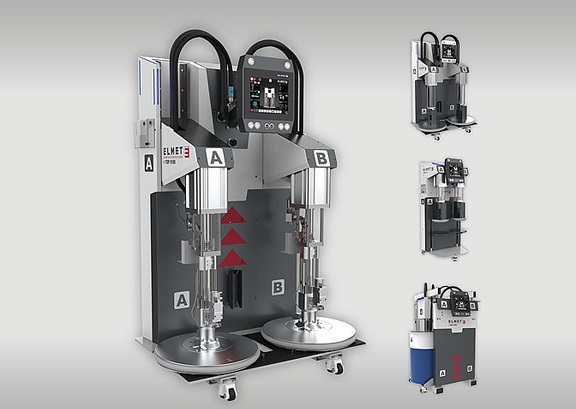
Horizon Microtechnologies is taking a different approach. Instead of simply advocating for the viability of its proprietary copper coating process, the company is setting out to prove it through an exhaustive, data-driven validation program. Over the coming months, Horizon will subject its coatings to a battery of tests designed to address the key concerns that have hindered previous efforts in this field.

The testing programme will cover a wide range of potential failure points. Horizon will assess the resilience of its coatings by exposing them to extreme environmental conditions, including rapid temperature changes and sustained humidity cycles, ensuring that the coating remains stable and adherent under stress. Long-term stability will also be scrutinized through outgassing tests. In addition, mechanical stresses will be assessed through vibration tests, while exposure to atomic oxygen will simulate the harsh conditions encountered in space applications in low-earth orbit.

Industry experience has shown how challenging this path can be. Companies across sectors — from electronics testing to aerospace — have attempted similar approaches with mixed success. Some have encountered fundamental limitations, while others have struggled with process scalability and consistency. Horizon acknowledges this reality but sees it not as a deterrent, but as an opportunity.

“The scepticism in the industry isn’t misplaced, it’s a reflection of real challenges that have stymied previous efforts,” says Andreas Frölich, CEO at Horizon Micro technologies. “However, we believe that through rigorous testing and transparent results, we can demonstrate that our technology is not just potentially promising — it is precisely proven.

We have already shown that our coating technologies deliver high-quality metallic films on 3D printed parts, but now is the time for empirical testing and transparent results on their durability in specific exacting applications.”

By addressing major historical failure mode head-on, Horizon aims to continue to establish its coatings as a game-changer for applications where traditional metal components are either costly, impractical, or impossible. The results of these tests will be made publicly available, setting a new benchmark for what is possible in metallized 3D-printed polymer components.

This initiative marks a turning point for the industry, moving from scepticism to certainty, from doubt to data. The end result should prove not whether metallized 3D-printed polymer parts can be made to work, but rather, how well they will work and last over time and in potentially harsh end-use environments.

www.3dmicrofabrication.com

#3dmicrofabrication #Modernplasticsindia #Pasticsnews #ModernPlasticsIndiaMagazine
#PrintPublication #Modernplasticssingapore
DenEast Embraces Sidel’s PET Innovation with New Aseptic Line

DenEast Embraces Sidel’s PET Innovation with New Aseptic Line

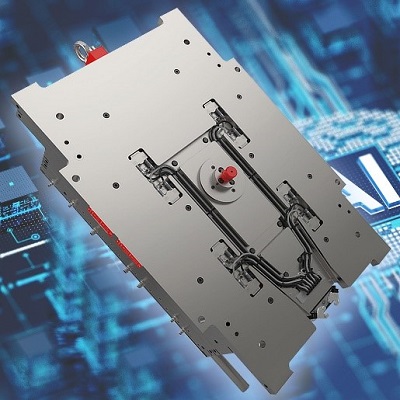
DenEast celebrates the groundbreaking of its new state-of-the-art Aseptic Nutrition beverage plant in Ho Chi Minh City, where a complete aseptic PET line by Sidel will be installed.

DenEast is a leading contract manufacturing service provider, offering aseptic beverage solutions with a 360-degree service proposition to brand owners in Vietnam and across Southeast Asia. Its comprehensive capabilities include multiproduct manufacturing, innovative packaging, raw material sourcing, warehousing, beverage processing, research and development, and vendor managed inventory.

Operating with advanced aseptic processing technology, DenEast’s state-of-the-art facility, located 45 km outside Ho Chi Minh City, produces up to one million liters of beverages per week.

Expanding to meet global beverage trends

Globally, PET-packaged sensitive beverages are expanding, with nutrition products, plant-based drinks, milk, and flavoured milk all showing steady growth. As beverage trends evolve, the increasing demand for diverse and innovative packaging solutions presents new opportunities for brands in the Southeast Asia Pacific (SEAP) region.

Looking to tap into these market trends, Johan Boden, CEO at DenEast comments: “We’re innovators at our core, continuously seeking solutions to diversify our manufacturing capabilities and explore new business opportunities, reinforcing our commitment to growth and industry leadership. In order to meet growing demands for healthy nutrition products in Vietnam and across the SEAP region, we decided to invest in a new complete aseptic processing and PET packaging line from Sidel”

Sidel’s complete aseptic PET line

DenEast’s new full production line, features Sidel’s Aseptic Combi Predis, that is designed to meet FDA standards, meeting highest customer requirements and ensuring the highest levels of product quality and safety.

Flexibility is a key feature of the line, allowing for multipack packaging in both cartons and shrink film to cater to various retail channels. This adaptability ensures that products can efficiently reach different market segments.

Sidel’s strong local presence in Vietnam played a crucial role in the selection of this solution, relying on essential technical assistance and maintenance, and ensuring optimal operational efficiency.

The production line will accommodate a range of sizes from 150ml to 1500ml, supporting a wide range of nutritional dairy and plant-based products. DenEast celebrated the groundbreaking of the new plant earlier this year on 28 March 2025.

https://www.sidel.com/en

#sidel #Modernplasticsindia #Pasticsnews #ModernPlasticsIndiaMagazine
#PrintPublication #Modernplasticssingapore