
Tuesday, June 30, 2026
spot_img
Home Blog Page 39

JPFL Films Unveils INR 700 Crore Investment in Cutting-Edge Film Manufacturing

JPFL Films Unveils INR 700 Crore Investment in Cutting-Edge Film Manufacturing

A subsidiary of the massive flexible packaging company Jindal Poly Films Limited, JPFL Films Private Limited (‘JPFL Films’) has announced an expansion of its capacity in Nashik, Maharashtra, by adding new BOPP, PET, and CPP lines. The new lines will require a capital expenditure of more than INR 700 crore and are anticipated to be put into service during the next two to three years.

This Capacity expansion is in addition to its ongoing new BOPP Line (Line 9) which was announced in the month of August, 2024 and is part of the company’s strategic play in the flexible packaging segment and in line with the company’s aim to increase market share amidst challenging demand- supply imbalances leading to ongoing pricing pressures in the sector. The expansion comes with the

YoY growth of around 43% in Net Revenue from Operations in 9 months’ period FY 24-25 and to maintain its market leadership despite business headwinds. Flexible packaging, or packaging in general, is regarded as one of the most lucrative industries due to its wide applicability in the food and beverage, personal care, and pharmaceutical industries.

These new lines will be the most advanced in the market, boasting superior width and output capabilities, along with exceptional reliability, equipment quality, and process efficiency.

The commissioning of these new lines will further strengthen Company’s growth story. It highlights the JPFL Films’ dedication to technological advancement, quality enhancement and customer satisfaction. As the flexible packaging market continues to evolve, the JPFL Films is better equipped than ever to meet the challenges and opportunities that lie ahead, reinforcing its status as an industry pioneer and reliable partner for businesses worldwide.

Sharing his views on the strategic expansion, Mr. Vinod Kumar Gupta, Chief Executive Officer, JPFL Films put it in perspective, “With this expansion, we are enhancing our ability to meet and exceed customer expectations with a diverse range of high-performance films with focus of majority of the products made on the line towards sustainability and creation of a greener future. Moreover, this move aligns perfectly with our goals of improving operational efficiency and sets us up well to leverage business upturns as we continue to maintain market leadership. This will further strengthen our capacity to serve our customers with enhanced confidence and commitment.”

https://www.jpflfilms.com/

#jpflfilms #Modernplasticsindia #Pasticsnews #ModernPlasticsIndiaMagazine
#PrintPublication #Modernplasticssingapore

XSYS Secures FTA Sustainability Award with Breakthrough Nyloflex Eco Plates

XSYS Secures FTA Sustainability Award with Breakthrough Nyloflex Eco Plates

XSYS, worldwide supplier of flexo prepress solutions, has received the FTA’s Sustainability Excellence Award 2025 for the new nyloflex eco printing plates. Framed as a more sustainable option compared to standard plates, the nyloflex eco range solves urgent environmental issues while ensuring the high print quality and consistent reliability customers have grown to trust XSYS.

The annual FTA Excellence in Flexography Awards is one the flexo industry’s longest running and most prestigious global print competitions. In addition to recognizing printers and converters, awards are also presented to suppliers for excellence in technological innovation and sustainability. The sustainability award specifically commends “technology, formulations, or techniques developed to reduce environmental impact of printing” and is evaluated on the “benefits, commitment, leadership, and relevance to the flexographic industry and beyond.”

“We’re delighted to have won the coveted FTA Sustainability Excellence Award 2025. This is another feather in our cap as nyloflex eco plates continue to set new standards by reducing the environmental footprint of flexo,” said James Van Buskirk, Technical Director North America. “We understand that in today’s highly competitive market, sustainability is absolutely crucial to growth and success. They are committed to pioneering greener solutions for brilliant flexo printing that benefit not only our customers and their clients but also people and the planet.”

They have designed the nyloflex eco series for high-quality flexo printing on absorbent and non-absorbent substrates, including paper, board, and liners, helping to support brand owners’ sustainability goals and their increasing need for fiber-based packaging solutions. The first two plates in the series – nyloflex eco ACT D and nyloflex eco FAC D – are suitable for printing with water- and solvent-based inks in eco-friendly applications such as such as folding cartons and corrugated post-print.

Directly replacing legacy XSYS plates, nyloflex eco plates include up to 29% bio-based raw materials (as verified by independent testing laboratory Normec OWS, in Belgium), reducing the reliance on fossil- based components. Furthermore, the new plates exhibit faster drying capabilities, shortening processing time by as much as 20%. The result is a much more efficient prepress process with less energy being consumed and lower greenhouse gas emissions.

The award was presented to XSYS at the FTA Excellence in Flexography Awards Banquet held at this year’s Forum & Infoflex event in Pittsburgh, PA. The winning entries were on display during 4–7 May in the exhibition hall, where they also showcased its full suite of sustainable flexo innovations on its booth.

https://xsysglobal.com/

#xsysglobal #Modernplasticsindia #Pasticsnews #ModernPlasticsIndiaMagazine
#PrintPublication #Modernplasticssingapore

New Performa Nova Board Enhances Sustainability and Yield, Says Stora Enso

New Performa Nova Board Enhances Sustainability and Yield, Says Stora Enso

Stora Enso is strengthening its position as a global leader in fiber-based packaging with the introduction of Performa Nova, a next-generation folding boxboard (FBB) that delivers high yield alongside superior performance. This latest innovation is designed to meet the rising demand for renewable, recyclable, and resource-efficient packaging—especially within high-volume segments like dry, frozen, and chilled foods, as well as chocolate and confectionery.

Performa Nova is now available for commercial orders following the successful launch of Stora Enso’s state-of-the-art consumer board production line in Oulu, Finland. This milestone marks a significant step in the company’s strategic investment in sustainable fiber-based materials, further reinforcing its long-term commitment to circular packaging solutions and material innovation.

At the heart of Performa Nova is FiberLight Tec, Stora Enso’s proprietary and thoroughly tested manufacturing technology. This innovative process enables the creation of board that is both lightweight and exceptionally strong, allowing converters and brand owners to use less material while maintaining structural integrity and visual appeal. This means more packages can be produced from the same amount of raw material—translating to better resource efficiency without compromising packaging quality.

“At the core of Performa Nova is a breakthrough in how we approach strength and sustainability,” says Tuomas Puonti, Vice President of Product Development at Stora Enso Packaging Materials. “By leveraging our FiberLight Tec technology, we’ve been able to develop a product that supports brand owners’ and converters’ efficiency goals while maintaining the high standards required for protecting packaged products.”

Engineered to meet stringent industry requirements, Performa Nova delivers excellent stiffness, high box compression strength, and a smooth surface optimized for premium printing results. These qualities make it especially suitable for demanding end-use applications, including food-safe packaging. The board can also be combined with barrier coatings for enhanced moisture and grease resistance, expanding its usability in more challenging packaging environments.

Available in grammages ranging from 200 to 315 g/m², Performa Nova adds to Stora Enso’s broad portfolio of carton board solutions. Its launch underscores the company’s role in driving innovation across the packaging sector, offering customers not only flexibility and performance but also a path toward more sustainable and circular packaging systems.

By introducing Performa Nova, Stora Enso continues to advance the shift from fossil-based to renewable packaging alternatives, supporting the evolving needs of modern brands and consumers alike—where environmental responsibility and packaging performance are no longer mutually exclusive.

https://www.storaenso.com/en

#storaenso #Modernplasticsindia #Pasticsnews #ModernPlasticsIndiaMagazine
#PrintPublication #Modernplasticssingapore
IKK Taps into FEDDEM’s Extrusion Expertise for Sustainable Plastics R&D

IKK Taps into FEDDEM’s Extrusion Expertise for Sustainable Plastics R&D

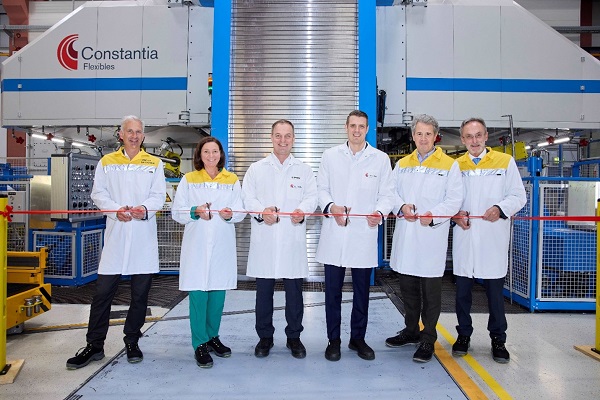
The mechanical engineering company FEDDEM GmbH is handing over a research extruder to the Institute of Plastics and Circular Economy at Leibniz Universität Hannover as part of a partnership.

Close cooperation between industry and research proves especially valuable when both sides combine their expertise and resources. An example of this is the partnership between FEDDEM and the Institute for Plastics and Circular Economy (IKK) at Leibniz University Hannover.

The FED 26 MTS extruder was officially handed over on permanent loan by Dieter Groß, Managing Director of FEDDEM, to Prof Dr Endres, Director of the Institute. The FED 26 MTS extruder was specially modified for use in research. Unlike conventional twin-screw extruders, the FED 26 MTS works without kneading elements, which enables particularly gentle melting of the materials.

A particular highlight of the system is the integrated energy recording system, which measures the energy consumption of individual components such as heating elements and cooling zones in real time. This data is both visualized and stored in the cloud, enabling precise analysis and optimization of energy flows.

Thanks to its modular units, the FED 26 MTS also offers a high degree of flexibility, as the design and process length can be adapted to changing requirements.

„Energy efficiency is also becoming an increasingly important economic factor in the plastics industry and I am therefore extremely pleased that we now have access to a research facility that we helped design, which enables us to record, understand and thus optimise energy flows in a time- and location-resolved manner, i.e. locally for the corresponding consumers”, says Prof. Dr. Endres. “When it comes to energy management and temperature control, I still see great potential for more energy-efficient compounding, which has been very much neglected to date. My special thanks go to Mr Groß and the company Feddem, who made this collaboration possible. “

„We are very happy about the cooperation with the IKK. With this partnership, we are actively contributing our technological strength to scientific development and making a valuable joint contribution to the further development of energy-efficient plastics processing,’ says Dieter Groß, Managing Director of FEDDEM.

www.feddem.com

#feddem #Modernplasticsindia #Pasticsnews #ModernPlasticsIndiaMagazine
#PrintPublication #Modernplasticssingapore

Covestro Powers Lightweight Design with New TPU for SCF Molding

Covestro Powers Lightweight Design with New TPU for SCF Molding

Covestro has announced the launch of Desmopan FLY, an advanced Thermoplastic Polyurethane (TPU) series specifically engineered for supercritical fluid (SCF) foaming technology. This high-performance material solution addresses the growing demand for lightweight, performance, and sustainable footwear design while expanding possibilities across sport gears, furniture and electronic products.

Desmopan FLY features an advanced formulation that enables superior supercritical fluid dispersion during the molding process, resulting in uniform fine-cell structured foams with outstanding mechanical properties. For footwear applications, this translates into midsoles with superior cushioning and energy return properties, and long-lasting comfort performance. The absence of chemical blowing agents and crosslinking additives ensures recyclability of the midsole; when combined with soft TPU outsole, the whole sole system supports circular economy initiatives.

“Leading sports brands are driving unprecedented demand for materials that combine elite performance with strong environmental credentials,” says Wilson Chan, Head of Business Development TPU Asia Pacific at Covestro. “Desmopan FLY brings exceptional lightweight and resilience properties while maintaining dimensional stability and durability throughout the product lifecycle. Its optimized processing enables efficient production through automated injection molding, allowing brands to create high-performance, recyclable footwear that meets demanding consumer expectations.”

In a pioneering industry move, they have installed the advanced SCF injection foaming system at its TPU Asia-Pacific R&D Center in Taiwan. This state-of-the-art facility enables them to provide comprehensive R&D support and rapid application services for customers’ specific requirements, demonstrating their ongoing commitment to advancing footwear material solutions and supporting the industry’s evolution.

“Our investment in the SCF injection foaming system marks another milestone in Covestro’s continuous innovation journey,” explains Dr. Christian Haessler, Head of Global Innovation TPU at Covestro. “This in-house capability enables us to optimize TPU material properties with precise SCF processing parameters. By being among the first in the industry to integrate this advanced technology within our R&D center, we can effectively combine TPU material and SCF injection expertise to accelerate customers’ development from concepts to commercial production.”

The combination of SCF foaming technology and Desmopan FLY delivers an energy-efficient manufacturing process that reduces the overall carbon footprint. The automated injection process integrates multiple components in a single step, enabling substantial production efficiency while maintaining consistent, high-quality output.

Desmopan FLY is now commercially available, supported by their comprehensive technical expertise and advanced in-house facilities. This integrated material and technology platform empowers sports brands in their journey toward advanced footwear solutions, combining performance, sustainability and production efficiency.

https://www.covestro.com/en

#covestro #Modernplasticsindia #Pasticsnews #ModernPlasticsIndiaMagazine
#PrintPublication #Modernplasticssingapore

BASF and Hagihara Drive Innovation in Robust Synthetic Turf Production

BASF and Hagihara Drive Innovation in Robust Synthetic Turf Production

BASF, a global leader in chemical innovation, and Hagihara Industries, Inc., a leading synthetic fiber producer in Japan, have joined forces to develop highly durable polyolefin yarns for artificial turf used in sports arenas, including football stadiums, baseball fields, and tennis courts. After three years of collaborative research and development, the two companies have created an advanced formulation with a series of Tinuvin grades that significantly enhances the durability of synthetic grass, making it less susceptible to damage from sun exposure and ensuring it retains its vibrant color.

“One of the challenges we faced in producing yarns for artificial grass was improving its ability to endure relentless exposure to sunlight and extreme weather conditions,” said Norio Funakoshi, Chief of Fundamental Research Section, Hagihara Industries, Inc. “As our customers were looking for enhanced durability, BASF stepped in to address this issue by recommending the ideal blend of additives,” added Funakoshi.

BASF’s range of light stabilizers are designed to convert UV rays into harmless thermal energy, serving as an umbrella to shield against the sun’s damaging effects. Certain UV rays can attack polymers, compromising their strength and elongation. However, with the use of selected Tinuvin grades, this radical reaction can be effectively prevented.

Hagihara Industries successfully incorporated the advanced formulation of these additives into their yarn manufacturing process, which resulted in the production of artificial turf that lasts up to 10 years. Fagiano Okayama, a J-League football club located in Okayama Prefecture, manages the company’s exceptionally durable artificial turf on its practice field. The turf has been acclaimed for its quality.

“We are thrilled to highlight the fruitful partnership between BASF and Hagihara Industries,” said Hazel Sprafke, Vice President, Global Business Management, Plastic Additives, Asia Pacific. “This collaboration exemplifies our commitment to addressing our customers’ needs through continuous innovation and effective solutions.”

As a trusted partner for innovation, BASF continuously pushes the boundaries of what is possible. Beyond synthetic turf, BASF’s comprehensive range of light stabilizers offers versatile solutions for demanding outdoor applications, such as construction tarps, heavy-duty waterproof sheets, and swimming pool covers. BASF ‘s innovative solutions ensure that its partners in the plastics industry can deliver high-performance, durable, and cost-effective products.

https://www.basf.com/in/en

#basf #Modernplasticsindia #Pasticsnews #ModernPlasticsIndiaMagazine
#PrintPublication #Modernplasticssingapore
Chemco and Kandoi Establish ₹450 Cr rPET-Based FIBC Bag Venture in Gujarat

Chemco and Kandoi Establish ₹450 Cr rPET-Based FIBC Bag Venture in Gujarat

In a path-breaking partnership to redefine India’s sustainable packaging, Chemco Group, India’s largest PET converter, and Kandoi Group of Industries, a technology textile industry leader, announced a strategic joint venture for the construction of two integrated greenfield manufacturing units at Vapi and Dahej in the state of Gujarat. With an investment of ₹450 crore, the project will be dedicated to the manufacture of FIBC (Flexible Intermediate Bulk Container) bags completely made from recycled PET (rPET).

The upcoming facilities will offer a closed-loop system from PET bottle collection and washing to tape extrusion, weaving, and final bag fabrication ensuring full traceability, consistent quality, and reduced environmental impact. Designed to recycle over 10 million PET bottles per day (approximately 3.6 billion annually), the plants will operate entirely on renewable energy and offer a high-strength, low-carbon alternative to traditional polypropylene and polyethylene packaging.

“This joint venture is a step toward building a circular economy rooted in India’s unique strengths. By transforming everyday PET waste into high-performance industrial packaging, we want to create value not just for businesses, but for communities and the environment. Our vision is to establish India, particularly Bharat’s industrial heartlands, as a global hub for sustainable manufacturing, where innovation, inclusion, and impact go hand in hand,” said Ram Saraogi, Chairman, Chemco Group.

“This partnership brings together two industry leaders with deep technical expertise and a shared commitment to circularity. We’re excited to set a new benchmark in high-performance, export-ready packaging made entirely from recycled PET,” said Niranjan Agarwal, Managing Director,

Kandoi Group of Industries. Beyond its environmental goals, the venture is built on a strong foundation of social equity. It is expected to generate over 2,500 direct and indirect jobs across collection, processing, logistics, and manufacturing. By partnering with Urban Local Bodies (ULBs) and municipal corporations, the initiative aims to formalize India’s informal waste collector network offering steady livelihoods, improved working conditions, and integration into a more transparent and efficient waste ecosystem.

The rPET-based FIBC bags are fully aligned with India’s Extended Producer Responsibility (EPR) framework and global ESG expectations. With end-to-end control over sourcing, recycling, and fabrication, the joint venture offers a scalable model for sustainable, compliant industrial packaging with reliable recycled content and traceable supply chains.

Commercial production is expected to begin by the end of 2025. Both Chemco Group and Kandoi Group plan to scale capacity in phases and explore export opportunities to position India as a global supplier of sustainable, industrial packaging solutions.

https://kandoiglobal.com/
https://www.chemcogroup.com/

#kandoiglobal #chemcogroup#Modernplasticsindia #Pasticsnews 
#ModernPlasticsIndiaMagazine #PrintPublication #Modernplasticssingapore

PRINT & DIGITAL CONVENTION 2025 Finishes Strong with Innovation and Collaboration at the Forefront

PRINT & DIGITAL CONVENTION 2025 Finishes Strong with Innovation and Collaboration at the Forefront

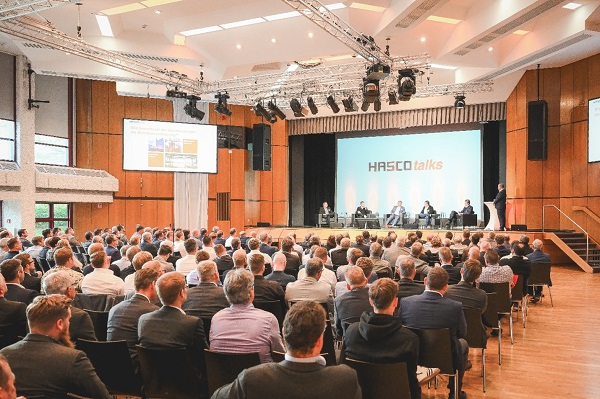
During times of deep market change, the PRINT & DIGITAL CONVENTION again demonstrated its role as a nodal point of innovation, exchange, and future planning. A trade fair, conference, and practical applications combined, it again established Düsseldorf as an important meeting place for the DACH region’s print, media, and communications industry – and sent one loud message: the industry is evolving, well-connected, and forward-looking.

From May 13 and 14, attendees at the PRINT & DIGITAL CONVENTION were able to experience the most up-to-date technologies, actual applications, and strategic solutions strategies. Brand owners, agencies, production managers, and communications experts alike received tangible ideas for their projects – and saw how print and cross-channel ideas can complement each other in successful integrated strategies.

Industry Hub with Strong Partners

With over 40 exhibitors – including industry leaders such as Canon, FKS, Horizon, Konica Minolta, KURZ, and Polar Mohr – and a high-caliber lecture program featuring around 40 sessions, the conference trade show reinforced its position as key meeting point for the print, media, and communications sector in the DACH region. Especially popular were the hands-on highlight projects, developed in collaboration with partners across the entire value chain. These projects demonstrated how technology, creativity, and strategic thinking can be combined to achieve success in modern marketing.

“Our sincere thanks go to the exhibitors, speakers, and partners who continuously engage with us to further develop and shape the PRINT & DIGITAL CONVENTION,” emphasized Rüdiger Maaß, Managing Director of the Fachverband Medienproduktion e.V. (FMP). “The event now feels like a true class reunion of the industry – marked by personal, in-depth conversations, a familiar atmosphere, and a shared drive to make a difference.”
Sabine Geldermann, Director of drupa at Messe Düsseldorf, also highlighted the special relevance of the event: “The PRINT & DIGITAL CONVENTION has become a fixture in the industry calendar, not least because it offers guidance, inspiration and practical solutions. It impresses with its practical relevance, innovative applications and in-depth expertise, and strikes a chord with the industry.”

Knowledge Transfer, Networking, and Fostering New Talent

As a conference and trade show, the PRINT & DIGITAL CONVENTION once again provided as a dynamic platform for in-depth discussions. Visitors gained valuable insights into the possibilities of modern print, packaging, and digital technologies through direct conversations at exhibition stands and lectures, offering real added value for their projects. Brand owners, agencies, and media professionals found inspiration for achieving their strategic communication goals.

Promoting young talent was also a priority at this year’s PRINT & DIGITAL CONVENTION. Following the successful launch of the Youngster Talent Initiative in previous years, several vocational schools once again participated with their classes – seizing the opportunity to experience current topics, technologies, and real-world applications first-hand. Combining classroom knowledge with practical insights and direct interaction with exhibitors and experts helped deepen their understanding of industry trends and laid the groundwork for valuable networking and sustainable talent development.

A Joint Signal for the Future

Fitting the future-oriented character of the PRINT & DIGITAL CONVENTION, another key initiative was announced: almost exactly one year after the last drupa, the leading trade fair confirmed its partnership with the industry campaign WE. LOVE.PRINT. This collaboration represents a strong alliance within the community – and symbolizes shared innovation, a commitment to quality, and a sustainable perspective in the print, media, and communications sector.
“By partnering with the WE. LOVE.PRINT initiative, drupa is supporting the campaign’s nationwide efforts to emphasize the industry’s value and economic importance,” said Sabine Geldermann, Director of drupa at Messe Düsseldorf. “Together, we are creating momentum, expanding our reach and emphasizing the resilience and future viability of the print sector.”

https://www.drupa.com/

#drupa #Modernplasticsindia #Pasticsnews #ModernPlasticsIndiaMagazine
#PrintPublication #Modernplasticssingapore
Vianode and Fortum Aim to Cut Carbon Footprint of EV Batteries Through Circular Economy

Vianode and Fortum Aim to Cut Carbon Footprint of EV Batteries Through Circular Economy

Vianode, an advanced battery materials company, and Fortum Battery Recycling, a specialist in recycling valuable metals from electric vehicle (EV) batteries, have signed a Memorandum of Understanding to collaborate on developing a sustainable EV battery recycling value chain.

Under the agreement, the two companies will work together to:

  • Secure supplies of high-quality recycled graphite concentrate from Fortum’s hydrometallurgical plant in Harjavalta, Finland
  • Develop and optimize recycled graphite materials for use in their commercial-scale anode production
  • Evaluate and enhance the performance of recycled graphite in advanced battery components

“Recycling graphite from end-of-life batteries is vital to reduce dependence on virgin raw materials, lower carbon emissions, and build sustainable supply chains. Access to recycled graphite concentrate with potential to scale volumes over time will support Vianode’s ambition to deliver high-quality anode materials with an industry-leading CO₂ footprint below 1 kilogram CO₂e per kilogram of graphite by 2030”, says Dr. Stefan Bergold, Chief Commercial Officer of Vianode.

Graphite anode material represents the largest component of lithium-ion batteries by weight, typically around 70 kilograms per EV. By integrating recycled graphite into its production processes, they aim to accelerate the development of low-carbon, high-performance battery materials.

“Fortum Battery Recycling and Vianode have a shared commitment to a more sustainable and less resource-intensive EV battery industry. By recovering valuable and critical graphite from used batteries and returning it to the cycle as battery-grade material, we help enable the production of new lithium-ion batteries with a significantly lower environmental footprint,” says Tero Holländer, Head of Business Line, Batteries, Fortum Recycling & Waste.

They recently launched its first high-performance anode material made from recycled battery-grade graphite as part of the company’s strategy of creating the world’s most sustainable anode graphite and enable a truly circular North American and European battery value chain.

Towards 2030, Europe is expected to see a significant increase in battery recycling as the first generation of EVs reaches the end of their life and new EU legislation requires higher recovery rates and the use of recycled materials in new batteries.

https://www.vianode.com/

#vianode #Modernplasticsindia #Pasticsnews #ModernPlasticsIndiaMagazine
#PrintPublication #Modernplasticssingapore

Kistler Academy Increases Course Offerings to Support Skill Development

Kistler Academy Increases Course Offerings to Support Skill Development

Using your expertise to get the most out of sensor technology: The Kistler Academy, an ISO-certified training institution, organizes courses for users from the injection molding industry for plastics. Kistler experts provide the knowledge required for optimum sensor use, efficient process design, monitoring and control, as well as profitable data evaluation. The broadened range now includes courses on part and mold design and AI-based data analysis.

A large number of cavity pressure sensors, the use of specific software and data management alone do not guarantee high efficiency in injection molding production. Only with the right knowledge and skills will users be able to make the best and most profitable use of these technologies.

“We have noticed that many production plants already use sensors and software to monitor mold cavity pressure but often lack the in-depth know-how to fully exploit the potential,” explains Dr. Oliver Schnerr, Head of the Plastics Academy and Application Technology at Kistler. For this reason, the DIN/ISO 21001-certified academy offers three successive levels of training on the optimum measurement and evaluation of mold cavity pressure. “With our Kistler Academy offer, we take a look at the entire process. From article and tool construction, through tool manufacturing and maintenance, to sampling and series production, as well as quality assurance and process and production analysis – naturally with a focus on mold cavity pressure measurement”, says Schnerr. The application-oriented courses are divided into theoretical and practical parts and are held at customers’ premises and as seminars in cooperation with selected institutes.

Needs-based training courses: basic, advanced and expert level

Kistler has divided the training courses into three areas: the basic level covers the correct selection, handling and operation of products and solutions such as sensors, ComoNeo or AkivisIO. The second level focuses on different process variants in injection molding and the efficient use of cavity pressure measurement in various processes. The goal is always to significantly reduce production costs through automated quality assurance and process control and regulation.

Third-level courses center on data storage and analysis, including knowledge transfer on process data management and the use of AI for data evaluation. “In all three areas, however, there is a clear focus on the use of cavity pressure and the associated opportunities for cost reduction,” explains Schnerr. “Throughout the academy, we concentrate on the opportunities for cost savings through the efficient use of resources and data along the entire injection molding process. Our offering is hence aimed at a broad range of users.”

https://www.plastech.biz/en

#plastech.biz #Modernplasticsindia #Pasticsnews #ModernPlasticsIndiaMagazine
#PrintPublication #Modernplasticssingapore