Mondi’s Duino Mill Begins Sustainable Containerboard Production Using 100% Recovered Fiber
Mondi, a global leader in sustainable packaging and paper, has officially begun operations at its Duino mill in Italy—a significant milestone that reinforces its position at the forefront of high-quality, environmentally responsible packaging production. This successful start-up marks another step forward in Mondi’s strategy to deliver long-term value while supporting a more circular, sustainable economy.
The Duino mill will focus on producing high-performance recycled containerboard made entirely from 100% recovered fiber. As the ramp-up phase continues, Mondi remains committed to ensuring consistent quality across production. These lightweight, durable grades of containerboard are especially well-suited for corrugated packaging used in eCommerce and consumer goods—two sectors with increasing demand for cost-efficient, fully recyclable packaging solutions.
“Starting up this machine on time is a fantastic achievement and a testament to the dedication and expertise of our team,” said Markus Gärtner, CEO of Mondi Corrugated Packaging. “With Mondi Duino now fully integrated into our production network, we’re in an even stronger position to meet customer needs across Europe and beyond with sustainable, high-quality solutions.”
This facility joins Mondi’s expanding network of containerboard mills, bringing the total to six globally. By adding Duino to its value chain, the company strengthens not only its production capacity but also its supply chain resilience—delivering greater reliability and flexibility to customers. The site is expected to play a key role in optimizing supply dynamics and ensuring consistent availability of recycled paper materials for corrugated applications.
In line with their sustainability commitments, the Duino mill aims to source raw materials locally whenever feasible. This approach supports regional economies and helps reduce the environmental impact associated with long-distance transportation. It also contributes to their broader climate goals by minimizing greenhouse gas emissions across the supply chain.
As the company looks ahead, the successful commissioning of the Duino mill is a clear signal of its continued investment in sustainable growth, circular innovation, and the future of eco-friendly packaging. With its expanded production footprint and a steadfast focus on quality and environmental stewardship, they are well positioned to meet the evolving needs of its customers and drive forward a more sustainable packaging industry.
Packaging Industry Transformed by IPL–Schoeller Allibert $1.4B Merger Agreement
The rigid-plastic product producer IPL and the reusable transport packaging firm Schoeller Allibert announced their merger. With 27 manufacturing facilities spread across Europe, the UK, and North America, the planned merger would establish a global producer of sustainable packaging with a combined proforma yearly turnover of more than US $1.4 billion in 2024.
IPL mainly manufactures sustainable, rigid-plastic products for the food, consumer, environmental and agriculture sectors, largely in North America, with significant manufacturing operations in the United Kingdom. Headquartered in Dublin, Ireland, it has approximately 2,500 employees across 16 manufacturing sites and reported revenue of US$822 million in 2024.
Schoeller Allibert manufactures returnable transport packaging and provides related services, serving customers across sectors such as automotive, beverage, food, pharmaceuticals, cosmetics, retail, and material handling, primarily in Continental Europe. Headquartered in Hoofddorp, the Netherlands, it has approximately 1,600 employees across 11 production locations and had revenue of 550 million in 2024.
The merged company will be headquartered in Dublin, Ireland and led by current IPL CEO Alan Walsh. The transaction is expected to close in the third quarter 2025, subject to customary closing conditions.
Mr. Walsh said: “The future of packaging lies in sustainability, innovation and adaptability. This merger will allow IPL and Schoeller Allibert to combine our strengths on both sides of the Atlantic to meet that future together. With an unwavering commitment to innovation, we will not only enhance the way we serve our customers but also optimize the skillsets of both companies to build a strong, resilient foundation for growth.”
Alejandro Cabal Uribe, CEO of Schoeller Allibert, stated: “Our combined strength in packaging solutions is well positioned to benefit from the tailwinds for the sector, driven by corporate sustainability ambitions and evolving regulations to improve value chains and reduce the environmental impact of packaging waste.” We are excited to work together to provide industry-leading customer service and cutting-edge worldwide solutions.
IPL is owned by investment funds managed by Madison Dearborn Partners, LLC (“MDP”), a leading private equity investment firm based in Chicago, and CDPQ, a global investment group. Schoeller Allibert is owned by Brookfield Asset Management’s private equity business and the Schoeller family. The new company will be 55% owned by the existing IPL shareholders and 45% owned by the existing Schoeller Allibert shareholders.
OE-A and LOPEC Announce 2025 Award Winners for Sustainable Printed Tech Solutions
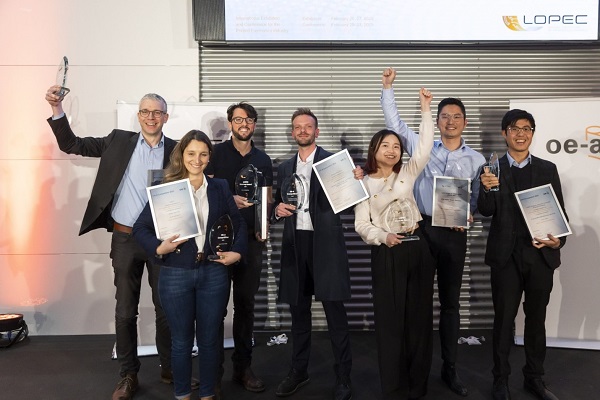
The winners of the annual “OE-A Competition” and the “LOPEC Start-Up Competition” were officially revealed at LOPEC 2025. This year, the OE-A Competition emphasized sustainable innovations aimed at the smart living sector.
This year’s OE-A competition was dominated by projects and products that focus on smart living. 20 entrants from around the world submitted their latest visions and products to the OE-A Competition 2025. From smart patches for healthcare applications to hydrogen tanks and new lighting applications: innovative demos and products that illustrate the potential and capabilities of printed electronics were recognized at LOPEC 2025, the international exhibition and conference for printed electronics, in Munich, Germany. The competition is organized annually by the OE-A (Organic and Printed Electronics Association), a working group within the VDMA.
The panel of judges, comprising experts from international companies and research institutions, assessed 20 submissions across three categories. In addition to the jury’s evaluation, LOPEC attendees had the opportunity to cast their votes. At their booth, where all demonstrators were showcased, visitors were invited to select their favorite innovation for the “Public Choice Award.”
“The OE-A Competition 2025 is particularly notable for its numerous applications in the smart living sector. We have increasingly seen projects that offer smart solutions for everyday life with a strong emphasis on sustainability ” said Dr. Klaus Hecker, Managing Director of the OE-A.
Each year, the competition pushes the printed electronics industry to present its most innovative and forward-thinking developments.
Technology Milestone from STEER in XLPE Waste Recycling
In a breakthrough for plastic recycling and sustainable manufacturing, STEER World, a global leader in materials transformation technologies, has unveiled a first-of-its-kind method to recycle crosslinked polyethylene (XLPE) — a material long considered non-recyclable — using its proprietary Omega Twin-Screw Extrusion Technology.
Widely used in cable insulation, piping systems, and other high-performance applications, XLPE’s exceptional durability comes from its three-dimensional network of covalent bonds. While this structure ensures thermal and mechanical resilience, it also makes the material extremely difficult to recycle using conventional methods. Most XLPE waste ends up in landfills, creating long-term environmental concerns.
To address this challenge, they have developed a solution using its state-of-the-art Omega Twin-Screw Extruder, featuring the STEER patented Fractional Geometry Technology (FGT). The process uses a combination of mechanical shear and controlled heat to break XLPE’s crosslinks while preserving its base structure—turning it into a reusable form called De-XLPE (Decrosslinked XLPE).
“This is not just an innovation in recycling—it’s a shift in how we look at thermoset waste,” said Dr. Prakash Hadimani, Global Head – Application Development Center, STEER World. “With the Omega series of machines, we’ve made it possible to recover and reuse a material that was once considered unrecoverable. That’s a win for the industry and a big step forward for sustainability.”
The modular design of the Omega machine allows precise control of temperature zones, screw speed, and configuration—factors essential to ensuring consistent and scalable decrosslinking. The resulting De-XLPE can be further processed into new products or blended with virgin polymers for a range of industrial applications.
A Game-Changer for Circular Manufacturing
This technology opens new doors for manufacturers seeking sustainable alternatives to traditional materials. It not only reduces reliance on virgin plastic but also diverts XLPE waste from landfills, making significant strides toward the circular economy.
“With this process, we’re not just recycling—we’re redefining what’s recyclable,” added Dr Hadimani. “The ability to reclaim and reintegrate thermoset materials like XLPE is a breakthrough the industry has been waiting for.”
Key Benefits of the STEER Decrosslinking Process:
Converts non-recyclable XLPE into usable De-XLPE
Reduces environmental impact and landfill burden
Eliminates the need for hazardous chemical treatments
Scalable, consistent, and energy-efficient process
UBQ Recognized for Innovation with Silver Award for ClimaPos
UBQ Materials, headquartered in Miami, U.S., receives the Silver 2025 Edison Best New Product Award in the Carbon Reduction Through Advanced Materials category for its innovative product, UBQ ClimaPos. This bio-based thermoplastic composite is designed to be blended with conventional plastics in durable and semi-durable applications, helping drive progress toward carbon-neutral and climate-positive goals.
Materials that matter
Incorporating just 10% UBQ ClimaPos into products can reduce the carbon footprint of goods and supply chains.
For every ton of UBQ produced in UBQ Materials’ Netherlands facility:
5 tons of landfill waste is diverted
0 ton of plastic is replaced
02 tons of net carbon is removed—equivalent to the greenhouse gas (GHG) emissions of a gas-powered car driving 2,596 miles
They reduce reliance on petroleum-based plastics, lowers GHG emissions generated by waste in landfills, and supports a circular economy.
“Winning the 2025 Edison Award affirms the value of our product and its potential to significantly impact the world,” said Albert Douer, Chairman and CEO of UBQ Materials. “This recognition reinforces that UBQ is a material that matters—making sustainability achievable for consumers and helping retailers meet their environmental goals. UBQ Materials leads the way in developing sustainable materials to benefit the planet and future generations.”
Frank Bonafilia, executive director of the Edison Awards, added “UBQ ClimaPos exemplifies the power of innovation. With its unique technology, UBQ Materials is well on their way to converting waste from a global challenge into a scalable, sustainable solution.”
Giving waste a new life
UBQ Materials’ pioneering solution emerges as a powerful response to our planet’s growing waste problem.
UBQ ClimaPos is created by an energy-efficient, patented technology that converts mixed household waste—including organic and hard-to-recycle materials—into a material suitable for a range of everyday products that are good for people, planet, and profit.
XSYS Wins Second Consecutive FPPA Award for Prepress Excellence
XSYS, global supplier of flexo prepress solutions, has won the 2025 FPPA Excellence Award for the nyloflex eco series printing plates. Taking home the coveted trophy for a second year, they have once again been affirmed as an innovation leader with eco-friendly solutions.
Founded to promote high standards in the flexo prepress industry, the FPPA recognizes and celebrates outstanding achievements in innovation, sustainability, and overall excellence with this annual award. Entries are evaluated on several judging criteria including demonstrating “efforts to reduce waste, energy consumption, and environmental impact, as well as the implementation of eco-friendly materials and processes.”
Meeting these criteria, the new nyloflex eco series, specifically the nyloflex eco ACT D and nyloflex eco FAC D, have been developed for high-quality flexo printing on absorbent and non-absorbent substrates (paper, board, kraft liner, test liner, etc.) using water- and solvent-based inks. The plates are perfectly suited for a whole range of fiber-based packaging applications including folding carton and corrugated post-print.
In contrast to traditional flexo plates, the eco plate formulation features up to 29% bio-based raw materials, significantly reducing the reliance on fossil-based components while maintaining excellent quality and performance. nyloflex eco plates dry extremely fast saving processing time by 20%. Prepress operations benefit from reduced energy consumption as well as lowering their greenhouse gas emissions.
“Receiving the FPPA award for the second year in a row is testament to the dedication of everyone at XSYS to spearhead sustainable innovation for the benefit of the flexo community,” said Dan Rosen, Sales Director National Accounts, North America. “This incredible honor confirms that the nyloflex eco plate series – the new XSYS flagship product line – is answering a pressing market demand in flexo. With this breakthrough innovation, we are demonstrating that incremental changes in material choices and processing technology will collectively lead to significant environmental improvements.”
Explaining the choice of XSYS’ nyloflex eco plates as the winner, the judging panel, made up from FPPA board and marketing committee members, said, “As a judge for the Excellence in Flexo Award Program, I was impressed by XSYS’s commitment to sustainability and efficiency. Their use of bio-based materials enhances sustainability, while improved processing times and excellent plate performance demonstrate their innovation in the market.” – Jeff Francis, Dynamic Dies Inc.
The award was presented during the FPPA’s annual conference, held on 23–25 February, in Tucson, AZ. As a long-term member of the association, XSYS was also on the speaking agenda at the event. Dan Rosen presented a 2025 business update including an in-depth look at XSYS’ latest sustainability initiatives, from nyloflex eco plates to the latest ThermoFlexX Catena automated platemaking technology and renewable electricity usage. In addition, Trey Beckman, Director of Strategic Global Accounts at MacDermid Graphic Solutions (MGS), provided insights into the recent creation of XSYS and MGS as one global company.
GreenPlast 2025 is gearing up to welcome a global audience with an edition that is set to be even more expansive and future-oriented. Taking place at Fiera Milano from May 27 to 30, 2025, the event continues to solidify its position as a major hub for the plastics and rubber technology sectors. With a clear mission, it aims to highlight the synergy between innovation and sustainability, demonstrating how both can drive value in an ever-evolving supply chain.
An Expanding Showcase of Exhibitions
With around 200 exhibitors, both direct and represented, spread over 5,500 square meters, GreenPlast offers an increasingly comprehensive overview of cutting-edge technologies for the processing, recycling and reuse of plastics materials.
It’s a vision focused on the future, reinforced by the presence of official delegations of buyers from around twenty countries across Europe, the Mediterranean basin and the Middle East, coordinated by ICE-Agency and the leading industry associations.
One hundred highly qualified professionals from established companies involved in manufacturing and recycling will be in search of solutions to enhance the competitiveness of their production processes, with a growing focus on energy efficiency and the reduction of environmental impact.
Thanks to an online matchmaking platform, buyers will be able to schedule targeted meetings with Italian exhibitors in advance, making their visit even more effective and strategic.
Beyond the Exhibition: Moments for Dialogue and Inspiration GreenPlast will also be a platform for discussion and in-depth analysis of the major challenges facing the sector. The international conference “Shaping a Sustainable Future for Plastics“, coordinated by AMI – Applied Market Information and Promaplast, organizer of GreenPlast, will feature leading experts and industry players reflecting on the opportunities presented by the ecological transition.
In addition, the Tech Talks – short presentations led by exhibitors – will provide a direct look at the most advanced technological solutions, combining performance with sustainability.
Sustainability as Art At GreenPlast, sustainability isn’t only a technical matter. This is demonstrated by the eagerly anticipated Art&Plastics exhibition, which this year will feature original projects such as LadyBe’s creations, Plastica d’Artista (curated by Pina Inferrera), Arte da mangiare mangiare Arte and Museo Acqua Franca (projects by topylabrys), joined in 2025 by the MAP – Museo Arte Plastica of Castiglione Olona. Through art, polymers become secondary raw materials capable of telling stories, evoking emotions and presenting new visions of circularity.
Educating the Next Generation Education will also play a central role. Around fifteen universities and technical institutes have already expressed interest in attending the fair. Guided tours and educational sessions will be organized for them, with the aim of fostering a more conscious culture around the use of plastics, their potential, and above all, their recyclability.
CHINAPLAS 2025 Wraps Up with Global Participation Exceeding 280,000 Visitors
CHINAPLAS 2025 successfully wrapped up on April 18 with 281,206 visitors (an increment of 13.29% compared to CHINAPLAS 2023 in Shenzhen) in 4 days. Among them, visitors from overseas countries and Hong Kong, Macau and Taiwan region of China rocketed to 68,542, accounting for over 24% of total visitors, a remarkable 141.1% increase compared to CHINAPLAS 2023 held in Shenzhen.
This premier trade fair saw over 4,500 superior plastics and rubber suppliers from 39 countries and regions, more than 3,800 cutting-edge machine exhibits, and over 1,600 raw material suppliers. Numerous trade deals were concluded between distinguished exhibitors and global buyers, proving CHINAPLAS 2025 an effective sourcing platform that cultivated new partnerships and paved the way for industry growth and success.
Over 4,500 plastics and rubber suppliers shined on the stage of innovation with cutting-edge technologies.
Showcasing of Full Industry Chain Drew Prosperous Picture for Quality Global Buyers
Innovation in the plastics and rubber industries plays a pivotal role in booming development of new fields. The exhibition not only released industry breakthroughs of more than 120 global/Asian debut technology projects, but also brought a large number of groundbreaking, effective and cost-effective landing solutions for plastics and rubber production. A fascinating industry chain in full scope was exhibited – from advanced material innovations, intelligent manufacturing solutions to tried-and-true products, covering automotive, electronics and electric, packaging, medical and healthcare, building materials, new energy, sports and leisure, as well as other downstream applications, catering to diverse needs from various industries and sectors.
With stellar solutions and products, the trade show attracted buyers from about 150 countries and regions. They connected with a substantial number of professional suppliers who provide high-quality products and solutions that meet their business needs, and immersed themselves in varied international business opportunities, greatly expanding the breadth and depth of their global network.
Sparks of Inspiration Blossomed in Fruitful Concurrent Events
A series of concurrent events surrounding circular economy were organized and received participants’ overwhelming support.
Innovative plastics and rubber solutions at the show caught visitors’ eyeballs.
Over 800 industry elites joined “Plastics Recycling & Circular Economy Conference and Showcase”, where over 60 international experts and leaders of renowned enterprises shared insights on plastics recycling market and technologies contributing to sustainable plastics development. In “Sustainable Plastic Packaging Forum“, experts from prominent packaging institutions and companies addressed the latest solutions and sustainability blueprint from an international perspective, while representatives from renowned brands shared difficulties they faced in daily operations of innovative packaging, realizing efficient docking between upstream and downstream of the industry chain. PET Food-grade and PE high-quality recycling production lines were demonstrated at “The Plastics Circularity Journey” Production Line Live Demo, showcasing high-value utilization of plastics recycling.
Other concurrent talks and interactive activities were also well received. In the 3rd “SciXplore Forum”, visitors acquired insights on future development and breakthrough achievements of polymer industry from renowned scientists and experts. Thematic forums were hosted at “Applications in Focus”, covering over 40 hot topics including recyclable medical packaging, cost reduction strategies, and improvements in manufacturing efficiency in electronic and electrical industries.
The trade show fostered cultivation of network between global buyers and exhibitors.
At “Market Insights Hub“, visitors explored innovative solutions facilitating business development with industry experts in 3 thematic forums, covering RCEP (Regional Comprehensive Economic Partnership) and overseas market exploring strategy, ESG and sustainable supply chain, as well as insights report of new quality productive forces. Over 40 game-changing technologies were launched at Tech Talk, covering 6 themes including 3D Printing, Automotive Lightweighting Solutions, Green Low-carbon Solutions, Efficient Packaging Solutions, Rubber & TPE Technologies and 2025 New Materials.
Debuting this year, “innoGreen Hub” and “SportsTech Chic + Green” focused on cutting-edge technologies, materials, designs and applications in automotive, electronics and electric, medical, packaging plus sportswear and sporting goods respectively. Together they presented how inventive and sustainable solutions foster the trend of “green+smart manufacturing” and sporty chic. In “Product Innovation Gallery”, over 200 unique products were showcased, providing the opportunity for visitors to quickly grasp technologies behind plus connect with ideal suppliers.
Plastics Recycling & Circular Economy Conference and Showcase successfully wrapped up, attracting more than 800 industry elites.
As never before, visitors had the opportunity to visit factories in “Exclusive VIP Factory Tour”. Through exchanging with technical executives face-to-face on the factory floors, they gained valuable insights on ESG and innovative product manufacturing from the factories.
Dedicated to construct a cooperative platform between exhibitors and renowned institutions, CHINAPLAS 2025 brought traditional campus recruitment onsite at “Development Day for Campus Elites”, facilitating efficient and precise matching between plastics and rubber enterprises and top graduates.
While CHINAPLAS 2025 has come to a successful conclusion, those who missed the trade show can replay any exciting moments on our dynamic livestream video platform, CHINAPLAS LIVE, for exclusive leader interviews, event highlights, and comprehensive coverage of the latest industry innovations and trends anytime, anywhere.
Thank you to all who visited the trade show and participated in the concurrent events. Together we created delightful memories that will never be forgotten. CHINAPLAS 2026 will be held at National Exhibition & Convention Center (NECC), Hongqiao, Shanghai, PR China on April 21-24, 2026. We look forward to seeing you again!
Recyclable Plastic Films by Reifenhäuser Turn Heads at Chinaplas
Reifenhäuser EVO Ultra Stretch blown film lines enable the production of mono-material composites (all-PE film) for fully recyclable flexible packaging.
The Reifenhäuser Group will showcase its most recent technological advancements for producing plastic films in an environmentally friendly and effective manner. From April 15 to 18, the extrusion experts will present solutions at the Shenzhen World Exhibition & Convention Center (Booth 10G21) that tackle the three main issues facing the plastics industry today: lowering resource consumption, boosting recyclability, and enhancing production autonomy and efficiency. Advanced production technology, which Reifenhäuser already provides, are necessary to meet these needs.
A central focus at the show will be the use of Machine Direction Orientation (MDO) technologies for producing fully recyclable mono-material films with performance and cost-effectiveness equivalent to conventional multi- material structures.
Marcel Perrevort, CSO of the Reifenhäuser Group, explains: “In the flexible packaging sector, we are currently seeing a huge trend away from conventional and non-recyclable mixed material laminates towards fully recyclable mono-material composites, both for blown and cast films. Our state-of-the-art MDO stretching units enable enhanced mechanical properties for all-PE or all-PP films. Thus, PET films commonly used in material composites can be replaced. By downgauging, we also reduce production costs to a competitive level, making recyclable films a profitable choice.”
KARAT cooling rings from Kdesign are known for their high performance, minimal film tolerances and easy handling.
It’s all about MDO
With the EVO Ultra Stretch MDO unit for Reifenhäuser’s blown film lines manufacturers produce all-PE mono films for applications such as high-barrier food pouches. Due to the stretch process film thicknesses of 18μm (with properties of a 25μm product) and less can be achieved, keeping production costs within the range of conventional films. With the patented integration of the MDO unit directly into the haul-off, the film is stretched in the ideal phase of the process – using the first heat – for maximum efficiency and film stability. Furthermore, the all-PE film achieves the required barrier effect with an EVOH content of less than five percent, fully meeting the criteria for recyclability. At the same time, Ultra Stretch enhances the performance of the EVOH barrier layer while reducing material usage, delivering cost and sustainability benefits.
The Reifenhäuser PAM automation option simplifies the operation of coextrusion adapters and dies. The high degree of automation makes producers independent of the shortage of skilled workers.
The same applies to MDO technology in the flat film sector. With its CPP/CPE cast film line they provide best transparency, printability, easy-tear properties, and sealing. The line features an MDO stretching unit that enhances the film properties, enabling recyclable all-PP mono films with barrier functions for food and medical packaging. Here too, stretching the EVOH layer improves the barrier effect while preserving recyclability. In addition, customers can opt for their unique automation system PAM (precise, autonomous, mechatronic) bringing cast lines to a whole new level. PAM automatically adjusts coextrusion adapters and dies via high- precision actuators for optimum convenience, quality and productivity. Once recipes have been set, they can be saved and called up immediately at the touch of a button – even by inexperienced system operators. The high degree of automation makes producers independent of the shortage of skilled workers. Energy consumption is 99% lower compared to a thermal expansion bolt system, as the actuators only need to be supplied with power during the adjustment process and not permanently.
Kdesign: Market leading blown film cooling technologies
Kdesign, Reifenhäuser’s subsidiary and leading specialist in cooling, measuring, and calibration systems for blown film lines, will also be showcasing at the ReifenhäuserChinaplas booth. With the famous KARAT cooling ring, Kdesign regularly sets benchmarks for maximum cooling performance, ultra-low film tolerances, and user-friendly operation. Processors all around the world rely on Kdesign solutions to improve blown film production in terms of quality and productivity. With an output capacity that is up to 50 percent higher than mid-range products and 25 percent higher than high-end competitors, the KARAT cooling ring enables a significant increase in productivity, while at the same time maintaining excellent profile tolerances and top film quality.
In addition, Kdesign offers sophisticated secondary cooling units: With the CENTRO-Freeze, producers avoid film blocking in the haul-off by additionally cooling the bubble before it enters the flattening process. By using the CENTRO-Freeze, the output is therefore further increased, whiles producers save on anti-block additives and improve the film properties. All Kdesign components reflect over 20 years of experience in retrofitting existing blown film lines and equipping new OEM lines.
The Future of 3D Printing Supply Chains: 3D People’s PartsVault
3D People, the UK-based 3D printing specialist, has officially launched PartsVault, a secure, cloud-based digital inventory platform that empowers customers to manage, store, and produce parts on demand — wherever and whenever needed.
Developed for the needs of contemporary industry and based on the lessons learned from a disrupted global supply chain, PartsVault provides engineers, buyers, and production teams with a centralized, browser-based hub to manage 3D-printed components throughout their product lifecycle. PartsVault expedites the process and provides production-grade components with the speed and flexibility that additive printing can provide, whether it is for emergency replacements or reordering repeat parts.
“PartsVault will transform the way our customers interact with us,” says Felix Manley, Co- Founder of 3D People. “It eliminates guesswork and waste. You know what parts you need, and we make them — on demand, with precision and speed.”
With PartsVault users can store the latest revision in each product to ensure they are never producing outdated parts, while saved production settings guarantee repeatable quality every time. PartsVault simplifies reordering, ensures consistency, and supports Just-in-Time manufacturing. It’s especially valuable for businesses seeking to reduce capita tied up in inventory or struggling with fluctuating demand.
But PartsVault isn’t just a solution for existing clients. It also represents a powerful opportunity for non-UK based companies to tap into the UK’s advanced 3D printing infrastructure — without needing local warehousing or logistics networks. “Many manufacturers overseas are looking for ways to reduce reliance on fragile international supply chains,” said Sasha Bruml, Co-Founder. “With PartsVault, they can securely store part designs digitally and trigger local UK-based production whenever needed. No stockpiles. No customs. No delays.”
The platform offers a timely solution to today’s turbulent economic landscape, marked by pandemic aftershocks and potential trade tensions spurred by tariff escalations. PartsVault enables companies to sidestep the volatility of international logistics and control their production destiny. Manley concludes, “The digital inventory revolution is here, and 3D People is at the forefront. With ISO 9001 quality, a market-leading online portal, and in-house finishing services, 3D People is perfectly positioned to deliver localized, responsive manufacturing for customers worldwide.”