Wednesday, July 1, 2026
spot_img
Home Blog Page 46

Brazil’s Plastics Industry Takes the Spotlight at São Paulo Summit

Brazil’s Plastics Industry Takes the Spotlight at São Paulo Summit

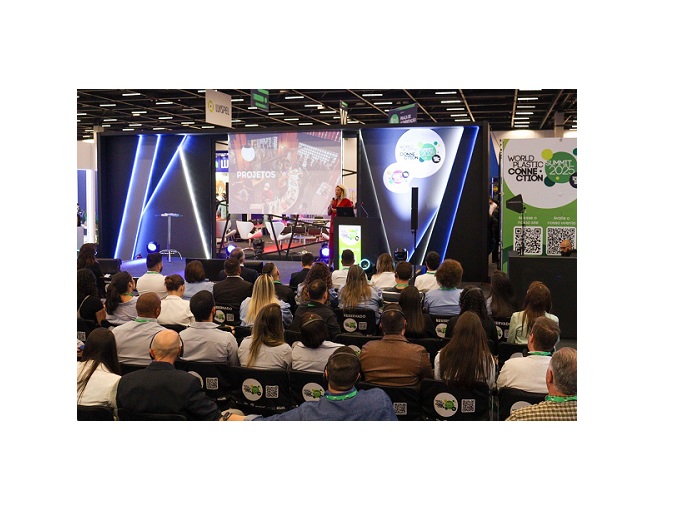
The IV World Plastic Connection Summit, organized by Think Plastic Brazil, officially opens today, April 8, 2025, at the Novotel Center Norte in São Paulo. This landmark event, held in partnership with the National Plastics Institute (INP) and the Brazilian Trade and Investment Promotion Agency (ApexBrasil), brings together industry leaders, innovators, and professionals from over 100 countries to celebrate and advance the Brazilian transformed plastics sector under the theme, “Converted Plastics from Brazil: Coloring the World with Design, Innovation, and Sustainability.”

Now in its fourth edition, the Summit serves as the premier international gathering for Brazil’s plastics industry, uniting key stakeholders across agribusiness, toys and childcare, construction, packaging, raw materials, and housewares. The event kicks off with a hybrid format, offering free in-person and online access with simultaneous translation in Portuguese, English, and Spanish, ensuring global participation.

A Platform for Innovation and Global Connections

The Summit’s ecosystem features eight dynamic projects, including the Hybrid International Seminar, the launch of the International Yearbook 2025 and Color Trend 2026, and the prestigious International Award ceremony. Hosted by renowned Brazilian presenter and personal organizer Micaela Góes, today’s opening day promises inspiring discussions and actionable insights.

Among the top figures leading the event are:

  • José Ricardo Roriz Coelho, President of the INP Deliberative Council, who emphasized the Summit’s role in elevating Brazil’s global standing: “This event is a cornerstone for the transformed plastics sector in Brazil. It’s where we share expertise, spark innovation, and forge partnerships that drive sustainable growth on the world stage.”
  • Edison Terra Filho, Executive President of INP, who highlighted São Paulo’s strategic importance: “As a hub of industry and innovation, São Paulo is the perfect stage to showcase Brazil’s leadership in plastics transformation.”
  • Carlos Moreira, Executive Director of INP and Think Plastic Brazil Project Leader, who oversees the Summit’s vision and execution.

The keynote speaker, Ricardo Amorim, Brazil’s most influential economist according to Forbes, will headline the seminar. Amorim commented, “The Brazilian plastics industry is at a pivotal moment. By blending design, innovation, and sustainability, we’re not just shaping products—we’re shaping the future of global markets. This Summit is where that vision comes to life.”

Spotlight on Brazilian Excellence

The event showcases Brazil’s strides in sustainable plastics innovation, featuring contributions from luminaries like Marcelo Rosenbaum, architect and curator of Color Trend 2026, and Ângela Hirata, a commerce expert with a storied career at Alpargatas. Additional highlights include:

  • A roundtable on design and innovation with Dijon de Moraes, a celebrated designer and professor, and Marco Lobo.
  • A focus on accessibility with the launch of See Color, a groundbreaking resource for the visually impaired, presented by its creator, Giácomo Parolin.
  • Insights into Brazil’s leadership in packaging trends by João Henrique Alves of Valgroup.

A Legacy of Impact

Since its inception during the COVID-19 pandemic, the Summit has grown into the largest platform of its kind in the Americas, fostering over $1.247 billion in business and facilitating 64,366 meetings across 240 trade promotion projects. With Think Plastic Brazil now representing over 220 companies, the Summit continues to drive international expansion and sustainability.

 worldplasticconnectionsummit.com.

#thinkplasticbrazil#Modernplasticsindia #Pasticsnews#ModernPlasticsIndiaMagazine
#modernplasticssingapore

IV World Plastic Connection Summit to Welcome Experts from 101 Countries

IV World Plastic Connection Summit to Welcome Experts from 101 Countries

The World Plastic Connection Summit, the premier international event for Brazil’s converted plastics industry, is set for its fourth edition. The biennial event, taking place from April 8 to 10, 2025, at the Novotel Center Norte in São Paulo, will focus on the theme “Converted Plastic from Brazil: Coloring the World with Design, Innovation, and Sustainability.” Registration is free for both in-person and online participants, with simultaneous translation available in Spanish and English. Organized by Think Plastic Brazil, founded by the Brazilian Plastics Institute (INP) and in partnership with ApexBrasil (Brazilian Trade and Investment Promotion Agency), the summit will showcase the latest innovations and trends in the plastics industry, emphasizing design, innovation, accessibility, and sustainability

“The World Plastic Connection Summit is a unique opportunity to bring together the global plastics processing industry, valuing the efforts of those who are investing in the internationalization process. The event honors these leaders while promoting the search for new paths and partnerships to further strengthen the presence of the Brazilian market abroad,” said Carlos Moreira, executive director of INP and Think Plastic Brazil CPO.

The event, featuring an ecosystem of 8 activities, will primarily take place on April 8. It will include the World Plastic Connection Seminar, which consists of 8 lectures and roundtable discussions, the launch of the 2025 International Yearbook, Color Trend 2026, and the presentation of the prestigious International Award, a highly regarded audited recognition in the industry. All activities will be hosted by Micaela Góes, the well-known communicator from the Santa Ajuda program on GNT. The event will be held both in-person and online, with simultaneous translation into Spanish and English, attracting professionals from over 101 countries during the 2023 edition.

www.thinkplasticbrazil.com

#thinkplasticbrazil#Modernplasticsindia #Pasticsnews
#ModernPlasticsIndiaMagazine#modernplasticssingapore

Register Now for Free: IV World Plastic Connection Summit Opens Doors!

Register Now for Free: IV World Plastic Connection Summit Opens Doors!

The World Plastic Connection Summit, the leading international event for Brazil’s converted plastics industry (including sectors such as Agribusiness, Toys and Childcare, Civil Construction, Packaging, Plastic Converting Industry Supplies, and Housewares), is now accepting free registrations. The summit will be held both in person and online, with simultaneous translation available in Spanish and English. This biennial event, taking place from April 8 to 10, will focus on the theme “Converted Plastic from Brazil: Coloring the World with Design, Innovation, and Sustainability.” The public event will be hosted on April 8 at the Novotel Center Norte in São Paulo. The summit is organized by Think Plastic Brazil, an initiative of the Brazilian Plastic Institute (INP), in partnership with ApexBrasil (Brazilian Trade and Investment Promotion Agency).

“The World Plastic Connection Summit reaches its fourth edition, consolidated as one of the main ones for Agribusiness; Toys; Civil Construction; Packaging, Supplies for the Plastic Converting Industry, and Housewares. Our goal is to promote a space for connection between companies, experts and investors, highlighting the innovations that boost the sector and expand its global competitiveness. With a comprehensive and accessible program, including simultaneous interpretation and hybrid free attendance, we want to strengthen Brazil’s position as a world reference in sustainable design and innovation in the converted plastics market,” says Carlos Moreira, Executive Director of the INP and Think Plastic Brazil projects.

On April 8, the public schedule will feature the World Plastic Connection Seminar, which includes 8 lectures and roundtable discussions with notable speakers such as Ricardo Amorim. The event will also showcase the launch of Color Trend 2026, an international guide on color trends for the converted plastics industry, the presentation of the International Award (honoring companies in the sector based on export and product categories), and the release of the International Yearbook 2025, a comprehensive document offering an overview of the converted plastics industry in Brazil.

All actions on stage will be led by the communicator Micaela Góes, from the famous Santa Ajuda TV show, at GNT, and will be available in person and online and with simultaneous interpretation into Spanish and English.

www.thinkplasticbrazil.com

#thinkplasticbrazil#Modernplasticsindia #Pasticsnews #ModernPlasticsIndiaMagazine
#modernplasticssingapore

Women Leaders Drive the ESG Dialogue at IV World Plastic Connection Summit

Women Leaders Drive the ESG Dialogue at IV World Plastic Connection Summit

As part of its International Seminar program, the IV World Plastic Connection Summit will host a “Women in Leadership” roundtable on April 8th at 11:15 am (GMT –3), with free admission. The session will bring together influential executives to discuss the challenges and progress of women in strategic roles, with a particular focus on ESG (Environmental, Social, and Governance) issues, aiming to inspire new leaders. The event will run from April 8 to 10, with the 8th open to the public, at the Novotel Center Norte in São Paulo. Organized by Think Plastic Brazil, created by INP (Brazilian Plastics Institute) and in partnership with ApexBrasil (Brazilian Trade and Investment Promotion Agency), the summit promises valuable insights for the industry.

“The presence of women in leadership is not just a matter of representation, but an essential strategic factor for innovation and sustainable growth of companies. Bringing together women with such inspiring trajectories in this roundtable is a unique opportunity to learn and exchange experiences on the challenges and advances of gender equality in the corporate environment. Diversity of thoughts and experiences strengthens organizations and drives significant changes in society, and we are excited to promote this debate and contribute to a more inclusive and sustainable future”, says Carlos Moreira, Brazilian Plastic Institute Executive Director & Think Plastic Brazil CPO.

In today’s business landscape, diversity, equity, and sustainability are essential pillars for company growth. The roundtable will include prominent leaders such as Neivia Justa, Director of Communications & Marketing and a key figure in diversity and inclusion within the corporate world; Ana Cristina Paiva, Regional Sales Manager for ExxonMobil Química in Latin America; Bruna Folster, Executive Vice President of Sales at Eco Ventures Brasil; Ianda Lopes, Legal Director at Uber; and Karen Sandhof, a senior executive with vast experience in technology and operations.

With inspiring careers and experiences in companies such as Natura, ExxonMobil, Uber and Johnson & Johnson, the speakers will address topics such as gender equity in the job market, the challenges of female leadership, inclusion and the impacts of ESG policies in organizations.

 Female leadership is not just about representation, but about real impact on business. More diverse and sustainable companies are also more innovative and competitive”, highlights Neivia Justa, who in addition to being a speaker, is one of the most influential voices on LinkedIn on diversity and corporate communication.

In addition to reflections on careers and challenges in the market, the roundtable will provide valuable insights on how companies can foster a more inclusive and sustainable environment, promoting structural changes that benefit society as a whole. The event is an unmissable opportunity for professionals who want to delve deeper into the topic and connect with female leaders who are transforming the market.

www.thinkplasticbrazil.com

#thinkplasticbrazil#Modernplasticsindia #Pasticsnews #ModernPlasticsIndiaMagazine
#modernplasticssingapore

Marcelo Rosenbaum Shines at IV World Plastic Connection Summit with 2026 Color Vision

Marcelo Rosenbaum Shines at IV World Plastic Connection Summit with 2026 Color Vision

The IV World Plastic Connection Summit will introduce the Color Trend 2026, a new guide on color trends developed by Think Plastic Brazil to assist professionals in the Brazilian converted plastics industry with their decision-making. This edition, designed by the renowned architect Marcelo Rosenbaum, will showcase colors inspired by Brazil’s diverse biomes. The event will be held from April 8 to 10 at Novotel Center Norte in São Paulo, with April 8 open to the public. The summit is organized by Think Plastic Brazil, created by the Brazilian Plastics Institute (INP), and in partnership with ApexBrasil (Brazilian Trade and Investment Promotion Agency).

“In this edition of Color Trend 2026, we are honored to have the curatorship of renowned architect Marcelo Rosenbaum, who brings an approach inspired by Brazilian biomes, connecting the identity of our country to innovation in design and industrial production. With this initiative, Think Plastic Brazil reinforces its commitment to offering assertive directions for the sector, helping professionals make decisions based on research and aesthetics aligned with global market demands”, comments Carlos Moreira, Brazilian Plastic Institute Executive Director & Think Plastic Brazil CPO.

Color Trend, one of the projects within the World Plastic Connection Summit ecosystem, is an international color trends guide focused on the Brazilian perspective. It provides in-depth research tailored to the converted plastics industry, offering a comprehensive color chart to guide the sector in the year following its release. Available in Portuguese, English, and Spanish, the 2026 edition is designed by Marcelo Rosenbaum, a renowned Brazilian architect with international awards.

The initiative uses architecture and design as tools for social transformation, promoting a dialogue between architecture, design and biome. Marcelo Rosenbaum selected colors that portray a connection with the diversity of each Brazilian biome, valuing their particularities, as well as reflecting his most striking memories of the places and situations he experienced during the research, which, based on photographs, recorded the unique colors of our country.

They will also highlight the innovation partnership between Think Plastic Brazil and SENAI CETIQT (Chemical and Textile Industry Technology Center), one of the main education and innovation institutions in Brazil, focusing on areas such as textiles, clothing, chemistry and design. The institution will be responsible for colorimetric tests, carried out in collaboration with industries and manufacturers of converted plastic products, ensuring, with laboratory rigor, color equality between those conceived by Marcelo Rosenbaum and those applied to both the raw material and the final plastic parts.

In 2025, they will begin developing an innovative color naming and coding system for converted plastics, specifically designed for the Brazilian market, with the goal of establishing it as a global reference by 2026. This system aims to provide a unique and efficient way to identify colors, tailored to the specific needs of the national industry, while offering a competitive alternative to existing international systems. The project will involve market research, an analysis of current standards, the creation of a comprehensive color palette, and validation by industry experts.

On April 8, industries and companies producing converted plastics will present their products with the new Color Trend 2026 colors to the public, in order to demonstrate the chromatic trends in practice, validate the application of the shades in different materials and highlight the innovation in the sector’s design.

www.thinkplasticbrazil.com

#thinkplasticbrazil#Modernplasticsindia #Pasticsnews #ModernPlasticsIndiaMagazine
#modernplasticssingapore

“See Color” Launches at IV Plastic Summit, Revolutionizing How We Experience Color

“See Color” Launches at IV Plastic Summit, Revolutionizing How We Experience Color

The IV World Plastic Connection Summit introduces an exciting new feature with the launch of Color Trend 2026, a color trend guide created by Think Plastic Brazil to assist professionals in the converted plastics industry in Brazil. The guide will also showcase See Color, a tactile language method for identifying colors in plastic. The launch event will be held from April 8 to 10, with the 8th open to the public, at the Novotel Center Norte in São Paulo. Organized by Think Plastic Brazil, founded by the Brazilian Plastics Institute (INP) and in partnership with ApexBrasil (Brazilian Trade and Investment Promotion Agency), the summit promises to be a significant event.

“The adoption of see color in the 2026 edition of Color Trend is aligned with one of the premises of Think Plastic Brazil, which is to bring innovation, design and sustainability to the Brazilian converted plastic sector through creative actions that connect us to the main players in the global market”, says Carlos Moreira, Brazilian Plastic Institute Executive Director & Think Plastic Brazil CPO.

One of the projects in the World Plastic Connection Summit ecosystem, This is an international guide to color trends with a focus and research from a Brazilian perspective, dedicated to the converted plastics industry, offering a complete chart that guides the sector in the year following its publication, published in Portuguese, English and Spanish. The 2026 edition is designed by Marcelo Rosenbaum, a renowned Brazilian architect who has won international awards.

This will highlight innovation in accessibility with see color, a tactile language method that uses high relief, as well as Braille, to enable access to color information for people with visual impairments (blind, low vision or color blind). Reading can be done both visually and by touching the symbols with your fingertips, so that people with visual impairments can understand and identify colors in any plastic application, such as household items, toys, decorative objects, medicines, among others.

The See Color method was developed by researcher Sandra Regina Marchi in her doctoral thesis, drawing from Color Theory, which includes primary colors (red, yellow, and blue), secondary colors (orange, green, and purple), as well as neutral colors (black and white). According to its creator, See Color is an innovative and unique approach that generates tactile color codes that are both easy to remember and compact in size. These codes can be applied to any object, enabling visually impaired individuals to become independent and make their own informed choices.

On April 8, converted plastics industries and companies will present see color on their products to everyone present at the event. The Brazilian Institute of Geography and Statistics (IBGE) points out that there are more than 6.5 million visually impaired people in Brazil, 500,000 of whom are blind and around 6 million have low vision. Therefore, the implementation of see color represents a significant advance in accessibility, allowing this public to identify colors in plastic products independently. The initiative reinforces the sector’s commitment to inclusion and innovation, making design more accessible and functional for millions of Brazilians.

www.thinkplasticbrazil.com

#thinkplasticbrazil#Modernplasticsindia #Pasticsnews #ModernPlasticsIndiaMagazine
#modernplasticssingapore

Ricardo Amorim to Spotlight Innovation, Design & AI at IV World Plastic Summit

Ricardo Amorim to Spotlight Innovation, Design & AI at IV World Plastic Summit

For a day of immersion in innovation, design, and worldwide trends, leaders and industry professionals are scheduled to gather at the IV World Plastic Connection Summit. Renowned economist Ricardo Amorim will deliver a lecture about the effects of artificial intelligence and other transformations in the shifted plastics industry, which is one of the program’s highlights. The event will be held at the Novotel Center Norte in São Paulo from April 8 to April 10, with the public being able to attend on the 8th. Think Plastic Brazil, founded by the Brazilian Plastic Institute (INP) and in collaboration with ApexBrasil (the Brazilian Trade and Investment Promotion Agency), is in charge of hosting the event.

“This event is a milestone for the industry, bringing together some of the brightest minds in innovation, design and economics to discuss the future of our converted plastics industry. The agenda has been carefully structured to provide a broad overview of key global trends, covering everything from the internationalization of business to the impact of Artificial Intelligence and accessibility on design. We expect attendees to leave the meeting not only informed, but inspired to innovate and lead the next phase of the industry”, highlights Carlos Moreira, Brazilian Plastic Institute Executive Director & Think Plastic Brazil CPO.

MORNING OF INSIGHTS ON INNOVATION, DESIGN AND FEMALE LEADERSHIP

Starting at 7:30 a.m., there will be a welcome coffee and registration, followed by the Yearbook 2025 launch, an introductory video screening, and institutional speeches. The round table “Design and Innovation” will kick off the event’s discussions at 8:30 am. Marco Lobo, Dijon de Moraes, and Gisele Raulik will explore the key developments in the industry.

At 9:30 a.m., João Henrique Alves (Valgroup) will give a lecture entitled “Brazil: from adversity to leadership in global packaging trends”, analyzing the challenges and opportunities for the Brazilian industry on the international stage. After a coffee break at 10:30 a.m., the program will resume at 11 a.m. with a presentation by Drummond Advisors, which will launch the Internationalization Guide for companies seeking to expand their businesses globally.

Next, at 11:15 a.m., the panel “Women in Leadership”, with Neivia Justa, Director of Communications & Marketing and a reference in diversity and inclusion in the corporate environment; Ana Cristina Paiva, Regional Sales Manager for ExxonMobil Química in Latin America; Bruna Folster, Executive Vice President of Sales at Eco Ventures Brazil; Ianda Lopes, Legal Director at Uber; and Karen Sandhof, a senior executive with extensive experience in technology and operations, will discuss the challenges and achievements of women in the sector, bringing reflections on gender equity and leadership in the corporate environment. The morning period ends at 12:15 p.m., with lunch and networking time.

AFTERNOON OF TRENDS IN COLOR, DESIGN AND ACCESSIBILITY

The program returns at 1 p.m., with the lecture “Colors and Brazilian Design for the World“, led by Ângela Hirata, director of foreign trade at Alpargatas SA, who will share her experience in taking Brazilian brands to the international market, showing how she led the company (Alpargatas) to export to 5 continents in more than 80 countries, with the brand Havaianas’ positioned in the market.

At 2:00 p.m., Carlos Oliveira and Sandra Marchi will present the “see color” panel, a tactile language method that uses high relief, as well as Braille, to provide access to color information for people with visual impairments (blind, low vision or color blind). The talk will present the application of innovation in the most diverse applications of plastic.

Next, at 2:30 p.m., the event brings one of the most anticipated moments: the launch of Color Trend 2026, an international guide to color trends with a focus and research from a Brazilian perspective, dedicated to the converted plastics industry, presented by renowned architect Marcelo Rosenbaum, who will share the colors inspired by Brazilian biomes that will be trending next year and their impact on design and industry.

Finally, a coffee break and the see color experience take place at 3:30 p.m., providing a moment of interaction and experimentation with the new trends presented.

THE IMPACT OF ARTIFICIAL INTELLIGENCE ON BUSINESS, BY RICARDO AMORIM

At 4:00 p.m., economist Ricardo Amorim will take the stage to present the lecture “Artificial Intelligence and other paradigm shifts that will transform your converted plastics business.” Amorim will address the technological innovations that are shaping the sector and how companies can prepare for this new reality. “Artificial Intelligence is reshaping entire industries, and the converted plastics sector is no exception. Companies that know how to take advantage of this revolution will have significant competitive advantages in the coming years,” highlights Ricardo Amorim.

CLOSURE AND AWARDS

The event will conclude at 5 p.m., with a cocktail reception and the International Award 2025 ceremony, recognizing the highlights of the sector.

In addition, the event will bring a sensory innovation to the venue’s ambiance with the fragrance produced exclusively for the IV World Plastic Connection Summit, in partnership with Vollmens, called “From Brazil to Brazil”. The essence will be diffused throughout the venue, allowing all participants to appreciate the new sensory dimension that the fragrance brings to the event.

https://thinkplasticbrazil.com/en/home-en/

#thinkplasticbrazil#Modernplasticsindia #Pasticsnews #ModernPlasticsIndiaMagazine
#modernplasticssingapore

Achieving Circularity in Plastics: A Sustainable Materials Approach

0

Achieving Circularity in Plastics: A Sustainable Materials Approach

K 2025 from 8 to 15 October in Düsseldorf has set itself the goal of addressing the central issues of our times. One of its three Hot Topics reads “Shaping the Circular Economy”. Reason enough to shed some light on the current state of affairs in terms of circularity six months ahead of the world-leading trade fair of the plastics and rubber industry.

The global raw material dilemma is a result of the fact that over 90% of the 100 billion tons of raw materials used each year are not recycled. A concerning ratio that the European Investment Bank (EIB) has identified. Companies are under increased pressure to manage resources more carefully due to rising CO₂ costs, unstable raw material prices, and geopolitical insecurities.

Circularity is considered the decisive lever for achieving a sustainable future. An analysis by management consultancy Material Economics shows that Europe could save 450 million tons of CO₂ equivalents through closed material cycles by 2030 – this corresponds to 8% of the current emissions. In the long term, the Ellen MacArthur Foundation forecasts that up to 45% of emissions could be avoided by a closed-loop circular economy.

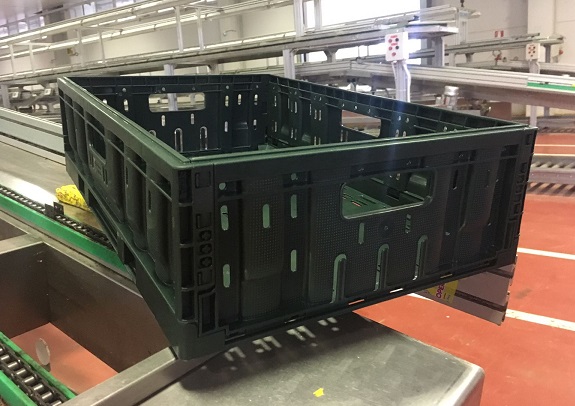
This transformation also holds enormous economic potential: according to estimates by consulting group EY, the use of secondary raw materials reduces energy consumption by 20% to 90%, saves large amounts of water and could save European firms up to EUR 465 billion in material costs per year. The International Labor Organization (ILO) also expects seven to eight million new jobs to be created worldwide by the transition to a circular economy by 2030. More and more use cases show that circularity makes not only ecological but also economic sense. For instance, the German Cabka Group annually produces pallets and crates from some 150,000 tons of recycled plastics by their own accounts – proving thereby how waste can be turned into valuable products.

Plastics industry: a key sector with catching up to do

The plastics industry plays a pivotal role in this transformation. In 2023 413.8 million tons of plastics were produced worldwide, according to Plastics Europe, but the share of recycled materials continues to be low: only 8.7% of plastics were recycled – most of them by mechanical recycling – whereas the lion’s share was incinerated or landfilled. This is happening even though recyclates hold an enormous potential. Their production requires markedly less energy than the production of new products from fossil raw materials, thereby substantially reducing CO₂ emissions. On top of this, their use increases supply security – a factor of rising importance in times of geopolitical crises.

However, recycling is technically demanding – and often more expensive than producing new plastics. After all, post-consumer plastics have to be sorted, cleaned and prepared with great effort. In addition, the legal requirements are strict, high-quality recyclates scarce and many processes energy-intensive – all resulting in higher production costs compared to new plastics. “But nobody wants to pay higher costs,” stresses Ulrich Reifenhäuser, Chairman of the K Advisory Board. “Plastics are so successful because they are so much better than other materials. But the transition to the circular economy costs money. This cost issue will not be overcome without regulatory requirements.”

However, the responses to the question of how the transition to a functioning circular economy will work vary from country to country.

Europe looks to regulation

While other nations focus on voluntary commitments and market-oriented solutions, Europe regulates by law. Strategies such as the “Circular Economy Action Plan” (CEAP) and regulations such as the Packaging and Packaging Waste Regulation (PPWR) and the Single-Use Packaging Directive (SUPD) drive the transition to circularity by means of recycling rate, mandatory recyclate content and Extended Producer Responsibility (EPR). The PPWR shows how this works: since 2025 single-use PET bottles have to contain a minimum of 25% recycled plastic and this percentage will go up 30% by 2030. For manufacturers such as Coca-Cola or Nestlé this means rebuilding their supply chains, sourcing high-quality recyclates, adapting production – otherwise they run the risk of a sales ban. The SUPD is also having an impact: in Lithuania the return rate of PET bottles shot up from 34% to 92% after the introduction of a deposit system – in as little as two years. Companies face major challenges in the process: the limited availability of high-quality recyclates, the technical complexity of changing over to a recycling-friendly design – not forgetting the short deadlines set for complying with these often-complex requirements.

Chemical ingredients are also increasingly moving into the focus of the EU. Especially disputed is the handling of PFAS since a ban could make recycling considerably more difficult – because plenty of waste plastics would then be classified as contaminated and eliminated from the circular economy. Wolfgang Große Entrup, Director General of VCI, therefore warns against a blanket ban: “With each individual substance banned in the EU the risk grows that more of our industry players move to less regulated regions. This, however, does not solve the original problem.”

Asia: between advances and structural deficits

Accounting for 53% of global plastics production Asia is the main player – and the main source of plastic waste. While some countries pursue ambitious recycling strategies, others lack the basic infrastructure.

China’s circularity offensive: centrally controlled, consistently implemented

For a long time, China was the biggest importer of plastic waste, now the country is recharting its course. By adopting its “National Sword Policy” the country has stopped the imports of unsorted plastic waste and is now driving the expansion of own recycling structures. The 14th 5-year plan focuses on modern collection and sorting systems and promotes both mechanical and chemical recycling. By 2035 the industry aims to be largely decarbonized and have transited to closed material cycles. This strategy is accompanied by the “Circular Economy Promotion Law”, which obliges companies to take back and safely dispose of specific products, and the establishment of the state-owned “China Resources Recycling Group” with the aim of centrally controlling the transformation.

Japan and South Korea: driving technology systematically

Japan and South Korea are among the pioneers in circular economy – not least due to clear political objectives and early-adopted legislation. In Japan the “Container and Packaging Recycling Act” has already obliged companies since the 1990s to participate in return and recycling systems. This is supported by the “Plastic Resource Circulation Act” adopted in 2022, which promotes recyclate use and prescribes detailed recycling plans for plastic products.

South Korea pursues a systemic, technology-driven approach via its new “Act for Promotion of Transition to a Circular Economy Society” (APTCES):  binding recycling rates, clear requirements for sustainable product design as well as targeted regulation for hard-to-recycle products. In addition, companies wanting to place new recycling technologies on the market, are temporarily exempted from restrictions.

Unlike Europe, these two countries are banking on clear responsibilities, hands-on implementation and targeted innovation funding rather than detailed regulation. This approach is supported by high social acceptance and responsibility assumed across the board when it comes to waste separation and saving resources, for example.

From India to Indonesia: why the circular economy is faltering

In India the “Plastic Waste Management Rules” (PWMR) oblige companies to take back plastic waste. Despite this important step insufficient infrastructure and the varying regional applications of the rules remain a major challenge for a nation-wide implementation. Similar problems exist in Vietnam, where an EPR law was introduced in 2022.  It holds manufacturers and importers accountable for seeing to the recyclability of their products.

In Thailand the “Plastic Waste Management Roadmap 2030” pursues the aim of recycling or energetically using 100% of plastic waste by 2027. There are local initiatives in Indonesia but there is no comprehensive national strategy. One objective is to drastically reduce the plastic waste that ends up in the sea by 2040.

Despite the progress made in these countries the regional fragmentation of waste management and the lack of infrastructure continue to pose a major challenge. Raising people’s awareness and stronger industry involvement will make or break the success of these measures.

North America: a patchwork of strategies

In North America circularity strategies are heavily fragmented. The US is pursuing an approach that comprises both state initiatives and private business measures. 33 US states have established EPR programmes, which oblige manufacturers of single-use packaging to financially participate in waste management. By 2032 100% of packaging is to be recyclable or compostable, and 65% of one-way packaging be recycled. Other states, however, lag behind. There is also another reason why plastic recycling in the USA only has a low uptake compared to the rest of the world, despite modern recycling technologies: “There is neither a national nor a state-wide recycling programme that would cover at least a complete federal state. Instead, individual cities and municipalities decide whether, how and which waste they collect and sort,” explains the German federal economic promotion agency, Germany Trade & Invest (GTAI).

Canada pursues a more comprehensive approach to promote the circular economy. The government has introduced the “Federal Plastics Registry”, a national registry for plastics to collect data about the production, use and disposal of plastics. It is designed to increase transparency and make for more effective plastic management. The “Action Plan on Zero Plastic Waste” aims to reduce plastic waste and establish a circular economy for plastics. It includes measures for reducing single-use plastics and promoting reuse and recycling. Beyond this, a gradual approach is pursued to reduce plastic waste by banning single-use plastic products and introducing EPR.

South America has a long way to go

In South America the circular economy is still in its infancy – some 90% of waste ends up at landfills and recycling is only of secondary importance. Chile, Colombia and Brazil have national return and circularity schemes such as Chile’s “Ley REP”, Colombia’s “Basura Cero” initiative or voluntary industry solutions in Brazil. Uruguay banks on consistent waste management with its Integrated Waste Management Act (Ley 19.829) and promotes packaging recycling. Despite various advances and initiatives, however, infrastructure remains insufficient in many South American regions and success will depend on further state investment, international cooperation and stronger awareness raising among the population.

https://www.k-online.com/

#k-online #Modernplasticsindia #Pasticsnews #ModernPlasticsIndiaMagazine
#Modernplasticssingapore

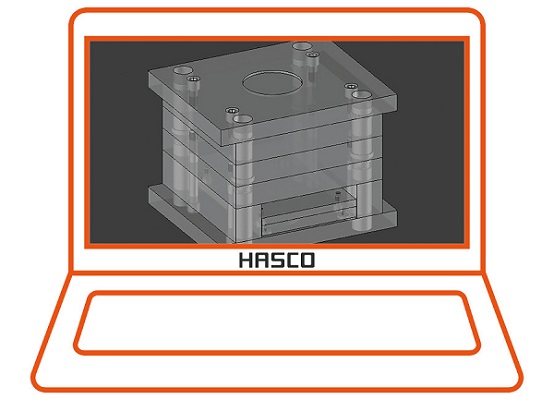
HASCO Launches Z825HT for Clean and Secure Cooling Line Closure

HASCO Launches Z825HT for Clean and Secure Cooling Line Closure

With the new innovative dummy safety coupling Z825HT/,HASCO is offering a simple solution for the reliable closure of open temperature control systems, that also enables clean storage without any risk of the cooling channels becoming dirty. The new development combines maximum safety standards with user-friendly handling and thus complies with the highest demands of modern mould temperature control.

Automatic safety locking to prevent undesired decoupling

The new coupling is noted for its automatic safety lock, which reliably prevents unintended decoupling. This function is ensured by exerting a precise mechanical rotational force on the locking sleeve, which requires a specific manual unlocking action. An additional optical colour code in the locked state facilitates the visual checking and thus contributes to greater process safety.

No contamination through leaking media

The design of the article offers another advantage in that it prevents leakage. Z825HT/ not only provides for a clean working environment, but also protects against possible damage through leaking liquids. The high-temperature sealing rings of the coupling allow reliable sealing even under extreme conditions. They are designed for use at temperatures of up to 180°C with water and up to 220°C with oil, which significantly increases the range of possibilities, especially in the high-temperature range.

https://www.hasco.com/

#Hasco #Modernplasticsindia #Pasticsnews #ModernPlasticsIndiaMagazine
#Modernplasticssingapore

Industry Leaders Dive Into Future of QA at 2025 Control Trade Show

Industry Leaders Dive Into Future of QA at 2025 Control Trade Show

The 37th Control international trade show for quality assurance, which will take place in Stuttgart from May 6–9, 2025, is just four weeks away and will be the industry highlight for all QA experts. The organizers of the trade show are welcoming guests to a top-notch supplemental program that will occupy four complete halls. One of the highlights will be the “Control Quality Talks,” a panel discussion including prominent professionals sharing their perspectives on artificial intelligence.

Quality assurance procedures are an integral part of the industrial production workflow, as well as in various processes in a variety of non-industrial settings. QA pervades a broad range of processes and its technologies span the fields of machine vision, image processing and sensor technology, as well as measuring and test technology, including the latest software and evaluation methods. As an international trade fair for quality assurance, Control enjoys a long tradition of focused thematic relevance, high levels of expertise and significant internationality. “Once again this year, we’re pleased to note that roughly one third of the exhibitors will come from outside of Germany,” announces Fabian Krüger, Control project manager at trade fair promoters P. E. Schall. “The participating companies are currently finalizing their exhibition portfolios and will present expert visitors with interesting innovations in the field of quality assurance,” says Krüger. “Various types of measuring technology will be showcased in halls 3, 5, 7 and 9 at the Stuttgart Exhibition Centre and presented with cross-industry relevance. Artificial intelligence (AI) will be one of the key topics, and its use will be demonstrated extensively at the trade fair,” promises Krüger.

KI in Actual Practice: All Interested Parties are Cordially Invited to the 2025 Control Quality Talks

Due to the fact that AI systems have evolved into a key technology trend in quality assurance, exhibitors, expert visitors and guests will be provided with a new presentation format as part of this year’s trade fair programme: the 2025 Control Quality Talks. The current status of AI in practical applications will be discussed under the heading “AI in QA – Will the Future be Free of Defects? AI as Turbocharger for Profitability and Efficiency”. Panel discussion participants include Dr.-Ing. Ira Effenberger, Head of Research for Artificial Intelligence and Machine Vision at the Fraunhofer Institute for Manufacturing Engineering and Automation IPA, Dr.-Ing. Ralf Christoph, Managing Director and Proprietor of Werth Messtechnik, Florian Schwarz, CEO at CAQ AG Factory Systems and Dr. Christian Wojek, Head of AI at Zeiss IQS. The discussion will be moderated by Dr.-Ing. Peter Ebert, Editor-in-Chief of trade journal “inVISION”. All industry players are cordially invited to attend the discussion in hall 7-7115 beginning at 2:30 p.m. on the first day of the trade fair. They’ll discover which AI systems already exist today, which are already being used in industry, and which specific results they’re achieving in terms of cost-effectiveness and efficiency.

Presentation Forum and Special Show Provide Visitors with Up-to-Date Expertise

In addition to opportunities for increasing manufacturing efficiency, intelligent QA also contributes to the production of safe products. The reduction of potential costs resulting from errors, the avoidance of material waste and additional work, as well as high levels of customer satisfaction are directly linked to quality assurance. The more modern and consistent QA processes can be made, the fewer disruptions occur in the value chain. The trend is moving towards full automation of inspection processes during production, which are becoming faster and more efficient, are being run inline and are integrated into a broad range of diverse production sequences. Expert visitors will be brought up to date on these topics at the presentation forum. Expert visitors will also be able to benefit from the special show on “Contactless Measuring Technology” being held by Fraunhofer’s Vision business unit for the 19th time this year. It will feature state-of-the-art technologies, applications and system components from the field of contactless measuring and test technology. “Traditionally, Control offers expert visitors the opportunity of gathering up-to-date information and establishing new contacts by attending the world-class supplementary programme,” notes the project manager. “In addition to the exhibition, the supplementary programme is indispensable for gathering additional expert knowledge concerning modern measuring technology and quality assurance. We’re looking forward to welcoming large numbers of visitors again this year!”

63 Years of Trade Fairs for Markets – Schall Trade Fairs’ Recipe for Success

With globally renowned trade shows for quality assurance (Control), optical technologies, components, and systems (Optatec), stamping technology (Stanztec), production and assembly automation (Motek), bonding technology (Bondexpo), plastics processing (Fakuma), sheet metal working (Blechexpo), and joining technology (Schweisstec), Schall has established prosperous business platforms. This has led to the emergence of entirely new markets in a number of industries, with leaders distinguished by their high degree of inventiveness, thorough system proficiency, and useful application solutions.

https://www.control-messe.de/

#control-messe #Modernplasticsindia #Pasticsnews #ModernPlasticsIndiaMagazine
#Modernplasticssingapore